
What Are the Most Missed Areas During Office Cleaning?
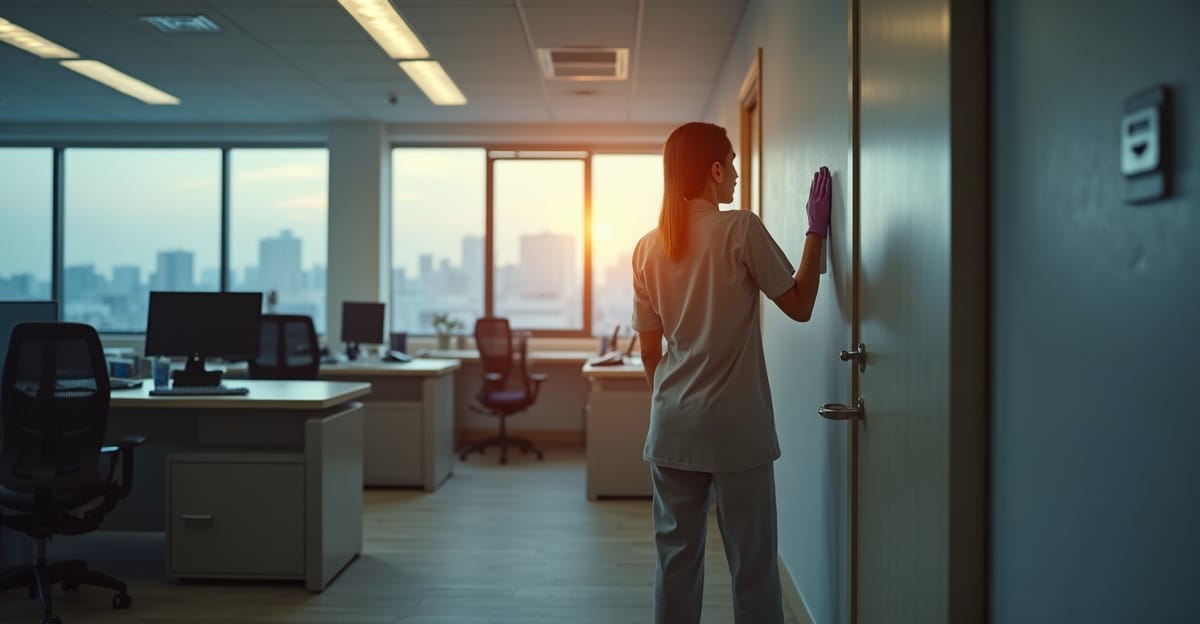
The most missed areas during office cleaning often sit beyond obvious surfaces. These blind spots create hygiene gaps that quick checks don’t catch. We see real operational risk from them. High-touch points, shared tools, secondary washroom surfaces, staff amenities, and low-visibility zones slip through routines. Those misses drive cross-contamination, staff complaints, and uneven results. We recommend setting clear scopes and checks to close those gaps.
Key Takeaways
- High-touch surfaces like door handles, switches, and lift buttons carry heavy contamination risk. Teams often miss them without clear daily task lists and sign-offs.
- Shared equipment such as keyboards, phones, and printer panels gets skipped due to unclear ownership or fear of damage. We advise assigning responsibility and using safe wipe protocols.
- Washrooms often receive fixture-level cleaning. Secondary surfaces like taps, dispensers, and partitions get ignored and spread germs without control.
- Kitchens and break rooms hide trouble spots. Appliance handles, cupboard fronts, and bin lids fuel hygiene and pest issues if routines miss them.
- Low-visibility and transition areas collect dust and marks over time. Clear routine and detail cycles keep these zones clean and consistent.
High-touch surfaces that carry the highest hygiene risk
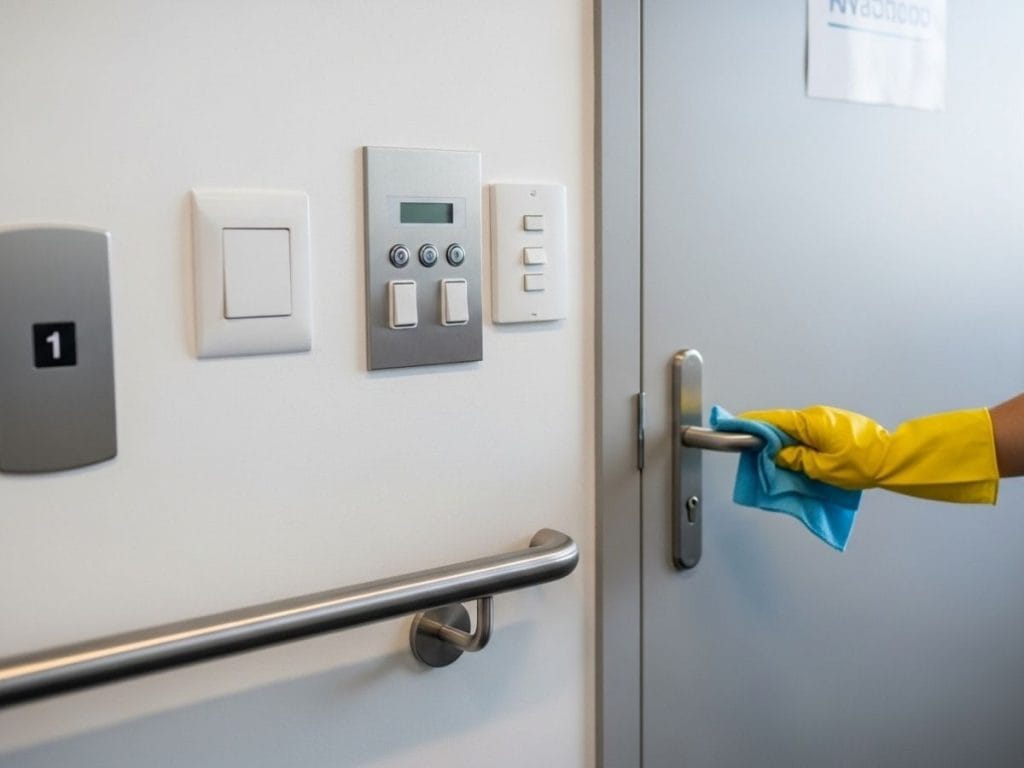
High-touch surfaces in offices create the most risk and receive the least attention, making high-touch area cleaning essential. These points often look clean during walk-throughs, which makes gaps hard to detect. Contact happens dozens of times a day, yet coverage is often inconsistent.
Door handles, light switches, lift buttons, handrails, shared control panels, and push plates at entry points all sit at the centre of common office cleaning mistakes. Missed wipes here increase cross-contamination and drive staff absenteeism, especially during flu season and outbreak periods, as outlined in CDC guidance on high-touch surface disinfection.
Professional commercial cleaning standards, including those promoted by ISSA’s workplace cleaning guidelines, treat these points as priority tasks, not add-ons. Clear scope definitions reduce ambiguity and lift outcomes. We often see improvements once teams align expectations with what’s typically covered in office cleaning services and ensure high-touch points appear on daily task lists.
Shared equipment and communal office tools
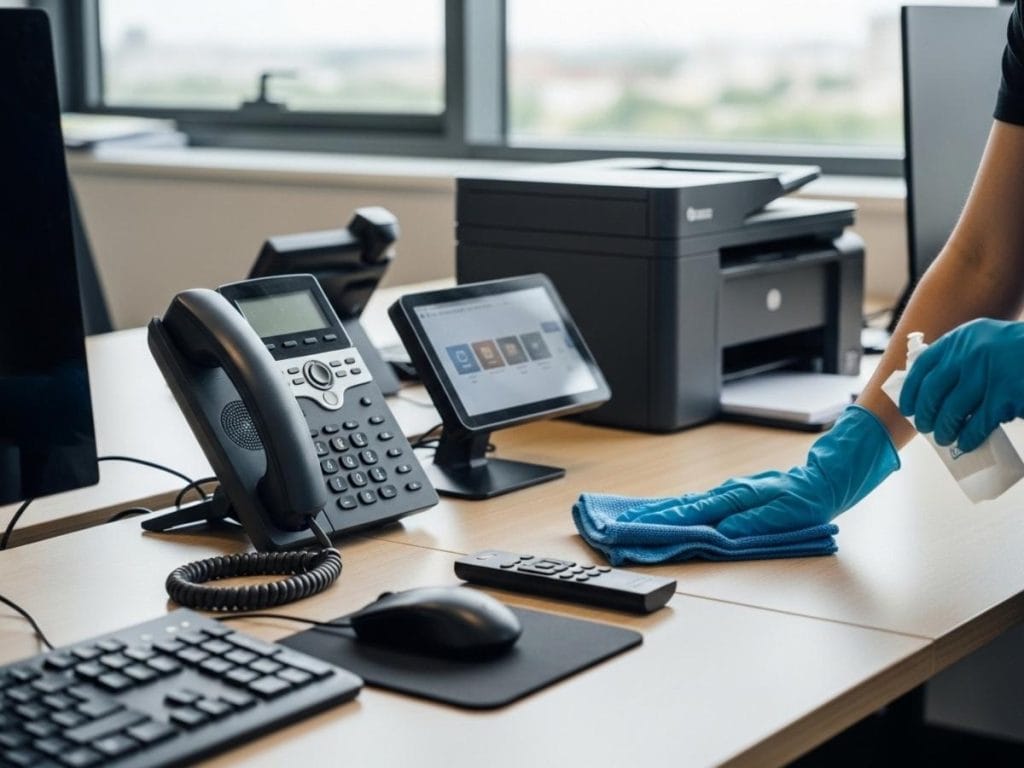
Shared equipment presents a hidden hygiene risk and a frequent source of staff complaints. Responsibility often feels unclear, or teams avoid items due to damage concerns. The result is inconsistent cleaning quality.
Keyboards, mice, phones, desk phones in shared workstations, printer panels, photocopier touchscreens, and meeting room remotes fall into this category. These tools see constant use and sit within workplace hygiene risk areas, as reflected in OSHA workplace sanitation standards, that are easy to overlook during routine schedules.
Clear inclusions and approved cleaning methods resolve this issue. A structured commercial office cleaning scope removes guesswork, protects equipment, and improves perceived hygiene standards across teams.
Washrooms beyond the obvious fixtures
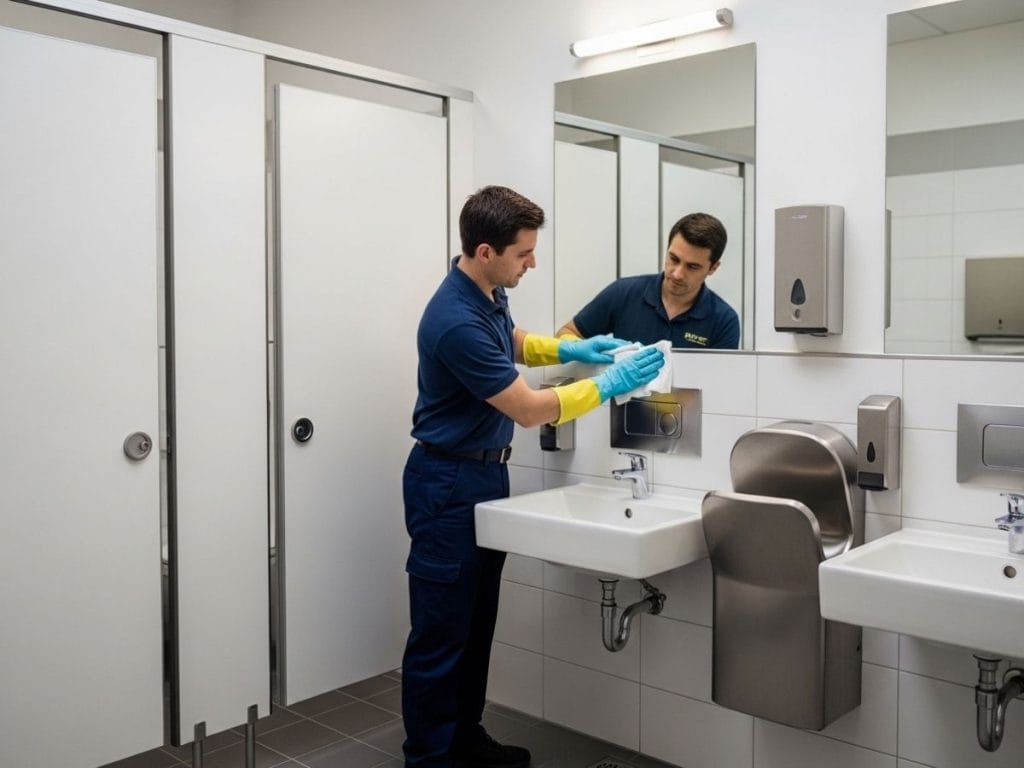
Most washrooms receive basic attention, but secondary surfaces are regularly skipped. These misses matter because washrooms strongly shape perceptions of professionalism and cleanliness.
Problem areas include cubicle doors, partition edges, flush buttons, tap handles, soap dispensers, hand dryers, baby change units, sanitary disposal lids, and surrounding wall tiles. Each sits within high-risk environments where germs spread quickly, consistent with World Health Organization guidance on surface hygiene in shared facilities.
These gaps signal misalignment with professional commercial cleaning standards. Consistent detail work across these surfaces reduces hygiene risk areas and limits repeat issues raised by staff or visitors. Understanding what commercial cleaning covers helps teams identify whether these details belong in daily, weekly, or periodic tasks.
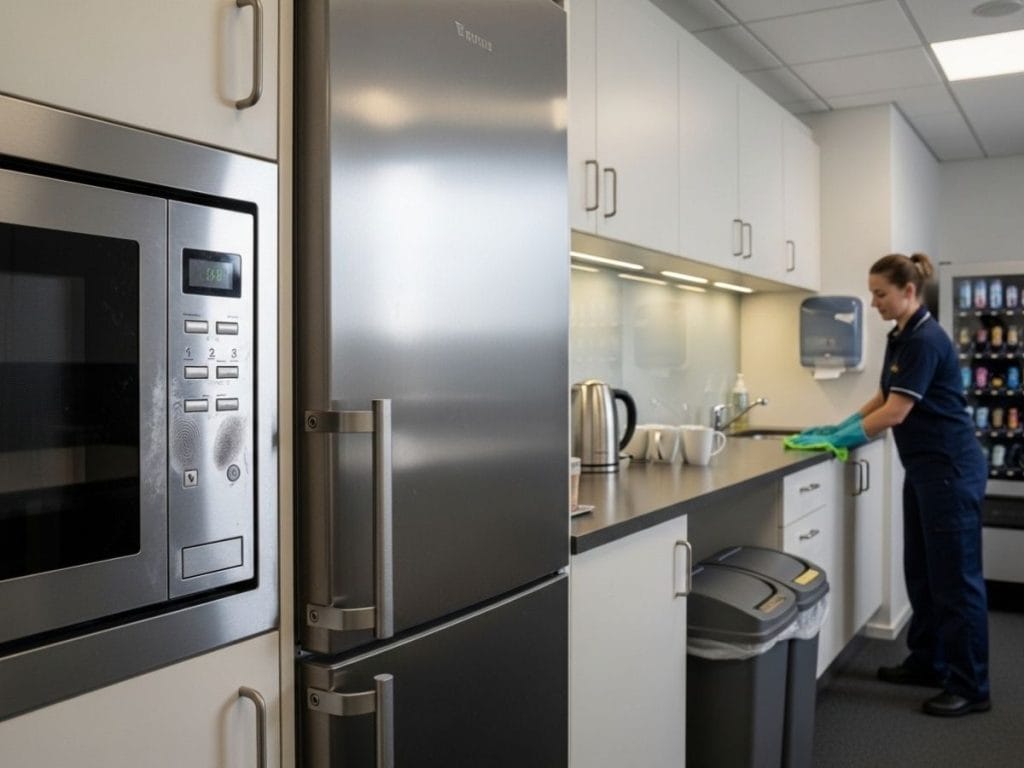
Kitchens, break rooms, and staff amenities that fall outside daily routines
Office kitchens often pass visual checks while hiding missed zones. These areas rely on both staff behaviour and defined cleaning scopes, which makes them easy to miss.
Fridge handles, microwave buttons, kettle handles, cupboard fronts, vending machine buttons, splashbacks, and waste bin lids are frequent problem points. Reduced cleaning frequency or unclear boundaries lead to odours, hygiene complaints, and pest risks.
Aligning routines with usage patterns fixes this quickly. Knowing how often offices need cleaning allows cleaning teams to prioritise busy staff areas without over-servicing low-use zones.
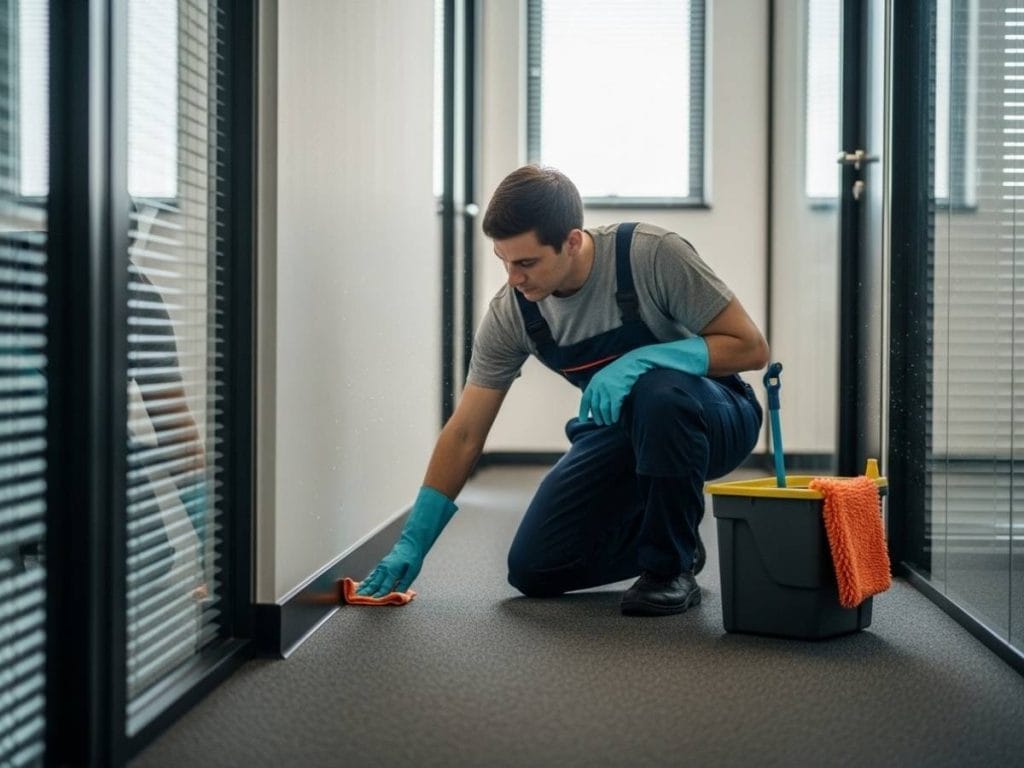
Vertical, low-visibility, and “out of sight” surfaces
Low-visibility surfaces affect air quality and long-term maintenance, as noted in EPA guidance on indoor air quality and dust control, even if they don’t attract immediate attention. Audits and inspections often reveal these misses.
Skirting boards, wall corners, door frames, partitions, glass edging, blinds, vents, and the space behind doors collect dust and marks over time. Left untreated, they undermine office cleaning quality checklists and raise questions about consistency.
Professional standards split these tasks between routine and detail cycles. Clarifying routine versus detail cleaning ensures these areas receive scheduled attention without disrupting daily operations.
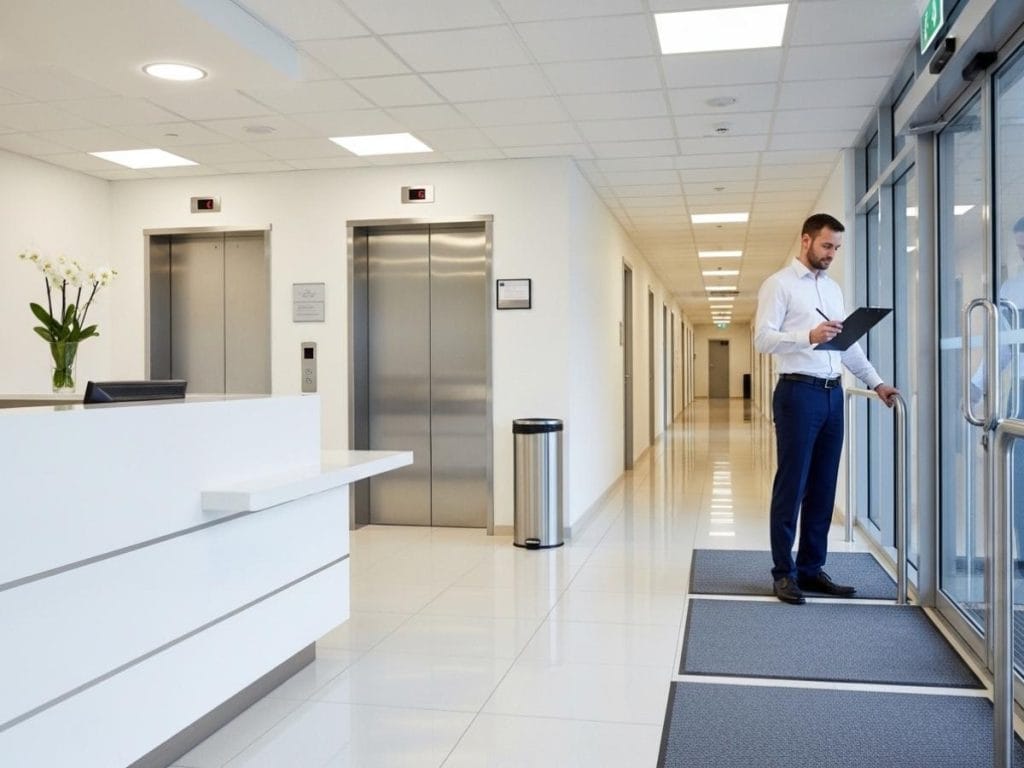
Transition areas and a practical checklist for audits
Transition zones experience heavy traffic yet often fall between assigned tasks. Reception counters, waiting areas, corridors, lift lobbies, stairwells, and entry mats shape first impressions and affect safety.
Office cleaning audit checklist
Use this scannable checklist to identify system gaps during audits, performance reviews, or contract discussions:
- Reception counters and sign-in points wiped daily
- Lift buttons, handrails, and lobby panels disinfected
- Entry mats cleaned and aligned to reduce dirt spread
- Corridors and stairwells checked for wall and skirting marks
- High-touch points consistent across all zones
- Shared equipment included in scope and schedules
- Washroom secondary surfaces detailed regularly
This approach supports professional commercial cleaning standards without assigning blame. Defined scopes, consistent schedules, and after hours office cleaning access often deliver the best results. Many offices benefit from after-hours cleaning services to keep transition areas clean without disrupting staff.
Where broader support is needed, we provide general commercial cleaning, industry-specific office cleaning services, and targeted solutions like sanitisation services. Clear expectations lead to consistent outcomes. For tailored scopes aligned with operational pressures, teams can request details through our commercial cleaning quote process.
Frequently Asked Questions
The most overlooked areas are high-touch but low-visibility surfaces. These include door handles, light switches, lift buttons, shared equipment controls, washroom dispensers, kitchen appliance handles, skirting boards, and wall edges. They often look clean during inspections, so they fall outside routine wipes unless they are clearly listed in daily or detail cleaning schedules.
High-touch surfaces are missed because they blend into the environment and are not always specified in cleaning scopes. Without clear task lists or checklists, cleaners focus on visible areas like desks and floors. This leads to inconsistent disinfection of items that are touched frequently throughout the day.
Yes, shared equipment requires regular cleaning because it carries a high risk of cross-contamination. Keyboards, phones, printer touchscreens, and meeting room controls are used by multiple people daily. When ownership is unclear or cleaning methods are not defined, these items are often skipped despite their hygiene risk.
Washroom cleaning often misses secondary surfaces rather than main fixtures. Commonly ignored areas include cubicle doors, partition edges, tap handles, flush buttons, soap dispensers, hand dryers, and sanitary bin lids. These surfaces are frequently touched and can spread germs if they are not included in routine cleaning tasks.
Offices can reduce missed areas by using clear cleaning scopes, audit checklists, and defined cleaning frequencies. Listing high-touch points, shared equipment, secondary washroom surfaces, and low-visibility zones ensures accountability. Separating daily cleaning from scheduled detail cleaning helps maintain consistent hygiene standards over time.