
How to Ensure Cleaning Safety in High-Traffic Areas
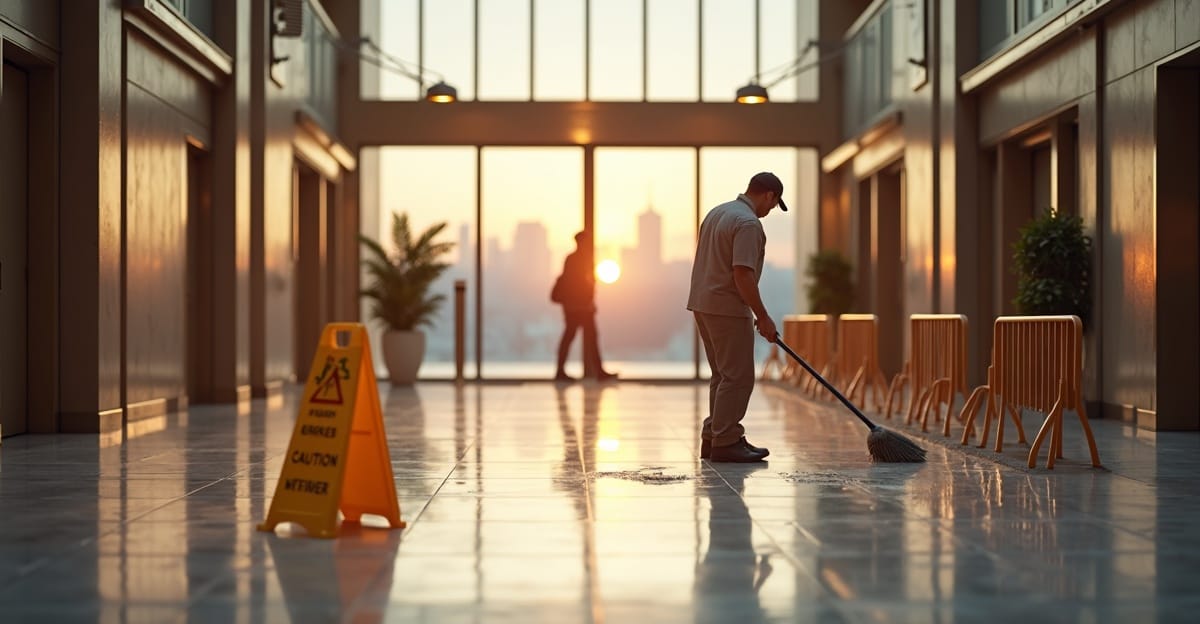
High-traffic zones such as entrances, lift lobbies, shared kitchens, and medical waiting rooms demand structured safety controls in commercial cleaning. Constant foot movement and limited downtime increase exposure to slips, contamination, and service disruption. We manage cleaning safety in high-traffic areas through clear risk assessments, controlled zoning, correct chemical handling, compliant signage, and documented WHS processes that reduce incidents while keeping operations running smoothly.
Key Takeaways
- High-traffic cleaning is risk management, with priority given to controlling slip hazards, cross-contamination, chemical exposure, and equipment risks.
We treat every high-movement space as a controlled risk environment. We focus on slip prevention, infection control, safe dilution and storage of chemicals, and correct equipment use to minimise harm. - Pre-clean risk assessments, Safe Work Method Statements, and accessible Safety Data Sheets support consistent and compliant operations.
We complete site-specific risk assessments before work begins. Our Safe Work Method Statements guide each task, and we keep Safety Data Sheets accessible to ensure safe handling and regulatory compliance. - Clear signage, physical barricades, low-moisture methods, and after-hours scheduling reduce exposure and disruption.
We position compliant signage and barricades before starting work. Our teams use low-moisture techniques where possible and schedule intensive tasks outside peak periods to limit public exposure. - Documented incident reporting and communication with facility managers strengthen accountability and audit readiness.
We log incidents immediately and share reports with facility managers. This documentation supports audits, strengthens transparency, and protects all stakeholders. - A reliable cleaning partner provides transparent documentation, trained staff, and structured systems tailored to high-movement commercial environments.
We provide clear records, trained technicians, and proven systems built for busy commercial sites. Our structured processes support safe, consistent outcomes without interrupting core business activities.
The Real Risks in High-Traffic Commercial Spaces
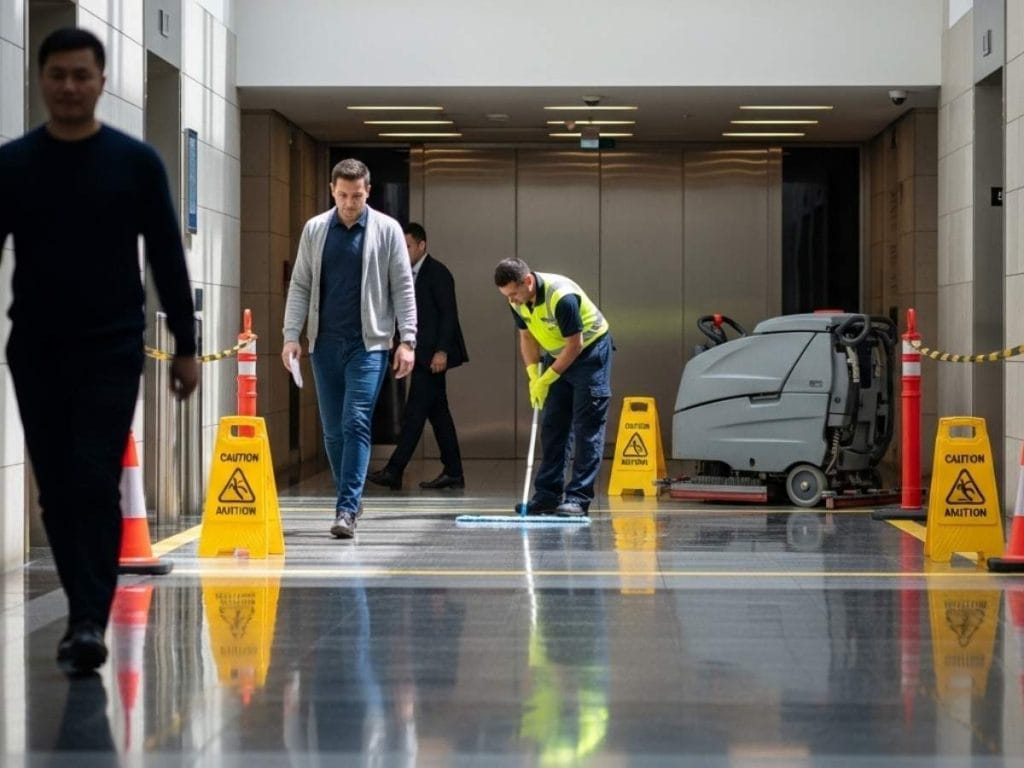
High-traffic areas in commercial settings include building entrances, lift lobbies, corridors, shared kitchens, bathrooms, medical waiting rooms, retail floors, and government service counters. These spaces handle constant movement and leave little room for error.
Cleaning safety in these zones is more complex because foot traffic rarely stops, especially when cleaning high-risk areas under constant use. Limited downtime increases pressure on cleaners and raises the chance of incidents. In these conditions, cleaning becomes risk management, not just presentation.
Several safety risks demand close control:
- Slip and trip hazards from wet floors, trailing cords, uneven surfaces, or poor signage
- Cross-contamination between zones, especially in shared offices and healthcare settings
- Incorrect chemical dilution, unsafe storage, or unlabeled containers
- Equipment left unattended or operated in congested areas
- Disruption during business hours that increases complaints and liability exposure
Slip and fall incidents are a common concern in commercial properties. Poorly placed signage or slow drying floors can expose building managers to claims. Controlling moisture levels and isolating work zones reduces that risk. Strong cleaning protocols directly support workplace safety outcomes.
Cross-contamination is another major issue. Shared kitchens, bathrooms, and waiting rooms require clear separation of tools and materials. In healthcare sites, higher controls apply. Our teams align with recognised infection control cleaning standards consistent with Australian Government infection prevention and control guidelines to reduce transfer between clinical and general areas.
Chemical handling also creates exposure if staff over-dilute or under-dilute products. Weak solutions compromise hygiene. Strong mixes can damage surfaces and irritate skin or airways. Equipment hazards, especially machine scrubbers in busy corridors, require supervision and defined work zones.
The operational consequences are real. Incidents lead to injuries, insurance claims, reputational damage, lost productivity, and closer WHS scrutiny. We approach high-traffic cleaning as structured risk control. Appearance matters, but safety comes first.
A Practical Risk Management Framework for High-Traffic Cleaning
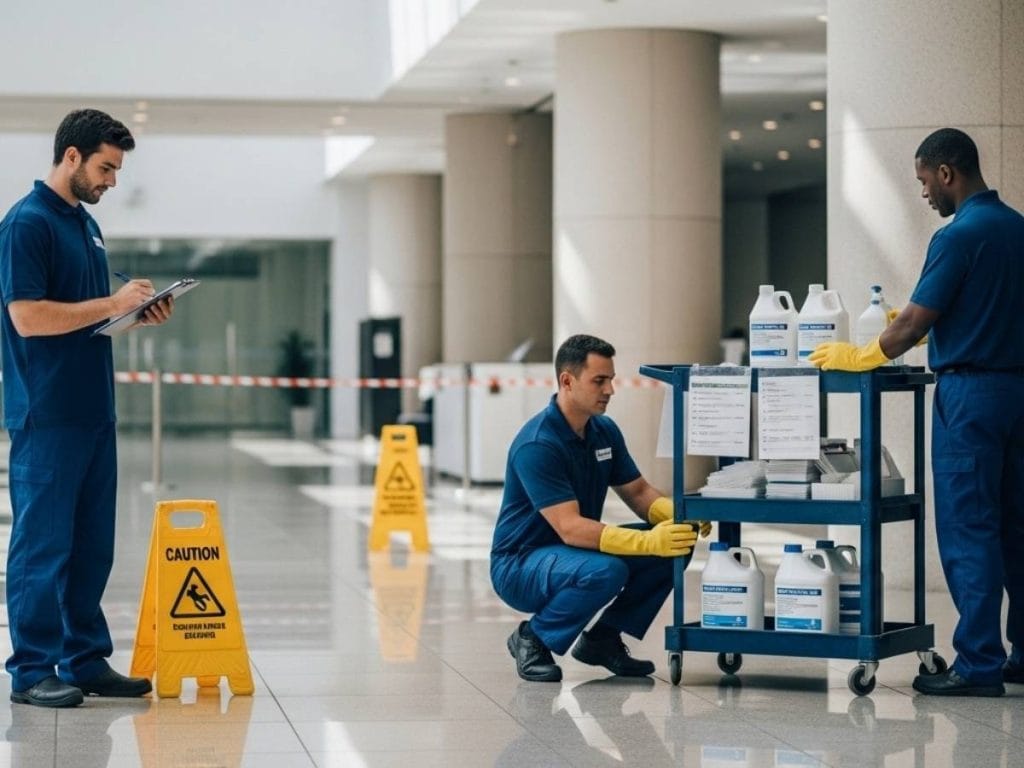
Effective control starts before any equipment is switched on. We conduct pre-clean site risk assessments prior to each shift in high-traffic environments. This allows us to adjust methods based on occupancy levels, events, and layout changes.
For higher-risk tasks such as machine scrubbing or chemical handling, Safe Work Method Statements (SWMS) guide the process in line with Safe Work Australia SWMS requirements. These documents outline hazards and required controls so teams operate consistently.
Every chemical on site must have an accessible Safety Data Sheet (SDS) as required under Safe Work Australia hazardous chemicals regulations. Staff need to understand correct dilution rates, storage requirements, and first aid procedures. This supports compliance and protects both occupants and cleaners.
Visible safety controls are essential. We install clear hazard signage that complies with Safe Work Australia workplace safety signage guidance. Where needed, we use physical barricades to prevent access until surfaces are dry.
Scheduling plays a key role. Staggered servicing reduces exposure. In many buildings, after-hours cleaning allows us to manage higher-risk tasks with minimal disruption. We also use low-moisture systems in busy corridors and lobbies to shorten drying times and reduce slip hazards.
Documented incident reporting processes protect property managers and tenants. All events, even minor near-misses, are recorded and reviewed. Clear communication with facility managers before, during, and after service keeps expectations aligned and prevents misunderstandings.
In day-to-day operations, we also distinguish between surface-level tasks and deeper periodic work. Understanding routine and detail cleaning helps set realistic schedules and ensures essential safety controls aren’t rushed during peak periods.
WHS Responsibilities and Commercial Cleaning Safety Standards
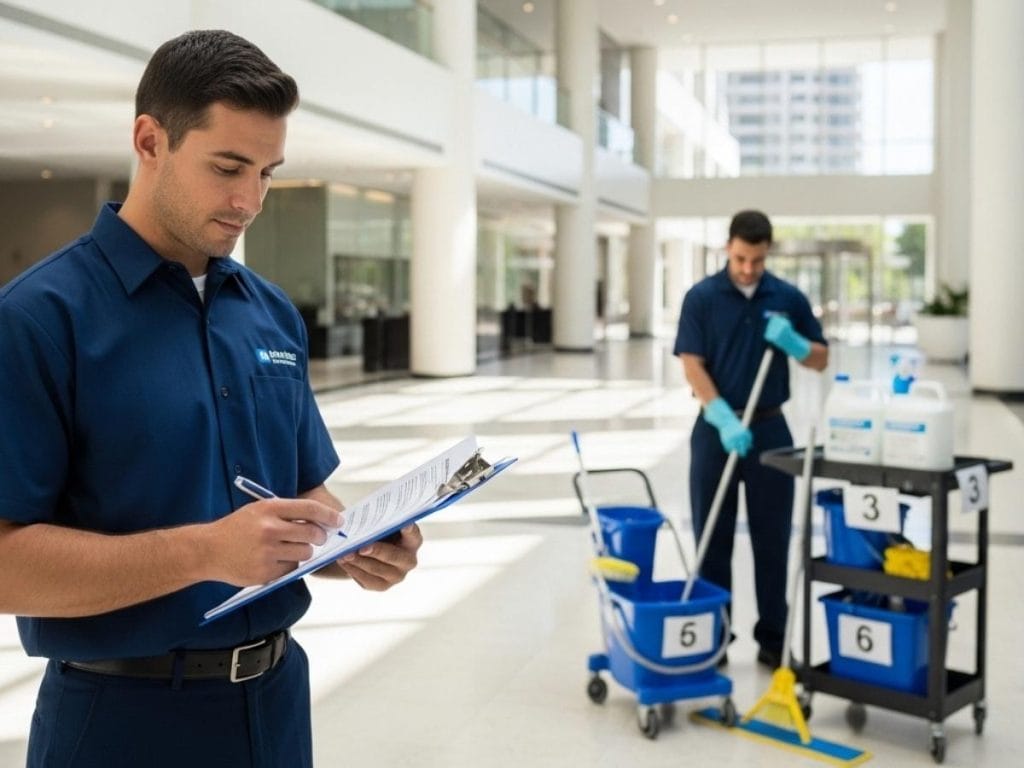
Work Health and Safety (WHS) obligations apply to both cleaning contractors and the organisations that engage them under Safe Work Australia’s primary duty of care framework. Businesses have a duty of care to provide a safe environment for workers, contractors, and visitors.
Responsibility for WHS compliance in cleaning is shared. A contractor must operate safely. The organisation must verify that systems are in place and suitable for its site conditions.
Decision-makers should request clear documentation before appointing a provider:
- Public liability insurance and workers’ compensation certificates required under WorkSafe Queensland employer obligations
- Current SWMS documents for relevant tasks
- Staff training and competency records
- Chemical registers and access to SDS
- Equipment inspection and maintenance logs
Documented commercial cleaning safety standards are far stronger than informal verbal processes. Written systems allow audits, demonstrate due diligence, and protect stakeholders during investigations.
Medium to large organisations benefit from governance-ready cleaning partners. Clear records simplify compliance reviews and support broader obligations under workplace hygiene laws. We align service delivery with recognised guidance outlined in workplace hygiene compliance practices so facilities remain audit-prepared.
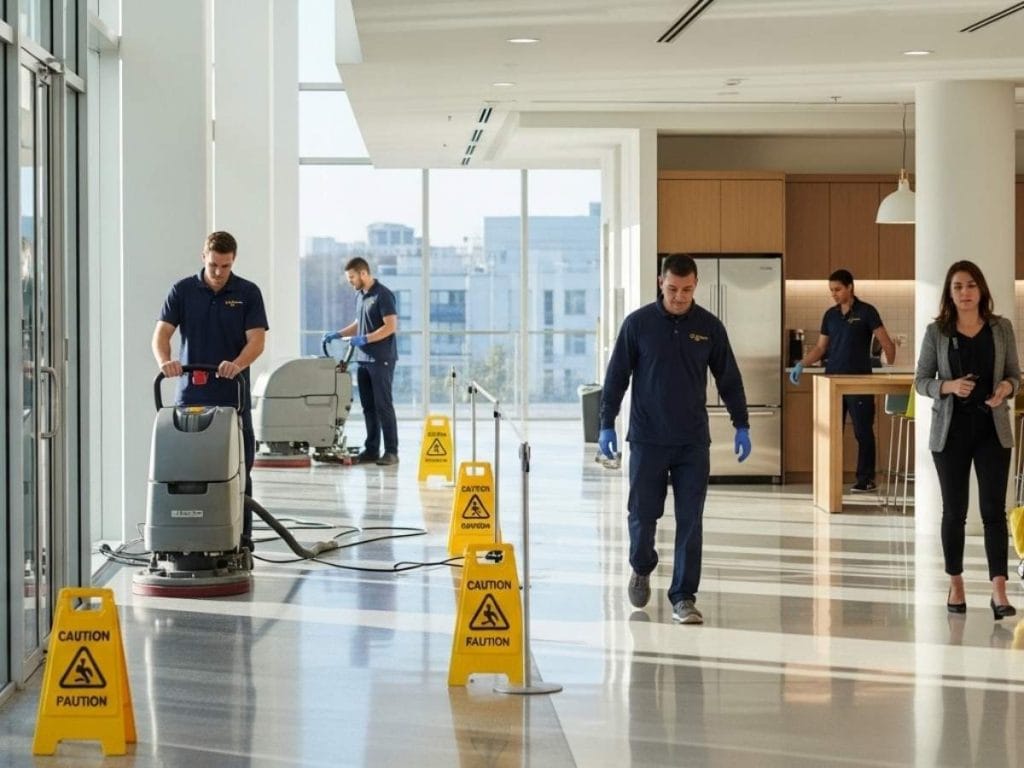
Minimising Disruption While Maintaining Safety Controls
High-traffic areas often sit at the centre of business operations. Cleaning must protect safety without slowing productivity.
We plan schedules around operational pressures and tenant expectations. Shared kitchens in corporate offices are best serviced outside lunch hours. Retail floors benefit from rotating floor care programs that maintain safe pedestrian flow instead of closing full sections at once.
Zoning strategies work well in large buildings. Rather than cleaning an entire level during peak movement, we isolate one section at a time. Clear barriers and signage guide occupants safely around temporary work zones.
Early-morning or evening servicing reduces exposure in entrances and lift lobbies. In busy facilities, our commercial cleaning services can be structured around these lower-traffic windows.
Noise and accessibility must be managed. Lifts, emergency exits, and disability access paths stay clear at all times. Equipment selection matters. For example, in spaces with heavy pedestrian use, planned floor cleaning reduces long-term hazards from worn or uneven surfaces.
Medical centres require stricter zoning. We separate clinical and non-clinical areas to prevent cross-contamination. Providers operating in healthcare settings must understand medical facility cleaning standards and apply appropriate controls.
Retail and public buildings also carry unique risk profiles. Teams experienced in retail shop cleaning know how to maintain safety during peak trading periods without disrupting customer movement.
The goal remains consistent: protect occupants while keeping operations running smoothly.
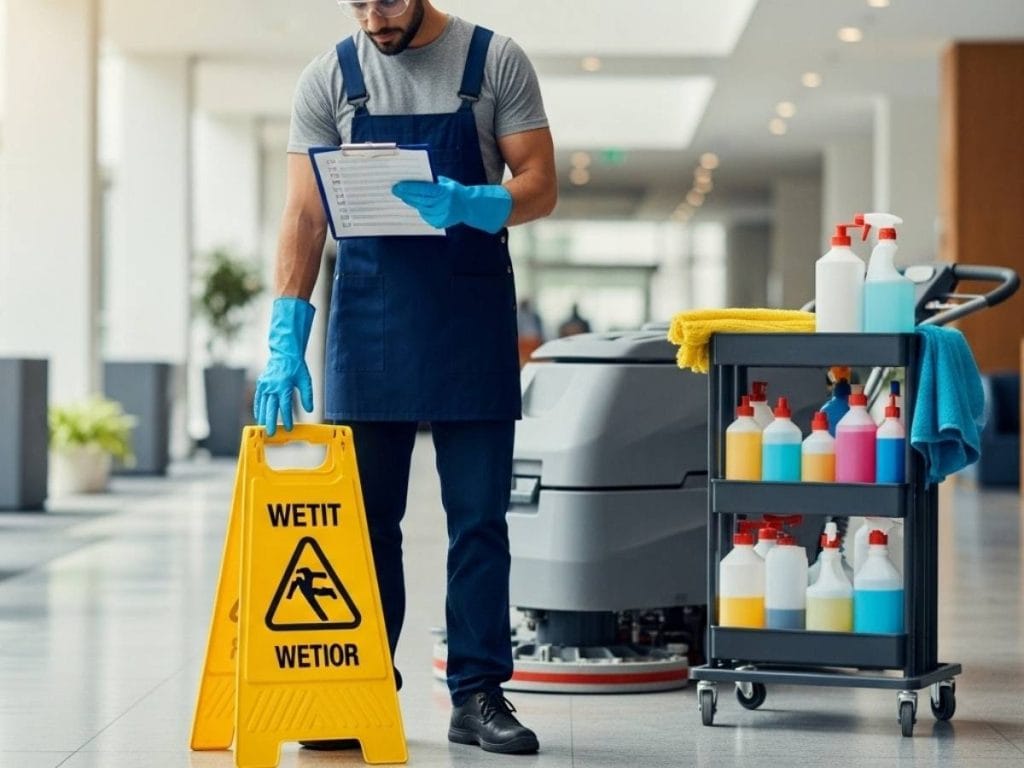
Safety in Commercial Cleaning Checklist for High-Traffic Areas
Use the following commercial cleaning service checklist to evaluate current high-traffic cleaning protocols or review contractor performance:
- Is a documented pre-clean risk assessment completed for high-traffic areas?
- Are wet floor signs and barricades placed correctly and removed once surfaces are dry?
- Are chemicals diluted, labelled, and stored according to SDS requirements?
- Do staff wear appropriate PPE for each task?
- Are cleaning machines inspected and maintained on schedule?
- Are high-risk tasks avoided during peak business hours where possible?
- Is there a defined communication process with facility management?
- Are incidents recorded and reviewed systematically?
- Are infection control standards applied in shared and clinical environments?
This checklist provides a practical reference point. It highlights gaps before they lead to injuries or complaints.
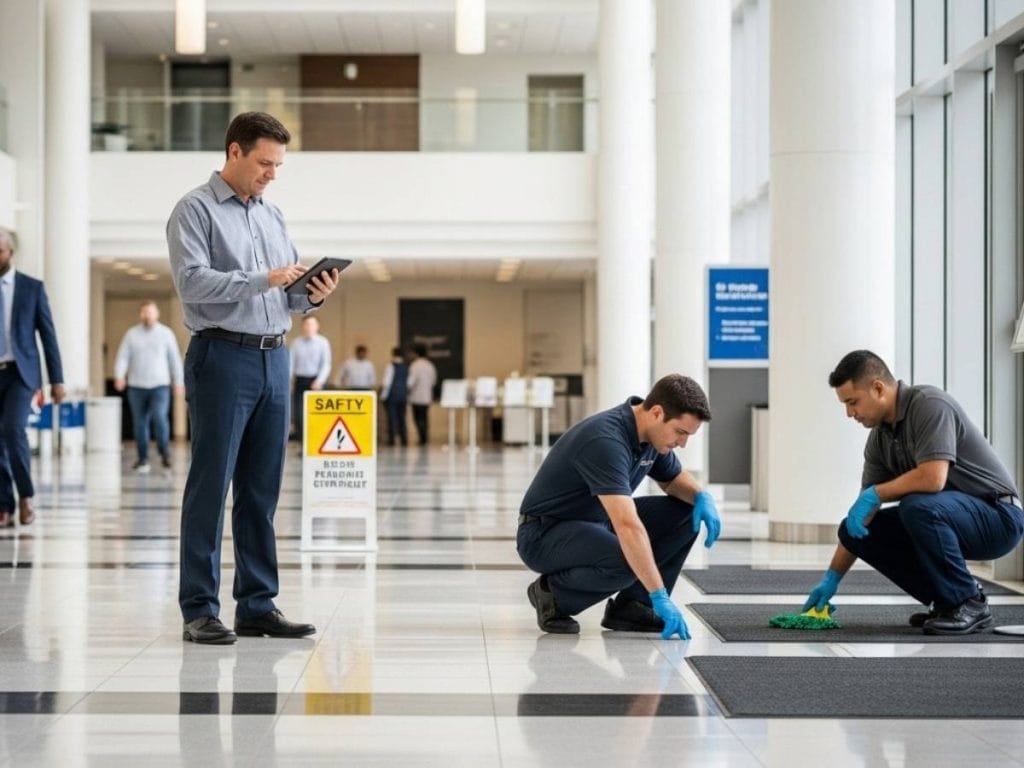
What to Look for in a Safe, High-Traffic Cleaning Partner
A reliable cleaning partner demonstrates structured risk management rather than reacting to problems after they occur. Clear systems, trained staff, and documented processes reduce uncertainty.
Transparency matters. Providers should supply SWMS documents, training records, insurance certificates, and equipment maintenance logs without hesitation. That level of openness builds trust and supports compliance.
Experience in commercial high-traffic areas is essential. Residential-style approaches don’t scale effectively in large offices, medical facilities, government buildings, or multi-site portfolios. Teams must understand movement patterns, tenant demands, and shared space dynamics.
Strong WHS compliance processes and minimal disruption scheduling distinguish dependable contractors. Services such as professional janitorial services should integrate reporting, supervision, and quality checks as standard practice.
We work across offices, healthcare environments, education facilities, and retail centres throughout Brisbane and the Gold Coast. Before engagement, we recommend a formal site review to identify current risks and practical improvements. Property managers can request a structured assessment through our commercial cleaning quote form to align safety controls with operational realities.
High-traffic cleaning demands planning, discipline, and accountability. With the right systems in place, organisations reduce incidents, protect their people, and maintain confidence in their facilities every day.
Frequently Asked Questions
The biggest risks include slips and trips, chemical exposure, cross-contamination, and equipment-related injuries. High-traffic environments increase these hazards due to constant movement and limited drying time. Managing safety in commercial cleaning requires structured risk assessments, clear signage, correct chemical handling, and controlled work zones to reduce incidents and protect both occupants and cleaning staff.
Businesses can reduce slip hazards by using low-moisture cleaning methods, placing compliant wet floor signage, and isolating work areas with barricades. Scheduling floor work outside peak traffic hours also lowers exposure. Fast-drying equipment and regular floor maintenance help prevent water pooling and surface deterioration, which are common causes of slip and fall incidents.
Proper chemical handling prevents injuries, surface damage, and compliance breaches. Incorrect dilution can weaken disinfectants or create harmful fumes. Safety in commercial cleaning depends on accessible Safety Data Sheets (SDS), labelled containers, trained staff, and secure storage. Following manufacturer instructions ensures effective cleaning while protecting workers and building occupants from avoidable exposure risks.
WHS compliance typically requires Safe Work Method Statements (SWMS), chemical registers, Safety Data Sheets, insurance certificates, and staff training records. These documents demonstrate that hazards have been identified and controlled. Maintaining clear records supports audits, protects property managers from liability, and ensures cleaning contractors operate within regulatory workplace health and safety standards.
Infection control is maintained by separating cleaning tools by zone, applying hospital-grade disinfectants where required, and following structured cleaning sequences. High-touch surfaces such as door handles, lift buttons, and shared kitchens need frequent sanitisation. Clear zoning between clinical and general areas reduces cross-contamination and supports hygiene standards in offices, medical facilities, and public buildings.