
What Are the Differences Between Office and Industrial Cleaning?
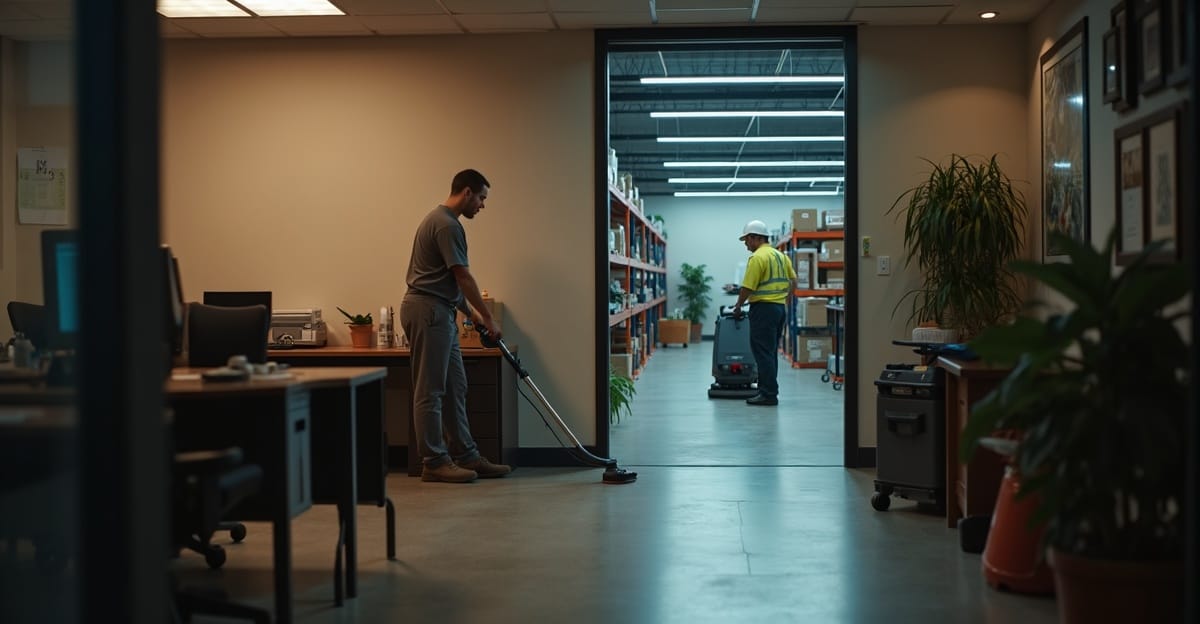
Understanding office vs industrial cleaning means recognising the clear operational, safety, and compliance differences between low-risk administrative spaces and high-risk production environments. We approach each setting with a distinct plan. This guide explains how equipment, staff training, WHS duties, scheduling, and pricing structures differ. Selecting the right service model protects productivity, safety, and regulatory compliance.
Key Takeaways
- We focus office cleaning on presentation, hygiene, and staff comfort in low-risk environments such as administrative offices, while we handle industrial cleaning in higher-risk areas like warehouses and factories.
- Our industrial cleaning teams use specialised equipment, conduct formal risk assessments, prepare SWMS documentation, and rely on trained staff with strong safety awareness and machinery knowledge.
- We schedule office cleaning after hours in most cases, while we align industrial cleaning with shift patterns, shutdown periods, or continuous 24-hour operations.
- We meet stricter compliance and insurance requirements in industrial settings because machinery, hazardous materials, and operational risks increase exposure.
- We structure industrial pricing higher because it demands advanced training, certified PPE, specialised systems, and greater risk management responsibility.
Office vs Industrial Cleaning: The Core Differences at a Glance
Office vs industrial cleaning involves two distinct service models. Each operates under different safety, compliance, and operational conditions.
Office cleaning services focus on administrative spaces, meeting rooms, amenities, reception areas, medical suites, and shared commercial environments. The priority is presentation, hygiene, and occupant comfort. These environments are typically lower risk and client-facing. Our corporate office cleaning services are built around maintaining professional standards while supporting daily operations.
Industrial cleaning services target warehouses, factories, manufacturing plants, distribution centres, and operational sites. This includes machinery areas, production zones, loading docks, and equipment surfaces. This is not simply heavier office cleaning. It involves higher risk profiles, specialised equipment, and strict safety protocols. Our industrial manufacturing cleaning addresses these specific risks.
Choosing the wrong model creates real consequences. Compliance gaps, insurance exposure, and operational disruption can occur if an office-focused team works inside a high-risk environment without the appropriate training or systems.
The table below outlines the operational differences:
| Factor | Office Cleaning | Industrial Cleaning |
|---|---|---|
| Environment Type | Administrative offices, meeting rooms, amenities, medical suites | Warehouses, factories, manufacturing floors, distribution centres |
| Risk Level | Low to moderate | Moderate to high |
| Equipment Used | HEPA vacuums, auto scrubbers, microfibre systems | Industrial sweepers, high-pressure systems, EWPs, degreasing equipment |
| Staff Qualifications | Hygiene training, site protocols | Safety training, machinery awareness, confined space knowledge |
| WHS Compliance | General WHS adherence | Formal risk assessments, SWMS, high-risk procedure controls |
| Scheduling | After-hours or early morning | Shift-based, shutdown, or 24-hour coordination |
| Commercial Cleaning Costs | Lower risk-related costs | Higher due to equipment, PPE, training, insurance |
Understanding these differences helps decision-makers choose the right commercial cleaning services model for their facility type and risk profile.
Environment and Risk Profile: Low-Risk Workspaces vs High-Risk Operational Sites
Office environments typically include carpeted areas, desks, kitchens, bathrooms, conference rooms, and reception spaces. Machinery exposure is minimal. The cleaning focus is dust control, sanitation, and maintaining a professional appearance. Our general commercial cleaning services align with these needs and follow structured checklists.
Industrial environments operate very differently. Warehouses and factories contain heavy plant and equipment, forklifts, oils and grease, dust extraction systems, high shelving, confined spaces, and loading bays. Warehouse cleaning and factory cleaning must account for contamination risks and site hazards.
Before starting industrial cleaning services, we complete formal risk assessments, site inductions, and job safety analysis processes. WHS compliance cleaning refers to working within Australia’s Work Health and Safety legislation, which requires employers and contractors to identify and control workplace risks. This includes managing slip hazards, chemical exposure, machinery interfaces, and restricted access zones.
Hazardous materials cleaning may also be required in certain facilities. Production by-products, chemical residues, or biohazards demand controlled handling. Cleaning compliance standards in Australia require structured documentation and clear procedural controls in these scenarios.
Improper cleaning in industrial spaces can create operational risks:
- Production downtime due to contamination
- Slip hazards from oils or residues
- Equipment damage
- Delays caused by unplanned shutdowns
Hybrid environments add another layer of complexity. A corporate office within a warehouse facility may require standard office cleaning in front-of-house areas, while the warehouse scope follows industrial safety protocols. Facility cleaning requirements must reflect both zones without compromising either.
Equipment and Methods: Standard Commercial Tools vs Specialised Industrial Systems
Office cleaning services rely on controlled, lower-risk equipment. These include HEPA-filter vacuums for dust control, microfibre cloth systems, auto scrubbers for hard flooring, standard sanitation chemicals, and touchpoint disinfection tools. This equipment supports hygiene without disrupting occupants.
Industrial cleaning services require specialised systems. Industrial sweepers and ride-on scrubbers manage large floor areas. High-pressure cleaning systems remove built-up grime. Degreasing equipment addresses oil contamination. Elevated work platforms (EWPs) allow safe high-access cleaning in warehouses. Confined space tools and extraction systems may be required inside production zones.
Equipment selection depends on surface type, contamination level, and risk exposure. Using the wrong tools can cause surface damage or create safety issues. For example, aggressive degreasers in an office kitchen may damage finishes. Conversely, a light-duty vacuum on a factory floor will not manage embedded debris.
We often support Brisbane and Gold Coast distribution centres that operate across multiple shifts. In one example, a large logistics site required after-hours mechanical sweeping to control dust without affecting forklift traffic. Coordinating through after-hours cleaning avoided disruption and reduced airborne debris during active production.
Industrial cleaning services demand methodical planning. Machinery cleaning protocols include isolation procedures and authority approval before access. High-access cleaning must follow fall prevention controls. These factors separate true factory cleaning capability from general commercial cleaning.
Staffing, Certifications and Compliance Obligations in Australia
Office cleaning teams focus on hygiene standards, presentation, and site protocols. Training covers chemical handling, infection control, and secure building access. Our janitorial services support ongoing maintenance in administrative environments.
Industrial teams require additional training. Industrial cleaning safety requirements include hazard identification, equipment operation, elevated work awareness, and confined space knowledge where applicable. Staff complete mandatory site inductions and must wear appropriate PPE such as high-visibility clothing, steel-capped boots, and respiratory protection where required.
Insurance and liability considerations increase in higher-risk facilities. Workers’ compensation and public liability coverage must reflect industrial exposure. Procurement managers should confirm that a provider’s policy aligns with site risk levels.
Documentation plays a central role in cleaning compliance standards across Australia. Safe Work Method Statements (SWMS), risk assessments, and incident reporting processes are essential for WHS compliance cleaning. Without this paperwork, site audits may expose compliance gaps.
Facility managers must assess whether their provider is equipped for industrial environments. A team trained for office cleaning services may not meet the facility cleaning requirements of a production site. The difference between service models is explored further in cleaning vs commercial cleaning guidance.
Scheduling and Operational Impact: Daytime Presentation vs Shift-Based Coordination
Office cleaning services are usually scheduled after hours or early mornings. This protects presentation standards and reduces disruption to staff and clients. The scope often follows structured checklists, similar to what is outlined in what is included in office cleaning resources.
Industrial cleaning services must align with shift patterns, production cycles, or shutdown windows. Many warehouses operate 24 hours a day. Cleaning inside active loading zones without planning can create safety risks. Brisbane commercial cleaners and Gold Coast commercial cleaning providers must coordinate around forklift traffic, inventory movement, and contractor access.
Downtime management is critical. Improper scheduling can delay production or restrict access to machinery. For multi-site premises and mixed-use facilities, blended scopes are required to separate administrative spaces from operational areas while maintaining consistent supervision.
Operations managers face performance targets and compliance audits. Cleaning must support those pressures rather than add to them. A structured coordination plan protects both productivity and safety.
Cost Structure and Procurement Considerations: Why Pricing Differs
Commercial cleaning costs vary based on labour skill level, site risk profile, specialised equipment, compliance requirements, frequency, and operating hours. Industrial cleaning services typically cost more due to advanced training, PPE, insurance coverage, and higher exposure risk.
Vague pricing models can hide important details. Square metre rates alone do not reflect machinery zones, high-access requirements, or hazardous materials cleaning. Office cleaning services generally follow predictable routines, while industrial sites require flexible planning and additional documentation.
Procurement teams should watch for signs that the wrong model is in place:
- Frequent safety incidents or near misses
- Inability to provide compliance documentation
- Staff not inducted to site requirements
- Cleaning tasks left incomplete in production zones
Before engaging commercial cleaning services, confirm the following:
- Does the provider supply SWMS and risk assessments?
- Are they insured for high-risk environments?
- Do they understand WHS compliance cleaning obligations?
- Can they support hybrid office and warehouse settings?
Clear answers protect against compliance exposure. A structured site walkthrough helps determine whether office vs industrial cleaning is the correct model for the facility. Facility managers can request a compliance-focused review directly through our quote request page to clarify scope, cost drivers, and risk coverage before engagement.