
What Equipment Do Professional Cleaners Use?
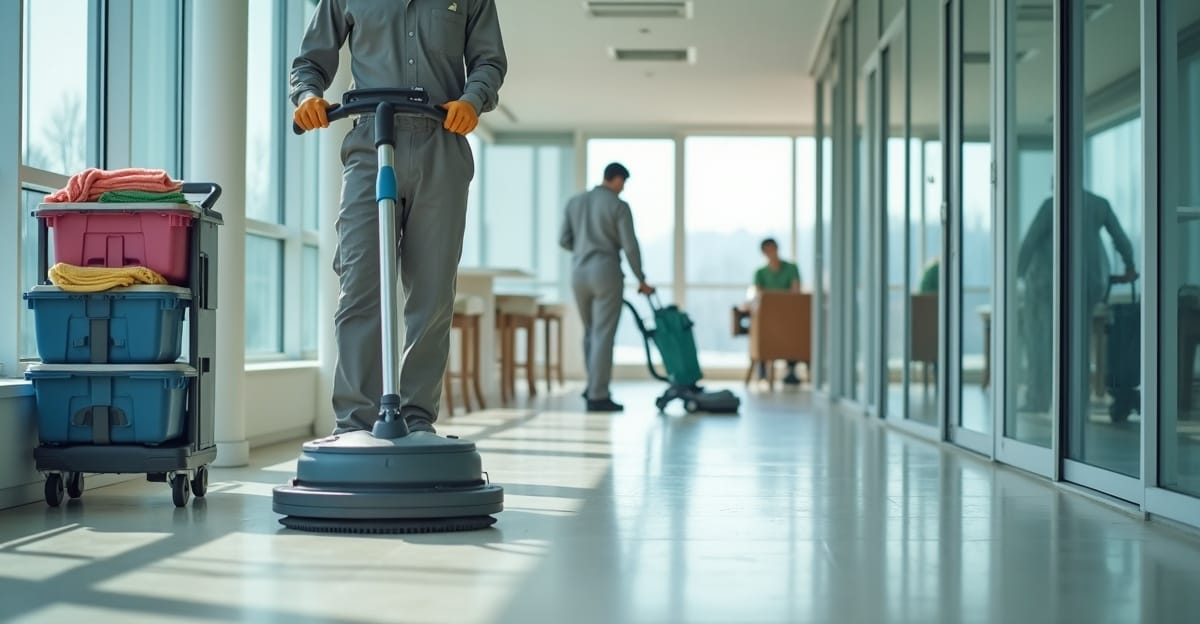
Professional cleaning demands more than basic tools. We rely on commercial-grade equipment to protect health, maintain safety, and keep facilities fully compliant across high-traffic sites. A detailed commercial cleaning equipment list shows exactly what professional cleaners use to achieve consistent, high-level results. From HEPA filtration vacuums and auto scrubbers to colour-coded systems and electrostatic sprayers, the right equipment directly shapes infection control, air quality, workflow efficiency, and risk management outcomes.
Key Takeaways
- A true commercial cleaning equipment list features industrial-grade machines built for durability, sealed filtration, and extended use across large facilities.
- HEPA vacuums, auto scrubbers, carpet extractors, and pressure washers support cleaner air, safer floors, and longer-lasting assets in busy environments.
- Microfiber tools and colour-coded systems limit cross-contamination and create organised, compliant workflows.
- Advanced tools such as electrostatic sprayers and high-reach systems improve infection control and surface coverage.
- Safety protocols, PPE, SDS documentation, and organised janitorial carts reflect strong compliance standards and dependable operations.
The Commercial Cleaning Equipment That Signals Quality and Compliance
A true commercial cleaning equipment list goes well beyond a mop and vacuum. It includes heavy-duty machines, high-filtration systems, controlled chemical application tools, and structured workflow equipment built specifically for commercial environments.
Domestic-grade tools aren’t designed for daily use across large, high-traffic sites. Commercial-grade systems deliver stronger motors, sealed filtration, higher durability, and greater infection control capability. They’re built to scale across multiple floors, buildings, and shifts without performance drop-off.
Professional cleaning equipment differs from household equipment in several clear ways:
- Motors are built for extended continuous operation.
- Filtration systems support air quality control, including HEPA standards.
- Tanks and components handle commercial chemical volumes.
- Parts are serviceable and replaceable, extending life cycle.
- Systems integrate into compliance cleaning standards and documented workflows.
Equipment choice directly affects hygiene standards. It determines how effectively dust is contained, bacteria are removed, and high-touch areas are disinfected. It also influences efficiency. Machines that clean large areas quickly reduce downtime and limit disruption during business hours.
Work Health & Safety requirements in Australian workplaces place clear responsibilities on hazard control, chemical management, and slip prevention. Equipment that includes sealed filtration, controlled water flow, correct signage, and documented SDS processes supports these obligations. Infection control principles are equally important, especially in offices with shared spaces, medical settings, and government facilities. Understanding infection control cleaning protocols helps clarify why equipment standards matter.
The cleaning equipment used by professionals reflects operational reliability and risk management. It shows whether a provider invests in consistent outcomes or relies on basic appearance-level cleaning. That distinction becomes clear when reviewing a commercial cleaning equipment list in detail.
Commercial-Grade Floor Cleaning Machines Built for High-Traffic Environments
High-traffic floors demand industrial cleaning equipment that delivers consistent results under pressure.
Core Machines That Define Professional Standards
A HEPA vacuum commercial system is a benchmark tool. It uses a sealed, high-filtration design capable of capturing 99.97% of particles as small as 0.3 microns. This improves indoor air quality and reduces airborne allergens. Offices, medical centres, and shared commercial buildings benefit from reduced dust recirculation. Using this level of professional cleaning equipment signals strong compliance awareness and care for occupant wellbeing.
An auto scrubber floor machine is another essential component of modern commercial floor cleaning machines. These machines scrub, extract, and dry in one pass. They control chemical and water usage while covering large floor areas efficiently. Burnishers and polishers complement them for hard floor restoration and shine maintenance. The outcome is a consistent finish, reduced slip hazards, and less disruption in busy workplaces. Floor assets also last longer when maintained using proper hard floor cleaning maintenance systems.
Carpet extraction machines use hot water extraction to remove embedded soil, allergens, and bacteria. Surface vacuuming isn’t enough in corporate offices and government buildings where carpets carry heavy foot traffic. Deep cleaning extends carpet life and maintains presentation standards. Planned commercial carpet cleaning services support both hygiene and long-term asset protection.
External areas also require the right equipment. Commercial pressure washers clean building entrances, car parks, and walkways. This reduces slip risks and improves site presentation. For many facilities, these industrial cleaning equipment choices directly support safety compliance and public confidence.
Microfiber, Colour-Coded Systems, and Cross-Contamination Control
Modern hygiene standards rely on systemised processes, not improvised tools.
A microfiber cleaning system uses high-density cloths and mops that trap soil mechanically rather than spreading it. These fibres lift and hold particles effectively, reducing reliance on harsh chemicals. The result is improved soil removal, lower chemical exposure for staff, and better cost control. This approach reflects evidence-based cleaning practices.
A colour-coded cleaning system assigns specific colours to different zones. For example, one colour may be dedicated to bathrooms and another to general office areas. This prevents cross-contamination between high-risk and low-risk environments. In locations using medical-grade cleaning equipment, this separation becomes critical to infection control outcomes.
Structured colour systems also create accountability. Staff can identify instantly whether tools are being used correctly. Multi-site properties benefit from this consistency. Compliance cleaning standards become easier to maintain across large portfolios when commercial cleaning tools are organised and documented.
Facility managers gain operational reassurance when processes align with recognised hygiene principles. Clear systems reduce risk, simplify training, and maintain uniform outcomes across all serviced areas. These practices often form part of broader janitorial cleaning services that support daily building operations.
Advanced Disinfection and High-Reach Capabilities
Heightened hygiene expectations across Australian workplaces have increased demand for advanced disinfection systems.
Electrostatic sprayer cleaning technology applies a charged disinfectant mist that wraps evenly around surfaces. This improves coverage on complex shapes and high-touch areas. Professionals use this tool to increase consistency and reduce application time. In medical clinics, high-density offices, and shared facilities, this method strengthens infection control processes. Integrated workplace disinfection services often include this capability.
High-reach cleaning tools also play a critical role. Extension poles and specialised attachments allow safe access to vents, ceilings, ducting, and light fittings. Removing dust from elevated areas supports indoor air quality and reduces accumulation that can affect sensitive environments.
Equipment choice connects directly to measurable outcomes. Improved hygiene standards reduce contamination risks. Cleaner air supports occupant comfort. Reliable disinfection supports workforce wellbeing and reduces absenteeism disruption. Public-facing organisations benefit from visible diligence and strengthened confidence.
Many managers operate under time constraints and budget pressure. Equipment that speeds processes while maintaining compliance helps protect daily operations without unnecessary downtime.
Safety, Compliance and Structured Workflow Systems
Professional cleaning equipment supports risk management, not just surface appearance.
Janitorial carts act as structured workflow systems. These mobile stations separate tools, cloths, and chemicals clearly. Staff move efficiently between zones without unnecessary backtracking. This reduces downtime and reinforces a professional site presence. It also limits cross-contamination by design.
Safety and compliance equipment is equally important. PPE such as gloves, masks, and eye protection aligns with Work Health & Safety requirements. Wet floor signage reduces slip hazards during active cleaning. SDS management systems provide transparent access to chemical safety data, supporting regulatory compliance and informed handling.
Documented processes strengthen accountability. Clear equipment standards and an organised office cleaning equipment checklist show whether a provider prioritises compliance cleaning standards. This matters in medical settings, government offices, and high-traffic commercial premises where risk exposure is higher.
Understanding office and industrial cleaning differences also clarifies why certain industrial cleaning equipment is necessary in more demanding environments. Larger facilities require heavier-duty systems and additional safety controls.
Comprehensive commercial cleaning services rely on structured equipment, trained operators, and documented safety systems. Without these foundations, consistency becomes difficult to maintain.
How to Use a Commercial Cleaning Equipment List to Evaluate Providers
A detailed commercial cleaning equipment list provides a practical way to assess capability before engaging a contractor.
When reviewing a provider, consider asking:
- Do they use a HEPA vacuum commercial system for dust control?
- Do they operate auto scrubber floor machines for large areas?
- Is there a documented colour-coded cleaning system?
- Are advanced disinfection tools such as electrostatic sprayer cleaning available when required?
- How are PPE standards and SDS compliance managed across sites?
Clear answers indicate structured service delivery. Vague responses suggest limited investment.
Red flags are equally important to recognise. Reliance on domestic-grade tools, absence of workflow systems, or lack of documented infection control processes signal potential inconsistency. Minimal investment in commercial cleaning tools often leads to variable outcomes and higher long-term risk.
Procurement decisions shouldn’t focus on price alone. Equipment investment reflects reliability, scalability, and operational consistency. It also shows whether a cleaning partner understands compliance obligations and workplace pressures.
Facility managers comparing providers often look for guidance on what to expect from a cleaning company and the scope of what is included in office cleaning. These resources help align equipment capability with service expectations.
At Aus Pro Commercial Cleaners, we operate with professional-grade systems built for commercial performance. We prioritise compliance, structured workflows, and dependable results across every site we service. Organisations reviewing their current provider can request a cleaning assessment to evaluate whether existing equipment standards meet operational and compliance needs.