
How to Align Cleaning Plans With Business Operations

We align cleaning plans with daily operations through structured coordination that prevents workflow disruption, audit failures, and excess labour costs. We map cleaning tasks to real-time building use, peak activity periods, compliance rules, and security protocols. This approach protects productivity and keeps hygiene standards consistent across every shift.
Key Takeaways
- Poorly timed cleaning disrupts productivity, increases complaints, and creates compliance and security risks.
- Mapping cleaning to peak hours, high-traffic zones, and regulatory requirements supports operational stability.
- Layered scheduling, including after-hours and daytime support cleaning, reduces noise, access issues, and rework.
- Clear communication, controlled site access, and documented audit processes strengthen compliance and accountability.
- Performance should be measured against reduced disruptions, improved audit outcomes, and predictable labour costs.
Why Misaligned Cleaning Disrupts Productivity and Increases Risk
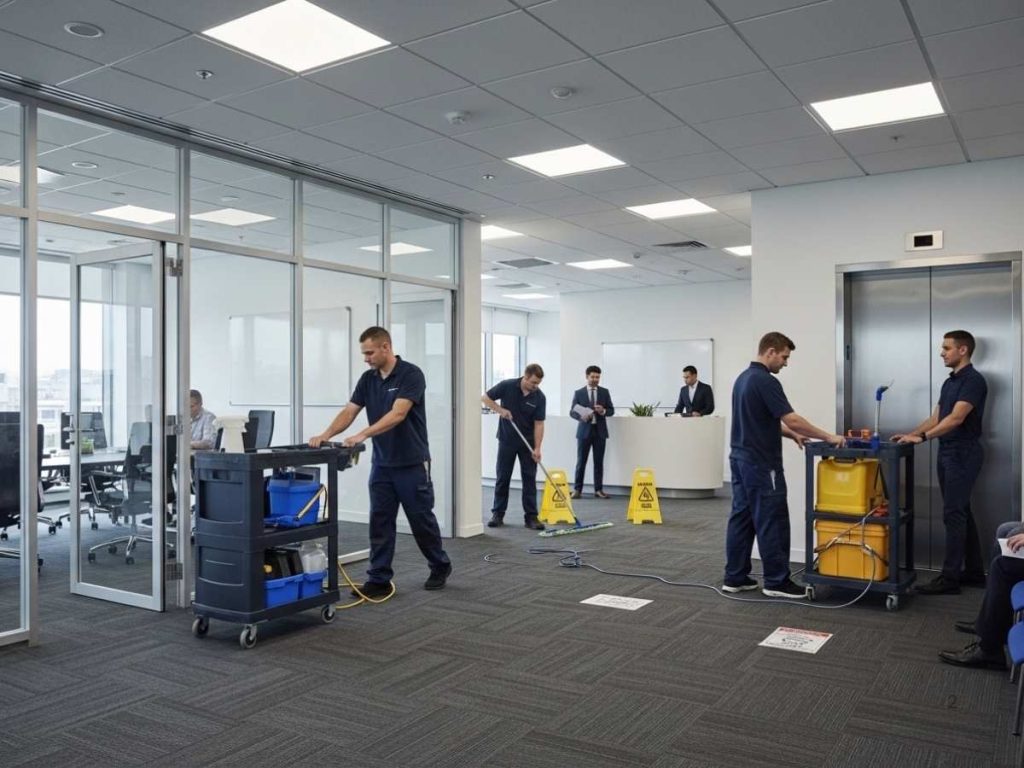
Cleaning should support daily operations, especially when businesses need to avoid disruption when changing cleaning companies. If syncing cleaning with operations isn’t planned properly, it quickly creates disruption instead of solving problems.
Poor timing leads to real operational issues. Cleaning teams working during peak hours can interrupt meetings, block access to boardrooms, or create workplace interruptions that affect productivity. Service lifts get tied up moving equipment while tenants move stock. Reception areas become restricted right when visitor traffic is highest.
Those disruptions affect productivity. Staff lose time relocating. Managers field unnecessary complaints. Tenants question site management decisions.
Risk also increases. Misalignment can lead to:
- Failed internal or external audits compliance audits
- Inconsistent hygiene standards across high-traffic zones
- Increased corrective call-outs
- Reputational damage
- Wasted labour spend due to rework
Security concerns often go unnoticed until something goes wrong. Cleaners overlapping with confidential meetings create privacy risks. Uncontrolled key or access card handling exposes liability. Government buildings require strict protocols, and government building cleaning needs make cleaning audit readiness essential rather than optional.
Industry requirements vary significantly. In corporate offices cleaning, the priority is minimal disruption and predictable office cleaning schedule planning. Medical sites require stricter timing controls aligned with patient movement and medical cleaning services standards. Government facilities place strong emphasis on secure access procedures and documented compliance processes.
Cleaning without operational disruption requires planning that respects how each site actually functions. That starts with mapping cleaning activity against real workflows.
Mapping Cleaning to Operational Workflows and Peak Activity Periods
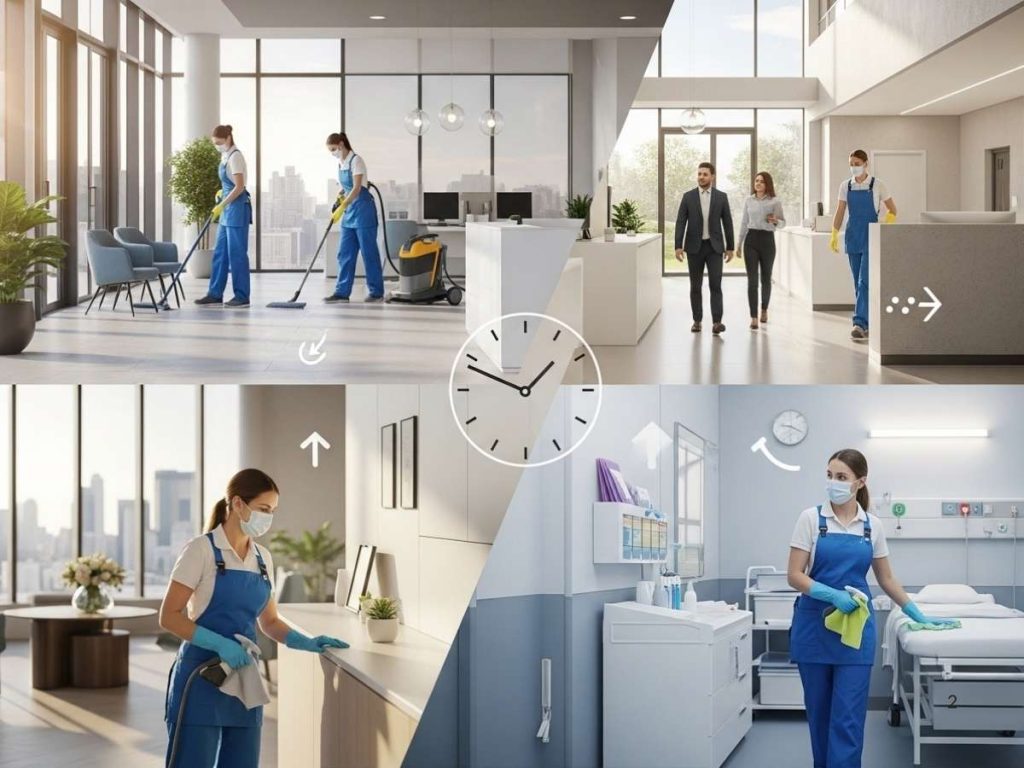
Operational alignment begins with understanding how the building operates hour by hour. A practical framework can be applied across sectors to ensure facility cleaning coordination supports operations rather than competes with them.
Assess Flow, Risk Zones and Compliance Requirements
Effective coordination follows three core steps:
- Assess operational flow and peak activity periods: shift changes, tenant arrivals, visitor waves, patient blocks, or public counter hours.
- Identify high-traffic or high-risk zones: receptions, bathrooms, lifts, shared kitchens, loading docks, clinical rooms.
- Map regulatory and audit requirements by site type.
A clear high-traffic area cleaning strategy prevents friction. Reception floors may need early morning servicing. Washrooms may require daytime touchpoints. Meeting rooms should be reset before business peaks, not during them.
Understanding how do cleaners reduce disruption during business hours starts with aligning cleaning schedules to support productivity. Teams operate smoothly. Staff focus on core work instead of avoiding cleaning equipment or reporting missed tasks.
Practical examples show how this works.
A corporate office might schedule staggered after-hours rotations, avoiding the 8am–10am peak when staff settle in. Teams handle vacuuming and machine scrubbing before the morning rush.
A medical site structures cleaning between patient appointment blocks. This protects infection control standards and supports strict medical facility cleaning requirements without interrupting consultations.
A multi-tenant government building coordinates structured floor-by-floor servicing. Public counters remain accessible during service hours while back-of-house zones are addressed separately.
Clear mapping of cleaning to workflow transforms cleaning from a background risk into a stable operational support function.
Structuring Commercial Cleaning Schedules for Minimal Disruption
Strong commercial cleaning schedules are structured around how a building operates, not based on generic frequency templates.
A balanced approach typically includes three layers.
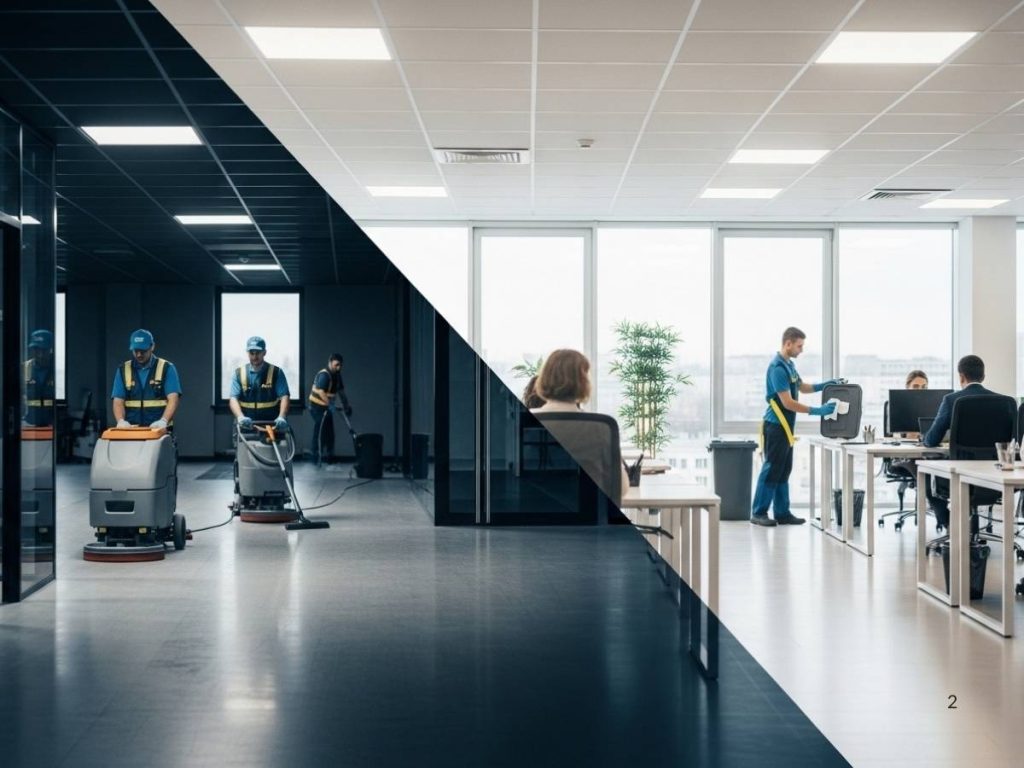
- After-hours commercial cleaning for vacuuming, machine scrubbing, detailed restroom cleaning, and bulk waste removal. These higher-noise or equipment-heavy activities sit outside trading hours. Learn more about after-hours commercial cleaning and how it protects productivity.
- Daytime support cleaning focused on touchpoints in high-traffic zones, including spot cleaning, restroom resets, and waste checks.
- Demand-based cleaning services that provide flexibility during seasonal peaks, large events, or temporary occupancy shifts.
Flexibility must be structured. In practice, this includes staggered shifts, split teams covering separate zones, rotating rosters, and scope adjustments that reflect site-specific usage patterns.
Noise management is part of that structure. Floor machines operate outside trading windows. Bin collection avoids peak tenant movement. Equipment storage locations stay clear of emergency exits and public corridors.
Cost control improves at the same time. Predictable labour allocation supports preventative maintenance strategies that reduce operational costs. Clear planning cuts unnecessary call-outs. Resource use becomes more efficient, supporting long-term value.
Facility managers reviewing what a cleaning schedule should include will find that operational mapping sits at the centre of effective office cleaning schedule planning.
Well-built commercial cleaning schedules protect workflow, compliance, and budget control together.
Communication, Security and Compliance Protocols That Support Operations
Operational alignment depends on process discipline. Without clear communication and security controls, even a well-planned schedule can fail.
Structured alignment requires:
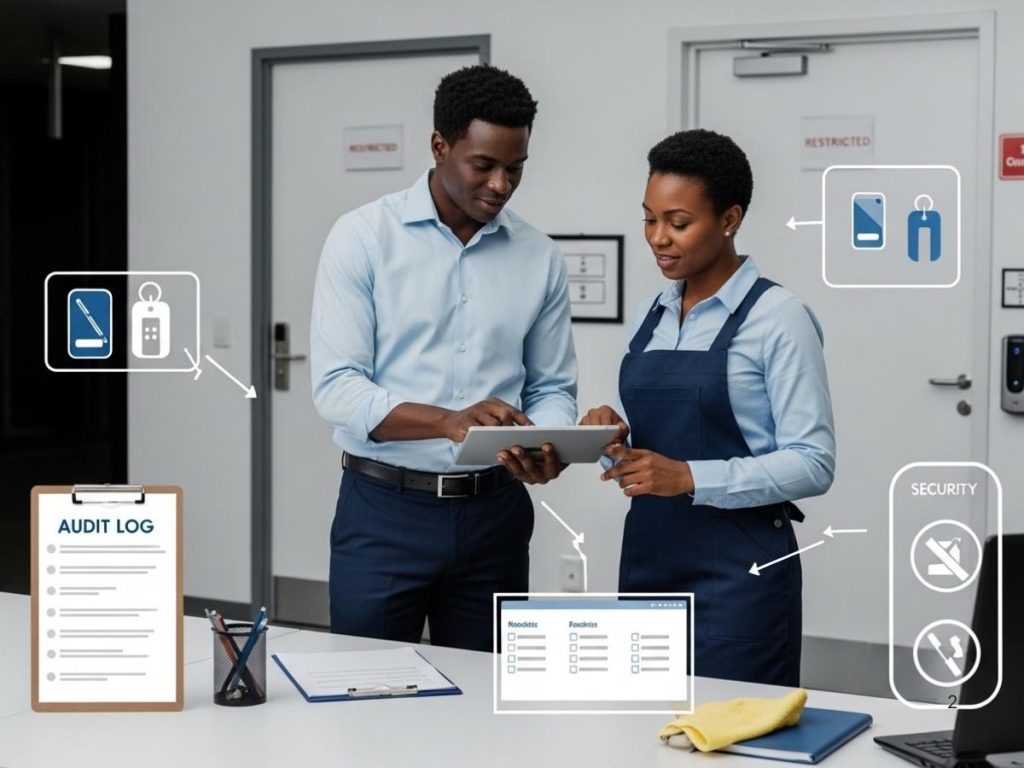
- Clear site access procedures and secure key or card handling systems.
- Defined communication channels between site managers and cleaning supervisors.
- Escalation pathways for urgent hygiene issues.
- Documented cleaning audit readiness with inspection and reporting logs.
Commercial cleaning compliance becomes visible through documentation. In medical and government environments, structured reporting strengthens traceability. Audit trails confirm task completion. Incident reports are recorded and resolved. Supervisory checks reinforce consistency.
Security protocols must match site requirements. Access zones should be clearly defined. Restricted rooms require authorisation controls and secure access management procedures. Confidential meeting areas remain protected.
Cleaning service contingency planning also plays a critical role. Absentee coverage plans prevent service gaps. Surge-response protocols allow rapid mobilisation during outbreaks or major public events. Resource adjustments can be activated without disrupting core services.
These systems build confidence across stakeholders. Audits run more smoothly. Risk exposure decreases. Operations teams trust that cleaning supports their objectives instead of interrupting them.
Facility cleaning coordination becomes a structured operational partnership rather than a reactive service arrangement.

Evaluating Whether Your Current Provider Is Truly Aligned With Operations
Alignment should be measurable. Procurement teams and facility managers can assess performance using a practical checklist.
Consider the following:
- Are cleaning tasks mapped against peak business hours?
- Is there a documented high-traffic area cleaning strategy?
- Are compliance requirements actively reviewed and updated?
- Is after-hours commercial cleaning structured around the trading schedule?
- Are contingency and escalation plans clearly defined?
- Are performance metrics tracked, including complaint frequency, corrective call-outs, and audit outcomes?
True syncing cleaning with operations goes beyond task completion. It delivers cleaning without operational disruption.
Performance should also link to measurable outcomes: reduced complaints, fewer emergency call-outs, predictable labour costs, cleaner audit results, and stronger long-term partnerships.
Understanding how to measure ROI on commercial cleaning services helps clarify whether current arrangements justify their cost.
Across Brisbane and the Gold Coast, structured operational alignment consistently makes the difference. Effective commercial cleaning services must reflect site-specific pressures, regulatory requirements, and real-world workflow demands.
Decision-makers reviewing Brisbane commercial cleaning services providers should look beyond promises. Alignment should be documented. Schedules should reflect trading hours. Compliance processes should be visible.
When cleaning integrates seamlessly with operations, businesses operate without friction. Productivity stabilises. Audit confidence improves. Costs remain controlled. That is how cleaning becomes a true operational asset rather than a daily disruption.
Frequently Asked Questions
Syncing cleaning with operations means scheduling cleaning tasks around how a building actually functions throughout the day. Instead of fixed generic schedules, cleaning is planned according to peak business hours, staff movement, and high-traffic areas. This approach prevents disruptions, maintains hygiene standards in busy zones, and ensures cleaning activities support productivity rather than interfering with daily operations.
Syncing cleaning with operations reduces interruptions that can affect employee focus and workflow. When cleaning occurs during peak business hours, it can block access to meeting rooms, create noise, or slow movement in shared spaces. Aligning cleaning schedules with quieter periods or low-traffic times keeps workspaces accessible and helps businesses maintain consistent productivity throughout the day.
Facility managers can sync cleaning with operations by analysing building usage patterns, identifying high-traffic zones, and scheduling tasks accordingly. After-hours cleaning is typically used for equipment-heavy work like floor scrubbing, while daytime teams handle quick touchpoint cleaning in busy areas. Clear communication with cleaning supervisors and documented schedules also help maintain alignment with operational needs.
Yes, daytime cleaning can support syncing cleaning with operations when it focuses on targeted tasks in high-traffic areas. Activities such as restroom checks, waste removal, and quick surface cleaning help maintain hygiene throughout the day. These tasks should be brief and strategically timed to avoid busy periods, ensuring staff and visitors are not disrupted.
When cleaning schedules are not aligned with operations, businesses may experience disruptions, complaints, and inconsistent hygiene standards. Cleaning during busy periods can block access to workspaces, create noise, and slow employee movement. It can also lead to audit failures, security risks, and unnecessary labour costs caused by repeated work or emergency cleaning requests.