What’s the Role of Feedback in Cleaning Performance?

Using feedback to improve cleaning turns routine service delivery into a measurable function that supports performance, compliance, and accountability. We treat cleaning as an operational discipline, not a background task. In commercial, medical, and government settings, we rely on structured feedback systems to reveal gaps, strengthen quality control, and reduce operational risk through documented inspections and corrective actions.
Key Takeaways
- Structured feedback shifts cleaning from reactive complaint handling to measurable performance management that we can track and improve.
- Documented inspections, scored assessments, and defined KPIs strengthen accountability and prepare us for compliance reviews.
- Consistent reporting and trend analysis help us spot recurring issues across single sites and large portfolios.
- Clear escalation procedures and retraining processes cut down repeat non-conformances and protect service standards.
- Transparent vendor performance monitoring supports contract reviews, audits, and long-term service stability.

How Using Feedback to Improve Cleaning Directly Impacts Performance and Compliance
Using feedback to improve cleaning shifts the service from a basic checklist activity into a measurable operational function. It gives facility managers clear visibility over performance, gaps, and compliance outcomes.
Structured feedback systems strengthen facility performance monitoring and accountability processes across offices, medical facilities, government buildings, and multi-site properties. Instead of reacting to complaints, managers gain data on missed tasks, recurring issues, and trends across locations. That visibility protects operational continuity and supports contract reviews.
Quality assurance in commercial cleaning depends on documented inspections and consistent reporting. Without measurement, performance becomes subjective. With structured vendor performance monitoring, service delivery becomes traceable and accountable.
Decision-makers often face pressure during renewal periods or compliance audits. Unresolved complaints, inconsistent presentation standards, and unclear reporting create risk. Using feedback to improve cleaning reduces that pressure by clarifying expectations, responsibilities, and follow-through.
Cleaning service accountability strengthens when performance is reviewed, scored, and shared. Operators know what’s measured. Supervisors know what requires follow-up. Facility managers gain confidence in what is happening on site.
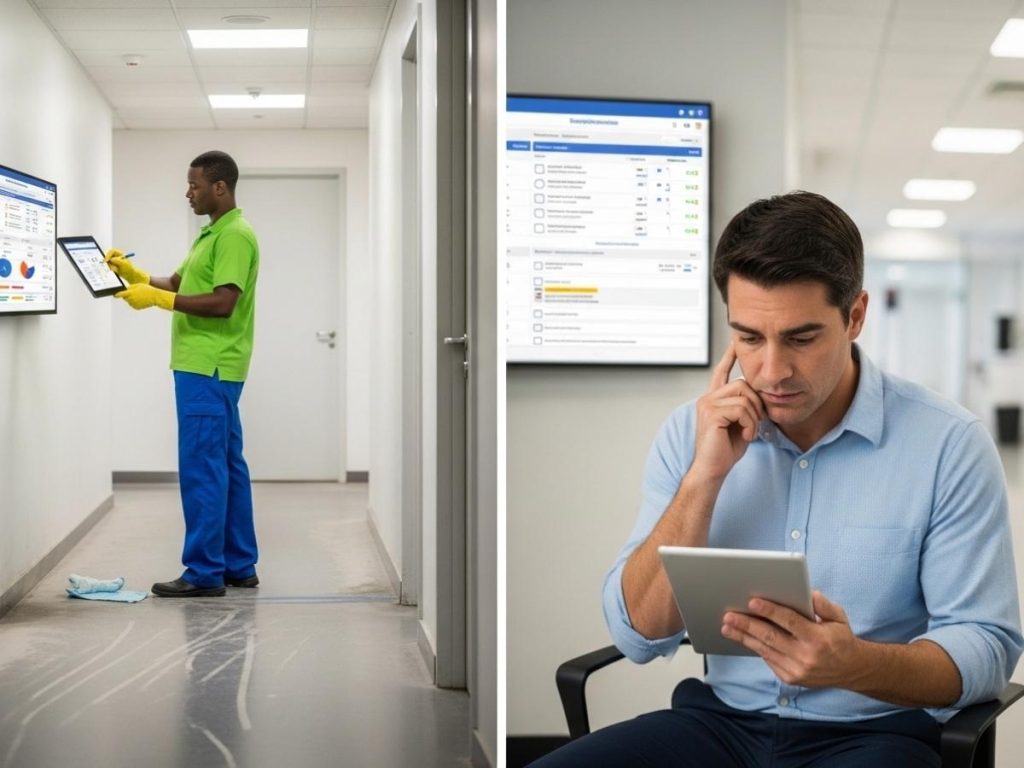
Why Cleaning Performance Declines Without Structured Feedback
Performance rarely declines overnight. It slips gradually when structured oversight is missing.
Without a clear facility management feedback system, issues stay informal. Complaints arrive through casual comments or after-hours emails. Small misses become recurring problems. Over time, service inconsistency becomes normalised.
Cleaning compliance standards are particularly important in medical environments with strict infection control requirements. If inspections are not documented and scored, there is no documented evidence of regulatory compliance. Audit readiness weakens. Risk exposure increases.
Operating without defined commercial cleaning KPIs creates blind spots. Expectations may exist in the contract, but without measurement there is no way to confirm delivery. The absence of a formal cleaning inspection process limits accountability. Staff can only correct what is clearly identified and tracked.
Reactive management also creates strain. Supervisors respond to complaints instead of preventing them. Teams receive correction only when something goes wrong. That cycle makes continuous improvement in cleaning services difficult to sustain.
In contrast, structured systems identify non-conformances early. They reduce recurrence and reinforce standards consistently across teams.

What a Structured Cleaning Feedback System Looks Like in Practice
A structured system goes beyond occasional site walks or satisfaction surveys. It integrates commercial cleaning quality control into daily operations.
At a practical level, this includes:
- Regular inspections using documented checklists aligned to the agreed scope of works.
- A defined cleaning inspection process with scored assessments and clear benchmarks.
- Scheduled reporting shared with facility managers, outlining findings and corrective actions.
- Escalation procedures for non-conformances or repeated issues.
- Retraining triggered by identified performance gaps.
- Trend analysis across weeks or months to support cleaning performance management.
- Clear allocation of responsibility between cleaners, supervisors, and site managers.
Customer satisfaction surveys measure perception. Quality assurance in commercial cleaning measures delivery. Both matter, but only structured assessment drives consistent vendor performance monitoring.
Supervisory oversight plays a central role in this process. Defined responsibilities ensure inspections lead to action rather than paperwork. For organisations wanting to understand how this structure operates on site, the role of a cleaning site supervisor is central to maintaining consistency and enforcing standards.
Documented systems minimise missed tasks. They also build consistency over time, which supports long-term service stability.

How Feedback Drives Measurable Improvements in Commercial Environments
Using feedback to improve cleaning produces measurable outcomes across commercial environments.
Service consistency strengthens through repeated, documented inspections. Patterns become visible. Corrective actions become proactive rather than reactive. Over time, sites experience fewer repeat complaints.
Cleaning performance management also reinforces staff accountability. When commercial cleaning KPIs are defined and monitored, performance becomes transparent. Teams understand expectations. Supervisors can track improvement.
Compliance readiness improves significantly. Documented inspection reports, corrective action logs, and retraining records create an evidence trail. Medical facilities that require strict hygiene documentation benefit from this clarity. Government buildings facing formal audits gain stronger assurance.
Multi-site operators across Brisbane or the Gold Coast often struggle with uneven standards between locations. Structured vendor performance monitoring allows trend comparisons. Managers can identify which sites meet cleaning compliance standards consistently and where additional attention is needed.
Communication between provider and client also becomes more constructive. Transparent reporting replaces uncertaintyand helps facility managers understand can i request performance reports from my cleaning company as part of standard service accountability. Rather than debating whether a task was complete, both parties review documented outcomes.
Consistency plays a critical role in this process. Stable standards, reinforced through inspection cycles, protect brand image and operational confidence. Long-term consistency in cleaning performance directly reduces friction and protects stakeholder trust, as explained in our article on why consistency matters in commercial cleaning.
Continuous improvement in cleaning services depends on this cycle of measurement, feedback, and corrective action. Improvement cannot occur without visibility.

Practical Benchmarks to Assess Your Current Cleaning Provider
Clear questions reveal whether structured systems are in place. Facility managers can assess vendor performance monitoring using practical benchmarks.
We recommend reviewing the following areas:
- How often are formal inspections conducted—weekly, monthly, or quarterly?
- Are inspections documented and shared transparently?
- Are commercial cleaning KPIs defined, measured, and reviewed?
- What is the average response time to identified issues or complaints?
- Is there a clear escalation procedure for unresolved items?
- How is retraining managed after recurring non-conformances?
- Can the provider demonstrate trend reporting across multiple sites?
Cleaning service accountability depends on systems, not verbal reassurance. If documentation is inconsistent or unavailable, quality control may rely too heavily on informal feedback.
Organisations preparing for contract renewal or reviewing performance can benefit from structured evaluation. A detailed approach to reviewing standards is outlined in our guide on how to audit your current cleaning provider.
Formal commercial cleaning quality control should be visible, measurable, and repeatable. Facility management feedback systems must support that visibility.

Strengthening Long-Term Vendor Relationships Through Structured Feedback
Structured feedback strengthens professional relationships rather than creating tension. Documented systems reduce blame and focus conversations on facts.
Using feedback to improve cleaning creates predictable outcomes. Performance expectations become clear. Corrective actions follow defined steps. This clarity reduces friction between client and provider.
Cleaning performance management also supports long-term planning. Trends inform staffing adjustments. Recurring gaps trigger retraining. Service levels evolve in response to measurable data.
Continuous improvement in cleaning services depends on open communication and clear metrics. When performance is tracked and shared transparently, cleaning service accountability becomes part of standard operations rather than an occasional escalation.
Organisations managing medium to large commercial properties benefit most from reviewing their current systems. If inspection cycles lack structure or reporting is inconsistent, it may be time to discuss formal quality processes with the current provider.
Stable partnerships rely on trust. Trust grows when systems prove performance. Using feedback to improve cleaning ensures that standards stay consistent, compliance stays visible, and service delivery stays aligned with operational priorities.
Frequently Asked Questions
How does using feedback to improve cleaning performance work in commercial facilities?
Using feedback to improve cleaning performance involves collecting inspection results, staff reports, and client observations to evaluate service quality. These insights help identify missed tasks, recurring issues, or gaps in cleaning procedures. Facility managers can then implement corrective actions, retraining, or schedule adjustments to address the problems. Over time, this structured feedback loop improves consistency, accountability, and overall cleaning standards.
Why is structured feedback important for commercial cleaning quality control?
Structured feedback is important because it turns cleaning performance into something measurable rather than subjective. Documented inspections, scored assessments, and performance reports allow managers to track service delivery against defined standards. This approach reduces reliance on complaints and instead provides clear evidence of what is working and what needs improvement, strengthening quality control and operational oversight.
What are common mistakes when using feedback to manage cleaning services?
A common mistake is relying only on informal feedback such as complaints or occasional site comments. Without documented inspections or performance metrics, issues are harder to track and resolve. Another mistake is collecting feedback without acting on it. Effective cleaning management requires clear follow-up actions, defined responsibilities, and retraining when performance gaps are identified.
How often should cleaning performance inspections and feedback reviews occur?
Cleaning inspections should typically occur on a regular schedule such as weekly or monthly, depending on the facility type and risk level. High-sensitivity environments like medical clinics may require more frequent assessments. Consistent inspection cycles allow managers to identify patterns, measure improvement over time, and ensure cleaning standards remain aligned with operational and compliance requirements.
Can feedback systems help reduce complaints about cleaning services?
Yes, structured feedback systems can significantly reduce cleaning complaints. Regular inspections and performance reporting identify problems before they escalate into client concerns. When issues are detected early, supervisors can implement corrective actions, retraining, or process adjustments. This proactive approach prevents repeat problems and supports more consistent cleaning service delivery across facilities.