
How to Communicate Cleaning Standards to Staff
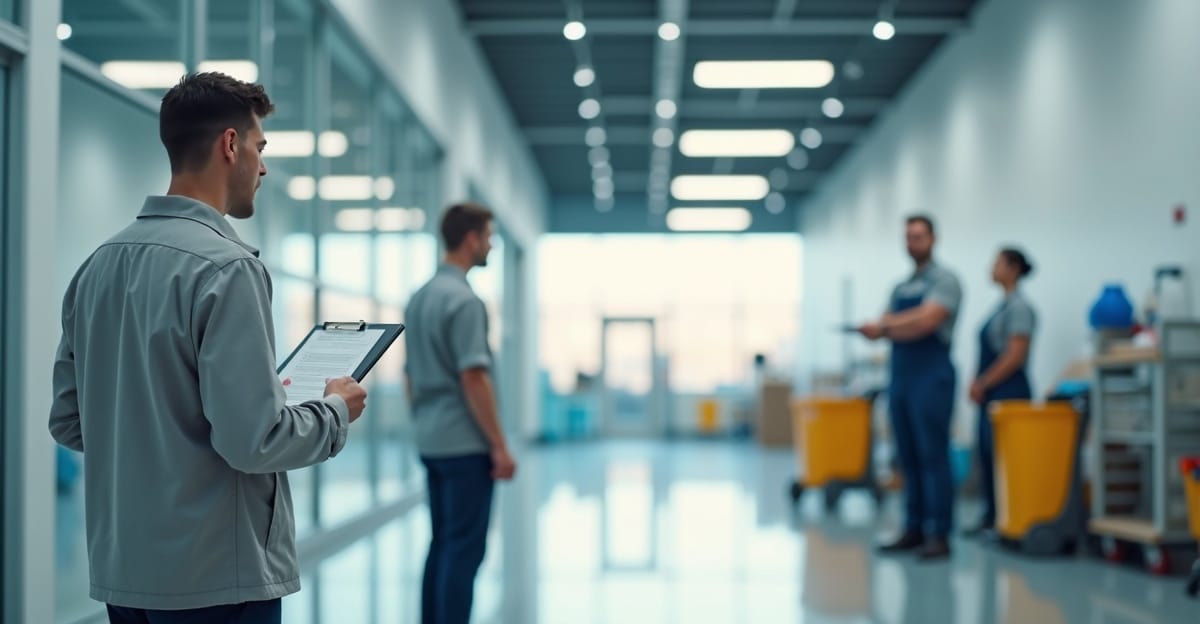
Clear communication of cleaning standards starts with documented, measurable expectations backed by structured internal cleaning standards training that defines outcomes, responsibilities, and response times. In large facilities, we move standards beyond policy and into practical SOPs, visual tools, supervisor-led training, and audited performance metrics so frontline teams deliver consistent, compliant results every day.
Key Takeaways
- We define cleaning standards in measurable terms, separating task completion from clear visual or compliance-based outcomes.
- We translate standards into practical documents such as step-by-step SOPs, detailed scopes of work, and visual audit checklists with pass/fail criteria.
- We use structured training, supervisor demonstrations, and regular refreshers to embed expectations into daily routines.
- We communicate standards through visual tools, pre-shift briefings, clear reporting lines, and simple outcome-focused language.
- We monitor performance using audit scores, complaint data, response times, and documented accountability systems to maintain consistency across sites.
What Clear Cleaning Standards Actually Look Like in Large Facilities
Clear cleaning standards define exactly what “clean” means on every site. Internal cleaning standards training must document expectations in practical, measurable terms so there is no room for interpretation.
Effective internal cleaning standards training includes:
- A documented scope of works
- Written commercial cleaning SOPs
- Measurable cleaning performance metrics
- Defined supervision processes
- Documented cleaning accountability systems
It is critical to separate task completion from measurable outcomes. Wiping a desk is not the same as achieving a defined result. A measurable outcome might be “no visible dust within one metre at eye level” or “sanitised high-touch points every 2–4 hours in high-traffic zones.” That level of clarity changes how teams approach their work.
Workplace hygiene standards must also reflect relevant cleaning compliance requirements, including workplace cleanliness and hygiene responsibilities outlined by occupational safety regulators. Medical centres and healthcare sites require documented high-touch disinfection cycles and strict waste handling controls. Government facilities often demand traceable audit records and incident response logs. Corporate offices focus on presentation, infection control, and minimal disruption to daily operations. Experience in healthcare and medical cleaning and corporate office cleaning shows that standards must match the site’s risk level and public exposure.
Clarity also extends to frequency and response time requirements. Daily, weekly, and periodic schedules must be formally documented. Public spill responses may require action within 15 minutes. Washrooms in high-traffic areas may require checks every 2–3 hours. Site-specific requirements must always be written, never assumed.
Inconsistent standards remain a leading cause of complaints, failed inspections, and contract disputes. Without clear commercial cleaning standards, teams rely on memory and habit, leading to variation across shifts and locations. Structured documentation removes guesswork and reduces avoidable risk.
How to Translate Standards into Practical Documents Staff Can Follow
Standards must become working documents. If they remain high-level policies, frontline teams will not apply them consistently.
Effective commercial cleaning SOPs provide step-by-step instructions. Each SOP should define equipment, chemicals, safety controls, and the expected visual outcome, including correct disinfectant dwell times referenced in surface disinfection guidance from the Centers for Disease Control and Prevention. For example, a bathroom SOP should outline dilution ratios, disinfectant dwell times, PPE requirements, and what qualifies as a pass result.
A detailed scope of works assigns responsibilities by role, shift, and zone. This structure prevents overlap and eliminates gaps. In multi-floor or multi-site environments, it supports effective multi-site cleaning management.
Visual cleaning audit checklists are far stronger than vague instructions. Avoid language such as “clean as required.” Instead, define objective pass/fail criteria such as:
- “No paper debris visible within bin storage area”
- “Glass free from streaks when viewed at 1 metre”
Turning Standards Into Visual, Usable Tools
To keep documentation practical and usable:
- Use photo-based benchmarks showing acceptable outcomes
- Provide laminated quick-reference charts in cleaner rooms
- Develop simple cleaning audit checklist templates with scoring boxes
- Create colour-coded zone maps identifying responsibilities
Operational realities must shape documentation. Shift rotations, staff turnover, and contract transitions can quickly dilute standards. Documents should be simple enough to support rapid onboarding. Where English is not a first language, simplified wording or multilingual versions help prevent misinterpretation.
A well-built, documented system supports consistency across commercial cleaning services without overcomplicating daily operations.
Delivering Structured Training That Drives Consistency
Documentation alone does not change behaviour. A structured cleaning staff training program ensures standards move from paper into daily routines, consistent with facility management workforce training principles promoted by the International Facility Management Association.
Every cleaner should complete induction training before working independently. This training must cover site-specific workplace hygiene standards, safety controls, and cleaning compliance requirements. Supervisor-led demonstrations reinforce written SOPs in real operating conditions.
Short toolbox talks help reinforce expectations in high-risk or high-traffic zones. Medical waiting rooms, government service counters, and corporate lobbies provide practical training examples in line with environmental cleaning guidance from the World Health Organization for high-traffic public spaces. Staff engagement improves when training reflects real situations.
Refresher training every 3–6 months keeps standards current and addresses recurring issues identified through audits or complaint data.
Supervisors require dedicated development. Strong facility cleaning quality control depends on supervisors who understand cleaning performance metrics and consistently enforce them. The role of a cleaning site supervisor is central to maintaining accountability and consistency.
Training should include practical assessment. Staff must demonstrate procedures rather than simply sign acknowledgment forms. This confirms understanding and provides additional compliance protection.
Consistent training reduces complaints, improves inspection outcomes, and strengthens contract confidence. Proven experience shows how consistency in commercial cleaning drives long-term performance across complex facilities.
Communicating Standards Clearly to Frontline Teams
Communication is most effective when it is simple and outcome-based. Excessive compliance language creates confusion. Frontline teams need clear instructions that define expected results and timeframes.
Visual reinforcement improves daily execution. Laminated SOPs in cleaner rooms provide accessible reference points. Daily or weekly sign-off sheets formalise task completion and supervisor verification.
Brief pre-shift huddles keep expectations visible. Teams can review focus areas, raise incidents, and clarify responsibilities before starting work. These discussions prevent minor issues from escalating.
Clear reporting lines are essential. Staff must know who to contact for incidents, supply shortages, or disruptions. Defined response times make escalation predictable and controlled.
Strong communication supports staff rather than criticising them. Well-explained standards increase ownership and accountability. Structured approaches such as getting staff buy-in for cleaning standards help align teams with measurable goals.
Standards should protect presentation, reduce disruption, and maintain compliance without unnecessary complexity. When teams understand the purpose behind expectations, execution improves.
Monitoring, Auditing, and Linking Training to Measurable Outcomes
Monitoring systems confirm whether standards are functioning as intended. A structured cleaning audit checklist should include scoring benchmarks, with minimum target scores typically set between 90 and 95 percent.
Tracking cleaning performance metrics strengthens oversight. Key indicators include:
- Complaint frequency
- Rework rates
- Incident response times
- Inspection pass rates
Comparing performance data before and after improvements to internal cleaning standards training demonstrates measurable results.
Supervisor inspections should occur weekly for standard commercial environments and daily for high-risk medical or government facilities. Sign-offs, escalation logs, and corrective action records form a documented cleaning accountability system.
Structured performance reviews focused on reducing cleaning complaints further strengthen process control and operational reliability.
Consistent reporting across multi-site operations maintains uniform commercial cleaning standards. Without shared benchmarks, quality drifts between locations.
Well-structured monitoring reduces operational risk, strengthens compliance confidence, and limits unnecessary service disruption. Leadership gains visibility over measurable performance rather than relying on anecdotal feedback.
When Structured Systems and External Support Become Necessary
Certain warning signs indicate systems require review. Recurring complaints, inconsistent audit scores, high staff turnover, and unclear responsibilities often highlight gaps in internal cleaning standards training.
Multi-site cleaning management increases operational complexity. Public-facing facilities with heavy foot traffic and tight response timelines rarely function well with informal systems.
A process-driven cleaning partner can reinforce internal frameworks through structured rollout plans, documented standards, measurable benchmarks, and transparent reporting. External support also reduces pressure on internal managers balancing compliance, presentation, and operational demands.
Well-managed janitorial services and structured general commercial cleaning programs perform best when standards, supervision, and accountability are aligned.
Reliable systems protect compliance, reduce disruption, and create predictable outcomes. That consistency supports long-term performance and provides facilities teams with confidence that cleaning standards are controlled, measurable, and repeatable.
Frequently Asked Questions
Internal cleaning standards training is a structured program that teaches cleaning staff how to follow documented procedures, safety controls, and measurable cleanliness expectations within a facility. It typically includes site-specific SOPs, hygiene requirements, equipment use, and quality benchmarks. The goal is to ensure all staff perform cleaning tasks consistently, meet compliance requirements, and deliver the same standard of results across shifts, teams, and locations.
Internal cleaning standards training is important because large facilities involve multiple staff, zones, and schedules that require consistent cleaning outcomes. Training ensures everyone understands documented procedures, hygiene requirements, and performance expectations. Without structured training, teams rely on personal habits, which often leads to inconsistent results, complaints, or failed inspections. A formal program helps maintain compliance, safety, and predictable cleaning quality across the entire site.
Internal cleaning standards training should typically be refreshed every three to six months, depending on the facility risk level and staff turnover. Refresher sessions reinforce SOPs, correct recurring mistakes, and introduce updated procedures or compliance requirements. High-risk environments such as healthcare or public service facilities may require more frequent updates to ensure staff remain aligned with infection control protocols and evolving workplace hygiene standards.
An effective internal cleaning standards training program should include documented SOPs, equipment and chemical handling procedures, workplace hygiene standards, safety controls, and measurable cleaning outcomes. Training should also cover task frequency, incident response expectations, and reporting procedures. Practical demonstrations and assessments help confirm staff understand the required standards and can perform cleaning tasks correctly in real working conditions.
Supervisors ensure compliance by combining training with ongoing monitoring and accountability systems. This includes regular inspections, cleaning audit checklists, performance scoring, and documented sign-offs. Pre-shift briefings and visual SOP references also reinforce expectations. By tracking metrics such as complaints, rework rates, and response times, supervisors can identify gaps early and reinforce internal cleaning standards training where improvements are needed.