
How to Handle Emergency Cleaning Situations
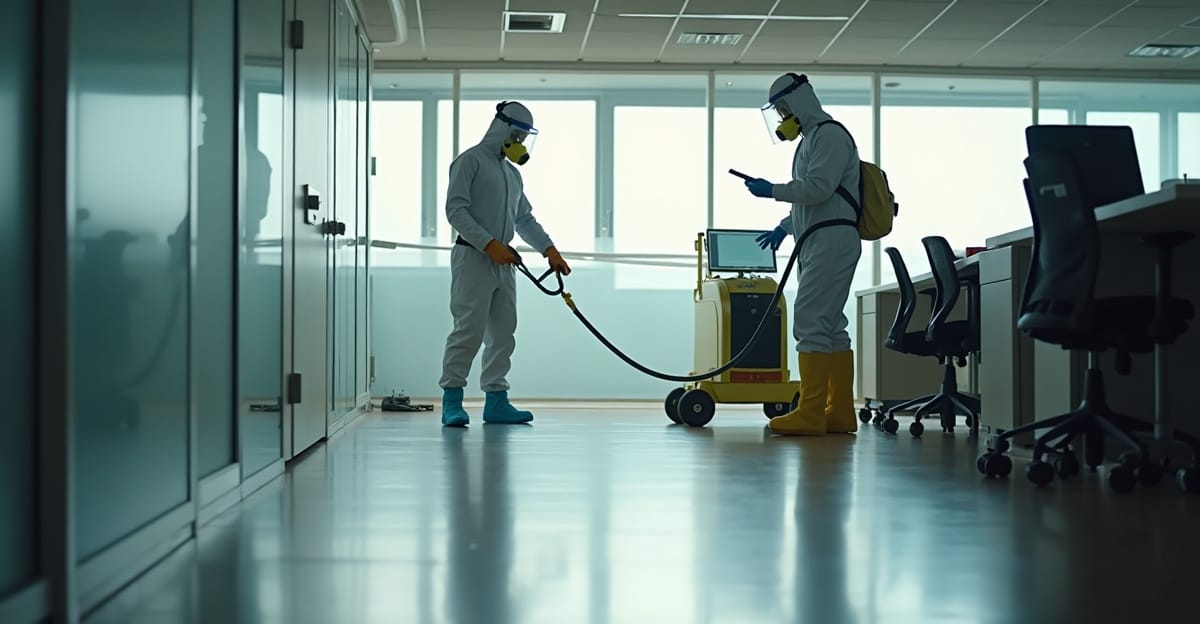
We handle emergency cleaning situations with a clear, structured protocol that protects health, safety, compliance, and business continuity across commercial facilities. Our team responds fast and documents every step. We focus on containment, decontamination, communication, and operational recovery to limit downtime, reduce regulatory exposure, and restore safe working conditions without delay.
Key Takeaways
- Emergency cleaning incidents create health, safety, compliance, and reputational risks that demand immediate, structured action from our team.
- Initial response requires us to assess hazards quickly, contain affected areas, use appropriate PPE, and escalate to responsible stakeholders without hesitation.
- Professional emergency cleaning involves removing hazards, sanitising impacted surfaces, disposing of waste in line with regulations, and verifying results to stop cross-contamination.
- Clear communication and detailed documentation allow us to meet WHS obligations, support insurance claims, and maintain stakeholder confidence.
- By aligning emergency cleaning with business continuity planning, we reduce downtime and strengthen overall operational stability.
When a Cleaning Incident Becomes an Operational Emergency
An operational emergency in a commercial facility occurs when a cleaning issue threatens health, safety, compliance, or business continuity. These incidents go well beyond surface dirt or routine maintenance.
In commercial environments, emergencies can include floods from burst pipes, biohazard incidents, washroom overflows, illness outbreaks, chemical spills, post-incident sanitation, and workplace contamination cleaning. Offices, medical centres, government buildings, and multi-site premises across Brisbane and the Gold Coast all face these risks.
We categorise emergency cleaning incidents into four key risk areas:
- Health risk: infection exposure requiring infection control cleaning
- Safety risk: slip hazards, structural moisture, or chemical exposure
- Compliance risk: breaches of WHS obligations and hygiene regulations
- Reputational risk: visible incidents in public-facing or tenant-occupied spaces
A viral outbreak in an office may require immediate infection control cleaning. A chemical spill in a warehouse introduces both safety and regulatory exposure. A sewage overflow in a medical clinic raises patient safety concerns and reporting obligations.
Delays create operational consequences. Downtime increases as affected areas remain unusable. Insurance claims become complicated without prompt mitigation. Regulators may scrutinise response times and documentation. Stakeholder confidence drops quickly, especially in healthcare or government facilities.
Fast activation of a structured emergency commercial cleaning protocol limits damage, protects staff and visitors, and supports commercial cleaning compliance requirements across Australia. A clear process turns disruption into a controlled response.
Immediate Response: Safety Controls, Containment and Escalation
The first response determines the scale of impact. Acting decisively reduces risk and shortens recovery time.
Step one is an initial incident assessment. We identify the hazard type, the affected area, and the potential exposure risk. Is the incident biological, chemical, or water-related? Has it spread to adjacent spaces? Are occupants at risk?
Step two involves immediate safety controls. The goal is containment. We isolate the affected area, restrict access, and apply suitable PPE such as gloves, masks, or protective clothing based on the risk level. In high-traffic buildings, this aligns with structured protocols for cleaning safety in high-traffic areas to prevent injuries during response.
Step three is escalation. Every facility should have an emergency cleaning plan that defines who must be notified. This typically includes:
- Facility manager
- WHS officer
- Operations lead or building management
- Approved emergency cleaning provider
External activation should occur quickly. Realistic response times for rapid response cleaning services often mean priority attendance within hours, depending on severity and service agreement terms. Waiting days is rarely acceptable in a commercial setting.
Clear escalation reduces injury risk, limits contamination spread, and supports insurance and audit requirements. Structured response demonstrates that the organisation acted responsibly and in line with compliance expectations.
Deployment and Decontamination: What a Professional Emergency Response Includes
Once the site is secured, professional emergency commercial cleaning teams mobilise. This may involve biohazard cleaning services, flood damage cleaning in commercial environments, or urgent sanitation of contaminated areas.
Trained personnel arrive equipped with appropriate tools. These may include extraction units for water removal, containment barriers to prevent airborne spread, and hospital-grade disinfectants for infection control scenarios. In healthcare sites, this approach aligns with standards required for medical facility cleaning environments.
The decontamination process typically follows four structured stages:
- Hazard removal and containment
- Cleaning and sanitisation
- Safe waste disposal in line with Australian regulations
- Verification of decontamination standards where required
Each stage must limit secondary exposure. We apply strict methods to minimise cross-transfer, drawing on established practices for minimising cross-contamination during cleaning. Proper ventilation, segregation of equipment, and controlled waste handling prevent the incident from escalating.
Waste disposal requires regulatory compliance. Biological or chemical waste must be removed and documented in accordance with Australian guidelines. Failure at this stage can trigger compliance breaches.
Many emergency responses occur during business hours. To reduce disruption, after-hours mobilisation is often critical. Using after-hours commercial cleaning allows us to restore areas overnight so operations can resume the following day with minimal interruption.
Communication, Documentation and Compliance Obligations
Emergency cleaning does not end with surface restoration. Strong communication and detailed documentation protect the organisation long after the incident.
Stakeholders must be informed clearly and promptly. This may include staff, tenants, visitors, contractors, and senior management. Transparent updates reduce speculation and reinforce confidence in leadership’s response.
Effective documentation should capture:
- Incident reports outlining the nature and scope of the event
- Risk assessments conducted at the time
- Photographs and time logs of response activities
- Waste disposal records
- A list of chemicals used and their Safety Data Sheets
These records support commercial cleaning compliance across Australia. They demonstrate alignment with WHS obligations and recognised hygiene standards. For broader compliance context, facilities should understand practical approaches to maintaining workplace hygiene laws.
Documentation also assists with insurance claims and regulatory reviews. Insurers often require proof of timely mitigation. Regulators expect evidence of risk control and safe waste handling. Without detailed records, organisations become exposed to financial and legal challenges.
Visible incidents can unsettle employees and visitors. Clear communication builds reassurance. It shows that management acted quickly and responsibly. Maintaining professional standards during disruption reinforces operational credibility.
Minimising Downtime and Maintaining Operational Continuity
Business continuity depends on structured recovery. Emergency cleaning should align with broader continuity planning rather than operate in isolation.
Several strategies reduce disruption during major cleaning incidents:
- Scheduling after-hours interventions where possible
- Reopening unaffected zones in phases
- Adjusting workspace layouts temporarily
- Coordinating across multiple sites for large organisations
Shared buildings introduce extra challenges. Access restrictions, strata coordination, and public exposure can slow response. In these cases, organised strata cleaning services support building-wide coordination.
Public-facing environments demand additional attention. High-touch areas such as door handles, lift buttons, and reception counters require priority treatment. Maintaining strict processes for high-touch surface cleaning helps prevent recurring contamination and protects brand reputation.
A structured emergency commercial cleaning protocol shortens recovery time. Areas reopen faster. Staff return to safe conditions. Service delivery continues with minimal interruption.
Decision-makers focus on outcomes. Reduced downtime protects revenue. Clear risk management protects reputation. Reliable continuity preserves stakeholder trust.
Evaluating and Strengthening Your Emergency Cleaning Readiness
Preparedness determines performance. Facilities should regularly review their emergency commercial cleaning protocol rather than waiting for a crisis to test it.
Key questions to assess include:
- Are response times and escalation pathways clearly defined?
- Is 24/7 or rapid response cleaning available under current contracts?
- Are personnel trained in biohazard and workplace contamination cleaning?
- Does the provider understand Australian compliance and insurance requirements?
- Are communication structures and reporting templates ready for immediate use?
Each element reduces risk. Defined response times limit uncertainty. Skilled personnel reduce exposure and error. Compliance knowledge protects against legal issues. Clear reporting supports audits and claims.
Provider selection matters. Experience across offices, medical centres, and government sites demonstrates operational maturity. Transparent response times reflect accountability. A strong focus on commercial cleaning risk management and documentation indicates long-term reliability.
Reviewing and testing the facility emergency cleaning plan before an incident occurs is essential. Preparedness should be viewed as standard risk management. Acting early protects people, operations, and reputation while keeping emergency response controlled, compliant, and efficient.