
What is a commercial cleaning contract?
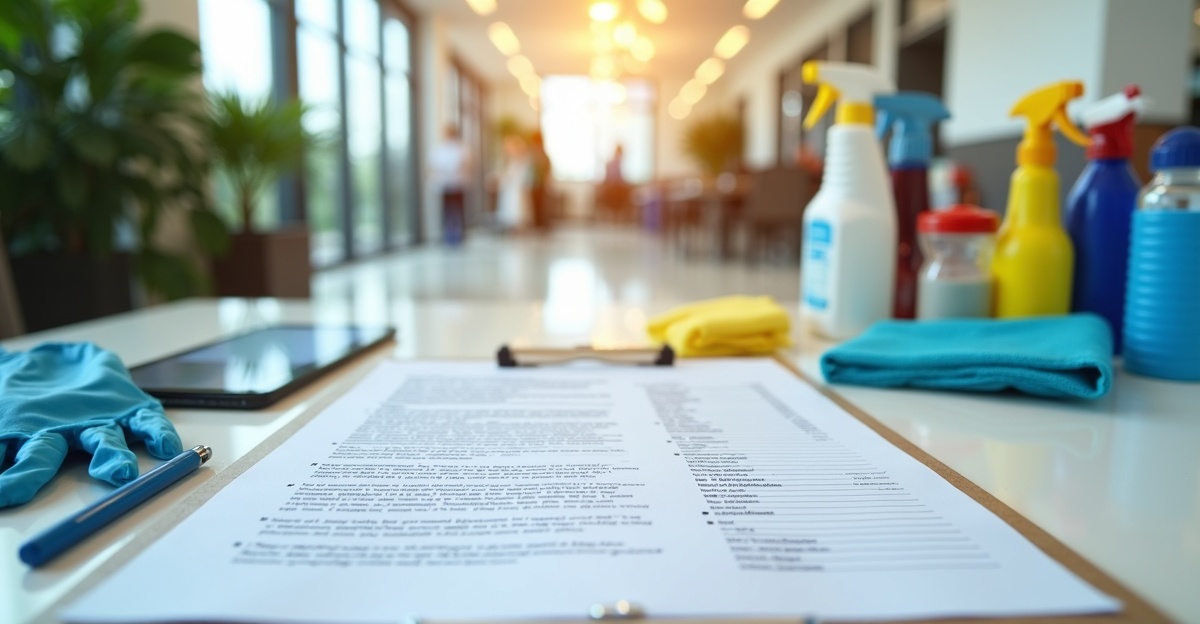
A commercial cleaning contract forms a clear agreement between a business and its cleaning service provider. It lists specific cleaning duties, sets schedules, outlines responsibilities, and defines standards of quality. This agreement does more than list tasks—it supports smooth operations, meets hygiene goals, and aligns with sector-specific rules.
Key Takeaways
- A commercial cleaning contract defines the work scope, sets service frequency, and details quality standards to ensure dependable results.
- Contracts limit confusion by laying out cleaning duties, reporting procedures, and clear steps for resolving issues.
- Strong agreements help maintain compliance in settings with strict regulations such as healthcare, food services, and educational facilities.
- Vague contracts lead to service breakdowns, unexpected expenses, and weak accountability.
- Cleaning agreements should match local site conditions and regional needs, particularly in Southeast Queensland’s unique climate and regulatory setup.

Understanding What’s in a Commercial Cleaning Contract
A commercial cleaning contract is a legally binding agreement between a business or facility and a cleaning company that defines the services to be delivered and the expectations around them, including the commercial cleaning contract requirements needed to ensure consistent service and accountability, especially for businesses learning how to get commercial cleaning contracts successfully. This document doesn’t just outline what tasks will be completed—it sets the foundation for accountability, consistency, and measurable outcomes, reinforcing the true contract cleaning meaning in professional environments.
To manage cleaning operations smoothly and reduce misunderstandings, a well-structured contract for commercial cleaning services usually includes the following elements:
Typical Components of a Cleaning Contract
- Scope of work: Specific tasks like floor cleaning, window care, dusting, or sanitation, with room for facility-specific needs.
- Service schedule/frequency: Days, times, and frequency of service visits.
- Cleaning materials and responsibilities: Clarity on who provides tools, chemicals, or consumables like bin liners or hand soap.
- Key performance indicators (KPIs): Standards to help assess service quality, such as response time, inspection scores, or cleanliness ratings, aligned with frameworks like ISO 41001 facility management standards.
- Communication and reporting requirements: Expectations for feedback, reporting issues, and regular check-ins.
- Escalation procedures: Defined steps for addressing service concerns or ongoing issues.
A well-documented agreement sets expectations early. Clear language prevents frustration later by making sure nothing gets lost in interpretation. For a deeper explanation of these components, refer to this article on what commercial cleaning actually covers.
Why Cleaning Contracts Matter for Operational Confidence & Compliance
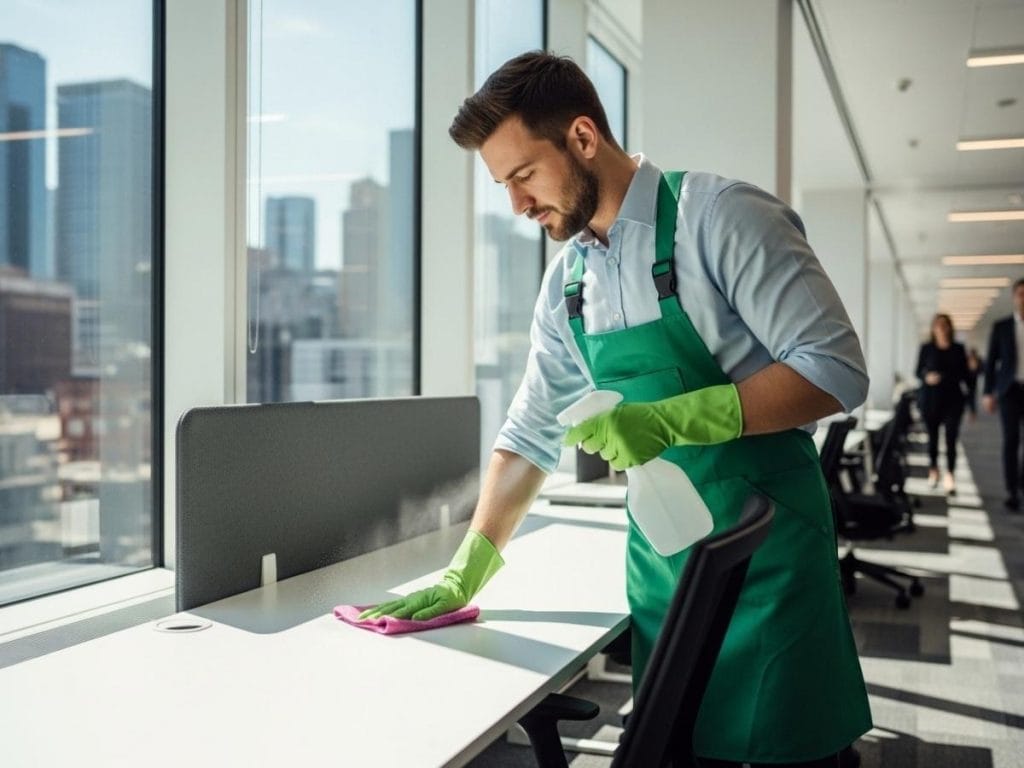
A facility cleaning contract, often referred to as a commercial cleaning agreement, isn’t just about keeping workspaces tidy. It directly supports workplace health, operational continuity, and legal obligations—especially in industries with hygiene regulations.
In sectors like healthcare or food production, a medical cleaning contract must meet national infection prevention and control standards set by the Australian Commission on Safety and Quality in Health Care to ensure safety for both staff and clients. According to Safe Work Australia’s workplace hygiene guidance, regular cleaning is part of maintaining a safe workplace, particularly in shared environments.
Facilities that lack a clear contract risk issues such as inconsistent cleaning, untrained fill-in staff, or gaps in service during public holidays or staff turnover. A contract ensures standards are upheld even when circumstances change.
Brisbane CBD offices and Gold Coast clinics deal with high foot traffic, making regular and verifiable cleaning especially critical. A reliable contract framework improves infection control and protects not just health—but also company reputation, which is critical when pursuing government commercial cleaning contracts.

How to Assess Quality in a Commercial Cleaning Service Agreement
Before entering a commercial cleaning service agreement, strong evaluation habits protect your business from overlooked details that lead to gaps in service and support those learning how to find commercial cleaning contracts effectively.
We recommend doing a site walkthrough prior to quoting. This gives both parties a shared understanding of the site’s specific needs—something no commercial cleaning contract template can fully capture.
Cleaning Contract Checklist
- Is the cleaning service scope of work clearly defined by area and task?
- Are service frequencies detailed by task (daily, weekly, monthly)?
- Are KPIs or benchmarks listed in the contract for cleaning performance standards?
- Is there a named escalation contact and process spelled out?
- Are consumables included? If so, where are they sourced and who replaces them?
- Does the vendor provide regular reporting or audit summaries?
- Are there clauses that accommodate after-hours entry and emergency access?
Also check for facility-specific needs—like sharps disposal in clinics or data-sensitive waste handling in corporate environments. Carefully assess any service bundled within general cleaning. More details about standard inclusions can be found in our article on what’s inside a commercial office cleaning package.
Common Red Flags and Contract Gaps That Undermine Service
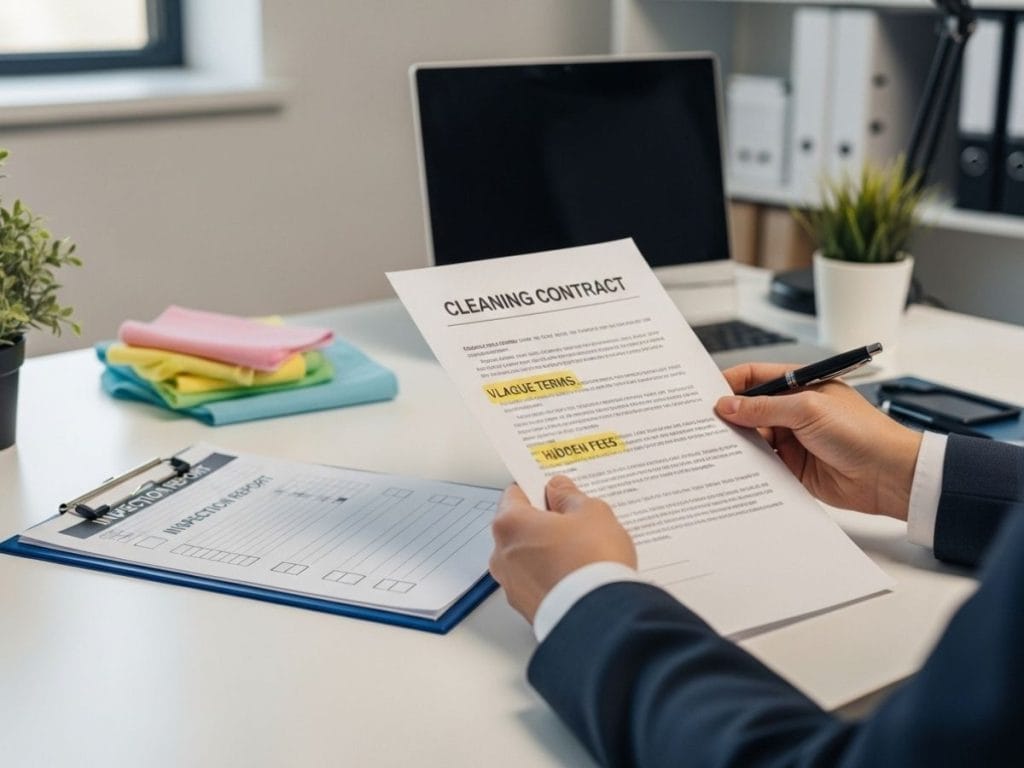
Poorly drafted cleaning contracts often lead to preventable service issues. One common problem is lack of specificity—vague phrases like “regular cleaning” or “interior areas” without defining what exactly is cleaned or how often. These result in tasks being skipped or interpreted inconsistently.
Another issue is the absence of well-defined cleaning performance standards or escalation points. If KPIs aren’t aligned with your needs, it becomes harder to measure whether the vendor is meeting expectations. Be cautious of contracts that don’t explicitly outline the resolution process for service lapses.
Hidden fees also create tension. Ensure all pricing includes call-outs, consumables, and overtime if applicable. Unchecked, these extras can add up—especially for public sites or 24-hour venues.
Watch for early signs of underperformance, such as missed spot checks, untrained fill-ins, or delays in addressing complaints. These may signal a deeper contractual issue that requires review. If unsure how often inspections or services should occur, review guidelines in this post about business cleaning frequency.
Tailoring Contracts to Facility Types: Office, Medical, Civic & More
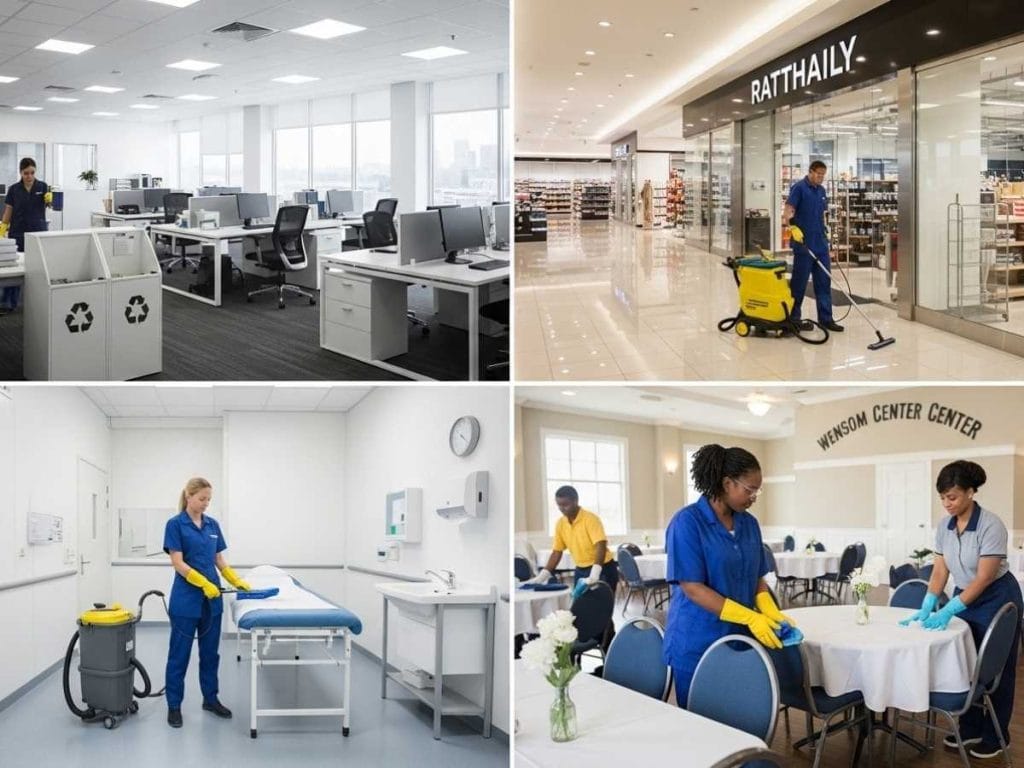
Basic cleaning tasks may be similar across sites, but contract details should reflect the function and risk profile of each facility. A public library, a private health practice, and a corporate head office all have very different needs—and contracts must account for that.
For example:
- A office cleaning contract may focus on workstation hygiene and secure bin collection.
- A commercial cleaning agreement for retail property might prioritise hard-floor cleaning, glass polishing, and day porter services, while commercial warehouse cleaning contracts often emphasise large-scale floor maintenance and safety compliance.
- A medical cleaning contract must include protocols for disinfecting treatment areas, handling biohazard waste, and complying with infection control measures.
- Contracts for civic venues like community centres may include weekend event recovery cleans and flexible scheduling.
For facilities with stricter compliance needs, certain services—like washroom sanitation or medical-grade disinfection—are non-negotiable. The more closely aligned the contract is to your risk profile and operations, the fewer surprises later.
Local Considerations for Southeast Queensland and How They Affect Your Contract
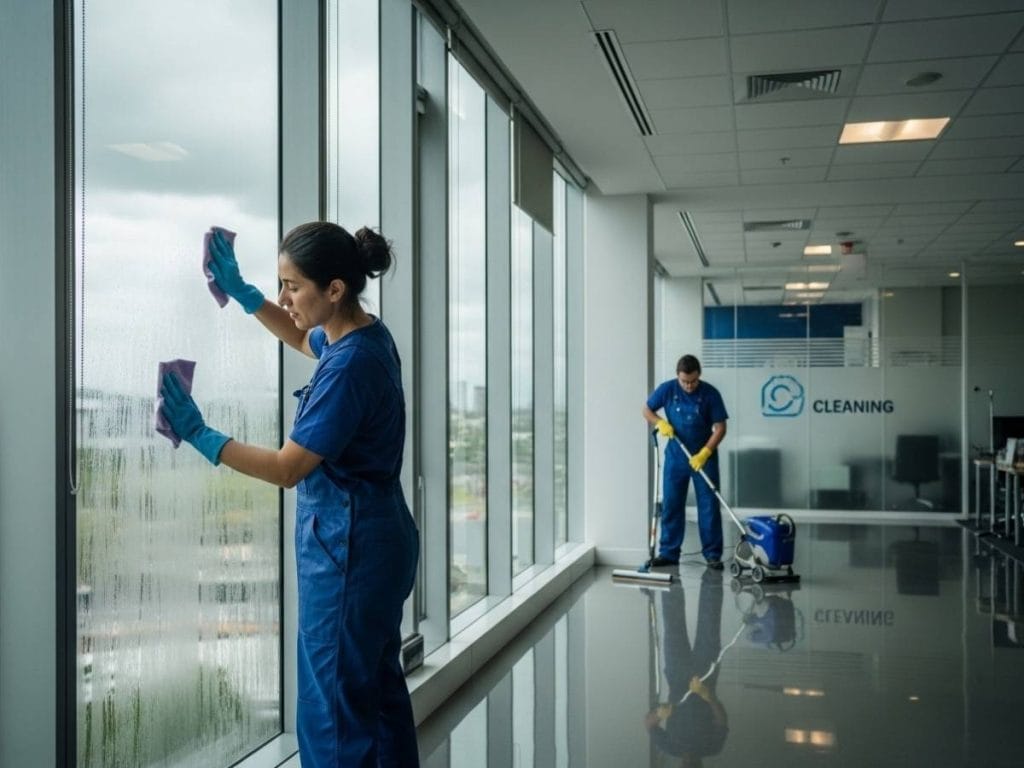
Cleaning service agreements should reflect the region in which they operate. In Southeast Queensland, factors such as high humidity, seasonal storms, and diverse industries impact how a contract should be structured.
Subtropical conditions require explicit measures for mould prevention and moisture control, consistent with Queensland Health’s guidance on mould and indoor humidity management. Sites near the coast or in older buildings should include frequent ventilation cleaning and anti-mould product use in relevant scope items.
Foot traffic also changes seasonally in sectors like tourism and education. Contracts should include scalable service schedules or variable staffing to handle demand during peak times.
Emergency response clauses are essential in this region—particularly in storm-prone months. Ensure your agreement includes after-hours or emergency access for storm debris removal, especially in outdoor common areas or underground car parks.
Additionally, Queensland Government waste management regulations for commercial premises influence expectations on waste management, signage during cleaning, and use of environmental products. These are particularly important for contracts involving school cleaning services or healthcare spaces.
Working with a commercial cleaning provider in Southeast Queensland with experience across sectors ensures your contract isn’t just compliant—but practical and fit for your site’s environment.
For more guidance and industry insight, review our full list of commercial cleaning topics here.
Frequently Asked Questions
A commercial cleaning contract typically includes the scope of work, service frequency, quality standards, and responsibilities of both parties. It defines which areas are cleaned, how often tasks are performed, what supplies are provided, and how performance is measured. Most contracts also outline communication methods, reporting requirements, and procedures for resolving service issues.
A commercial cleaning contract is important because it sets clear expectations and reduces the risk of misunderstandings. It helps ensure consistent cleaning standards, supports workplace health and safety, and provides accountability if service levels drop. For regulated industries, a written agreement also supports compliance with hygiene and safety obligations.
Most commercial cleaning contracts run for 12 to 36 months, depending on the facility type and service complexity. Shorter terms offer flexibility, while longer contracts often provide cost stability and consistent staffing. Many agreements include review periods or break clauses to allow adjustments if cleaning needs or site conditions change.
Yes, a commercial cleaning contract should be customised to suit the facility’s size, function, and risk level. Offices, medical clinics, retail spaces, and public venues all require different cleaning tasks, schedules, and compliance measures. Tailored contracts reduce service gaps and ensure cleaning supports daily operations rather than disrupting them.
Common mistakes include vague task descriptions, unclear service frequencies, and missing performance standards. Contracts that fail to define escalation processes or include hidden costs can lead to disputes and inconsistent results. Avoid generic templates and ensure the agreement clearly reflects your site’s layout, usage patterns, and compliance requirements.