
What is the difference between cleaning and commercial cleaning?
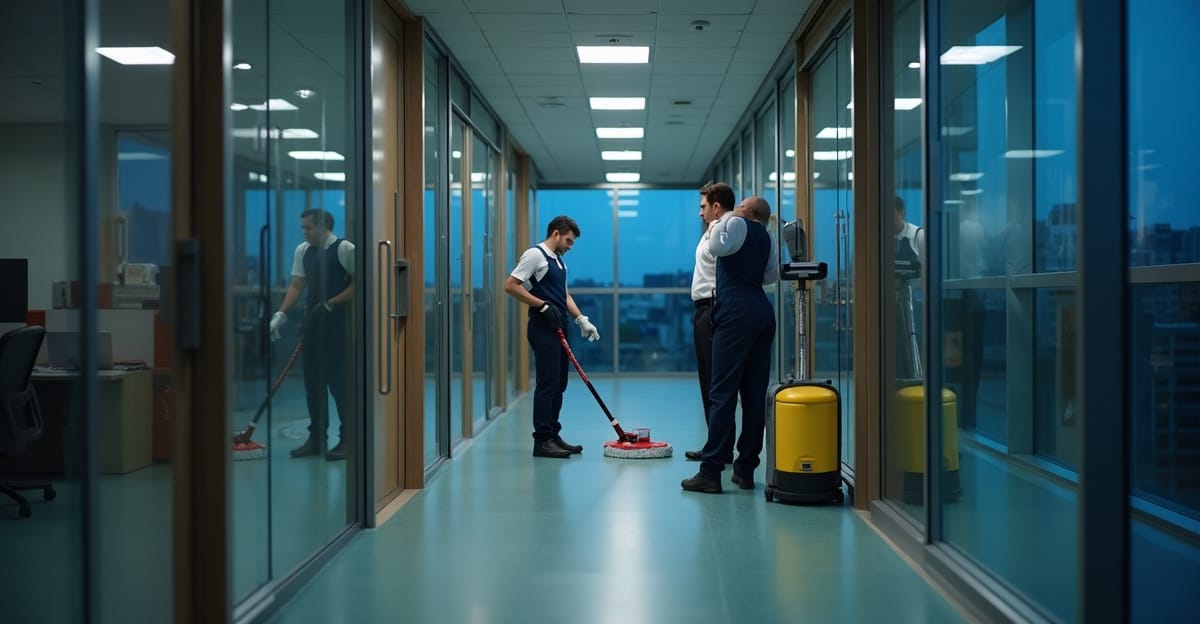
Understanding the difference between cleaning and commercial cleaning matters because each service carries a different level of responsibility. We explain how this distinction shapes risk management, compliance, service scope, and accountability across business settings. Our goal is to help teams choose services that protect operations and reputation.
Key Takeaways
- General cleaning prioritises convenience and basic tasks, while commercial cleaning supports daily operations and continuity.
- Commercial cleaning applies defined scopes, documented standards, and alignment with WHS and industry rules.
- Businesses assume legal, safety, and brand risk when teams miss standards or apply them inconsistently.
- Commercial cleaning depends on trained crews, clear supervision, ongoing reporting, and quality checks.
- The right service choice reflects the environment, exposure to risk, foot traffic volume, and regulatory duties.
Why service level matters for business operations
Cleaning and commercial cleaning are often grouped together, but they’re different service models with different levels of responsibility. The difference between cleaning and commercial cleaning matters because it affects safety, compliance, and how smoothly a business runs.
General cleaning usually supports convenience. Commercial cleaning supports operations. In business settings, cleaning outcomes carry legal and reputational weight. Decision-makers are accountable for audits, WHS obligations, lease conditions, and public presentation. That accountability doesn’t sit with residential or ad‑hoc cleaning services.
Commercial environments like offices, medical facilities, government buildings, and high‑traffic sites face higher hygiene expectations. These sites also carry greater risk if standards slip. That’s why commercial cleaning vs cleaning isn’t a price comparison. It’s a risk and continuity decision. For a deeper explanation of why service level matters, our guide on commercial cleaning importance breaks this down in practical terms.
Scope and complexity of work performed
General cleaning focuses on visible, surface-level tasks. It suits small, low‑risk spaces with limited foot traffic. Tasks often include vacuuming, dusting, mopping, and wiping benches or bathrooms.
Commercial cleaning covers a broader and more structured scope. The work is planned to handle scale, shared areas, and frequent use. That includes large floor areas, amenities, touchpoint disinfection, waste handling, and industry‑specific requirements. Services are built for consistency across one site or many.
Commercial cleaning services are also scheduled to protect productivity. Work often happens after hours or outside peak times so teams can do the job thoroughly without interrupting staff or visitors. This is a key difference in office cleaning vs commercial cleaning, especially in active workplaces. Our overview of commercial cleaning services details what’s typically included across different facilities.
Standards, compliance, and risk management
Commercial cleaning operates under documented standards. These standards link directly to WHS, infection control, and site‑specific compliance needs. Medical and healthcare cleaning, government buildings, and high‑traffic sites all require clear procedures and records.
General cleaning doesn’t usually include compliance reporting or risk‑managed delivery. That gap creates exposure. Missed standards can lead to health issues, audit failures, or damage to reputation.
Commercial cleaning standards exist to manage that risk. They provide clear processes, trained staff, and traceable outcomes. This is especially important in industrial and commercial cleaning where public access or regulatory oversight applies. The difference between routine and higher‑detail services is also part of compliance planning, which we explain in routine vs detail cleaning.
People, training, and accountability
Commercial cleaning relies on trained teams. Staff are prepared for specific environments, equipment, chemicals, and safety rules. That training supports consistent results and protects everyone on site.
Accountability is built into the service. Supervisors perform checks. Issues are logged and resolved. Reporting lines are clear. Background checks, site inductions, and uniformed staff are standard expectations.
General cleaning tends to be less structured. Supervision is limited. Documentation is rare. That approach may work in low‑risk settings, but it doesn’t meet most business cleaning requirements. Organisations that need reliable cleaning services usually expect this higher level of control as standard. We explain the staffing difference further in our comparison of janitorial and commercial cleaning.
Equipment, systems, and quality control
Commercial cleaning uses industrial‑grade equipment and site‑specific chemicals. Systems guide how tasks are completed, how often they occur, and how results are checked. These systems reduce service gaps and hygiene risks.
Quality control sits at the centre of delivery. Checklists, inspections, and issue management are part of the process. That structure protects operations from disruption and supports consistent presentation across facilities.
General cleaning relies on basic tools and informal standards. It suits small spaces without compliance pressure. In larger or regulated environments, that approach creates avoidable risk. Commercial quality assurance exists to prevent that. To see how this works in practice, our outline of commercial office cleaning packages shows how systems and equipment align.
When general cleaning is sufficient vs when commercial cleaning is required
Choosing between general cleaning and commercial cleaning depends on environment, risk, and responsibility. A simple comparison table often helps decision‑makers review differences in scope, standards, staffing, compliance, and accountability.
Practical guidance for decision‑makers
General cleaning may suit limited situations. Commercial cleaning is required in most operational environments. Use the points below to assess which service fits current needs.
- General cleaning can work for small spaces with low foot traffic, no public access, and minimal compliance requirements.
- Commercial cleaning is expected where staff volumes are higher, visitors are regular, or regulatory oversight applies.
- Facilities with brand exposure, shared amenities, or audit obligations need structured cleaning systems.
- Multi‑site operations benefit from consistent service, reporting, and quality control.
This commercial cleaning vs cleaning comparison highlights why many organisations move to structured services as they grow. For offices specifically, our guide on what’s included in office cleaning explains baseline expectations.
Where commercial cleaning requirements apply, working with an experienced provider reduces risk and protects continuity. At Aus Pro Commercial Cleaners, we support property managers and businesses with structured commercial cleaning services built for compliance and consistency. When the environment demands accountability, commercial cleaning isn’t optional. It’s part of running a safe, reliable operation.
Frequently Asked Questions
The main difference is the level of responsibility and structure. General cleaning focuses on basic, surface-level tasks for low-risk spaces, while commercial cleaning is designed to support business operations. Commercial services follow defined scopes, compliance standards, trained staffing, and quality controls to manage safety, hygiene, and operational risk in professional environments.
Businesses need commercial cleaning because they are responsible for safety, compliance, and public presentation. Commercial cleaning aligns with workplace health and safety rules, industry regulations, and audit requirements. Regular cleaning usually lacks documentation, supervision, and risk management, which can expose businesses to health issues, compliance failures, and reputational damage.
Yes, commercial cleaning is more than cleaning larger areas. It involves structured systems, trained teams, industry-approved equipment, and scheduled delivery to avoid operational disruption. Services are designed to manage high foot traffic, shared amenities, and compliance needs, rather than simply increasing the frequency or size of basic cleaning tasks.
General cleaning is sufficient in small, low-risk spaces with limited foot traffic, no public access, and minimal compliance requirements. Examples include small private offices or non-operational areas. Once staff numbers increase, visitors are regular, or regulatory oversight applies, commercial cleaning becomes necessary to manage risk and maintain standards.
Yes, compliance and quality control are core parts of commercial cleaning. Services typically include documented procedures, inspections, supervision, and reporting. These systems ensure consistent results, support audits, and reduce hygiene and safety risks. General cleaning usually does not include formal quality assurance or compliance tracking.