
Why Commercial Restroom Cleaning Needs Professional Attention
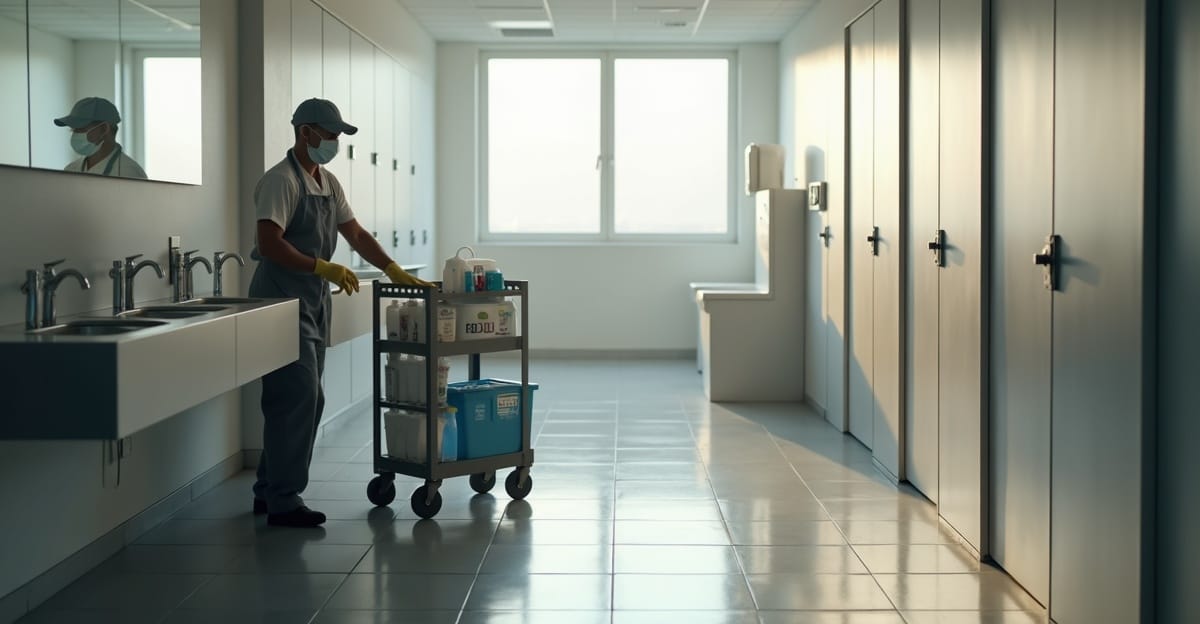
Commercial restrooms operate as high-traffic, high-touch spaces where hygiene risks, compliance pressure, and brand perception meet. We treat professional restroom cleaning as a controlled, performance-driven service, not a basic janitorial task. Across corporate offices, medical centres, and public facilities, we rely on structured workflows, documented procedures, and measurable oversight to control infection risk, manage peak demand, and meet audit standards with confidence.
Key Takeaways
- Restrooms are high-risk, high-visibility areas that directly affect staff wellbeing, visitor perception, and audit results.
- Inadequate cleaning creates odour complaints, empty dispensers, higher infection risk, and added management time spent resolving issues.
- Professional restroom cleaning depends on defined sanitation procedures, targeted disinfection of high-touch points, and preventative maintenance rather than surface-only work.
- Compliance-focused facilities require documented scopes of work, cleaning logs, consumable tracking, and formal quality inspections.
- A dependable provider delivers structured schedules, clear reporting, and proactive risk control that reduces disruption and protects site standards.
Restrooms Are a High-Risk, High-Visibility Area in Any Commercial Facility
Restrooms carry a higher hygiene risk than almost any other area in a commercial facility. They also leave a lasting impression on staff, visitors, and auditors.
In medium to large workplaces across Brisbane and the Gold Coast, restrooms operate as high-traffic, high-touch environments. Door handles, taps, flush buttons, dispensers, locks, and partitions are handled constantly. That level of contact creates continuous exposure to bacteria, viruses, and odour build-up. Without structured professional restroom cleaning, hygiene standards decline quickly.
Workplace restroom hygiene directly affects staff wellbeing and visitor perception. Odour complaints, empty soap dispensers, or visible grime are often the first indicators of service inconsistency. Once these issues surface, confidence in overall facility standards can drop just as quickly.
For corporate offices, medical facilities, government buildings, and public venues, restrooms represent both a hygiene risk and a reputational touchpoint. Facility managers face ongoing operational pressure during peak traffic periods. Lunchtime surges, public events, or shift changes place strain on supplies and surface cleanliness. High-traffic restroom cleaning requires planning, monitoring, and frequency adjustments to maintain acceptable standards.
Professional restroom cleaning is not routine janitorial work. It is a controlled, process-driven activity supported by restroom sanitation protocols, documented checks, and performance oversight. In commercial-scale environments, consistency is critical. Commercial restroom cleaning services must operate with defined systems that address risk, compliance, and user experience at the same time.
The Operational and Reputational Risks of Inadequate Cleaning
Inadequate cleaning creates operational disruption as well as hygiene concerns. Poorly maintained restrooms increase infection risk, contribute to staff complaints, and damage public perception. Internal management time rises as issues require follow-up, investigation, and complaint handling.
Odour complaints are common in high-use facilities. These typically indicate incomplete cleaning, poor waste management, or biofilm accumulation on floors and fixtures. Visible soil build-up around urinals, toilet bases, and partitions often signals that servicing is surface-level rather than thorough. High-touch points can harbour contamination if disinfection steps are inconsistent.
Medical facility restroom cleaning carries heightened risk. In healthcare and government settings, restroom cleaning compliance requirements are stricter. Audit failures or inconsistent documentation can lead to contract performance issues and reputational damage.
Common real-world challenges include:
- Unmonitored consumables running empty during peak hours
- Missed cleans during busy periods
- Lack of cleaning logs
- Reactive responses to complaints
These patterns show a gap in preventative commercial cleaning maintenance.
Workplace restroom hygiene also plays a clear role in infection control. For facilities that require structured hygiene programs, it’s important to understand what role cleaning plays in infection prevention and how restroom sanitation fits within broader compliance frameworks.
From a facility management perspective, priorities are clear: risk reduction, reliability, minimal disruption, and transparent service agreements. Professional restroom cleaning addresses those priorities through documented procedures, consistent oversight, and measurable outcomes rather than reactive fixes.
The Difference Between Basic Janitorial Work and Professional Restroom Cleaning
Basic janitorial services often focus on visible presentation. Bins are emptied. Floors are mopped. Obvious marks are wiped away. While these tasks are necessary, they do not meet commercial bathroom cleaning standards in high-use environments.
Professional restroom cleaning follows structured restroom sanitation protocols. It includes documented cleaning schedules, defined frequencies, and high-touch disinfection procedures. In high-traffic restroom cleaning programs, frequencies are adjusted based on usage patterns and peak-time strain.
High-touch areas require specific attention. Facilities managers should be familiar with high-touch surface cleaning principles, especially in shared restrooms. Taps, flush panels, grab rails, door plates, and dispensers must be disinfected systematically to reduce cross-contamination risk.
Professional programs also incorporate colour-coded equipment and separation of tools to minimise contamination transfer. Clear guidance on how to minimise cross-contamination during cleaning is critical in commercial restrooms, particularly in medical facility restroom cleaning.
Beyond hygiene technique, professional restroom cleaning includes:
- Documented scope of works
- Measurable service benchmarks
- Consumable monitoring systems
- Quality assurance inspections
- Issue escalation procedures
- Reporting aligned with commercial bathroom cleaning standards
This structure transforms restroom cleaning from a routine task into a controlled compliance activity. It recognises the hygiene and high-traffic challenges specific to commercial environments. In busy corporate and public facilities across Brisbane and the Gold Coast, that distinction matters.
Facilities that require a broader approach may integrate restroom cleaning within general commercial cleaning programs, but the restroom component must still meet professional standards to maintain overall site performance.
Standards Expected in Corporate, Medical, and Public Facilities
Commercial restroom cleaning services must align with facility management cleaning checklist requirements and site-specific risk assessments. Documentation must be clear enough to support audits and demonstrate compliance.
In medical facility restroom cleaning, infection-control measures must be clearly defined and consistently applied. Teams should understand infection control cleaning requirements and apply heightened restroom sanitation protocols where required. Healthcare environments cannot rely on informal processes or unclear responsibilities.
Corporate and multi-site properties require consistency across locations. Reporting transparency, defined KPIs, and measurable benchmarks should support every contract. Compliance is practical, not theoretical. It affects audit outcomes, tenant satisfaction, and contract renewals.
A professional provider should clearly define:
- Scope of works
- Cleaning frequencies matched to usage
- Consumable stock monitoring systems
- Incident response and escalation protocols
- Scheduled quality audits
Restroom cleaning compliance requirements also intersect with broader workplace hygiene legislation. Facility managers should understand how to maintain compliance with workplace hygiene laws and ensure their provider can demonstrate alignment.
Where restroom hygiene forms part of a larger facility program, integration with structured commercial cleaning services supports consistency across all site areas.
Signs Your Current Provider May Not Be Meeting Professional Standards
A practical review can quickly identify risk areas. The goal is not criticism. It is risk assessment.
Warning signs may include:
- Inconsistent documentation or missing cleaning logs
- Repeated odour complaints
- Supplies frequently empty during business hours
- No clear quality assurance inspections
- No defined escalation pathway for issues
- Reactive fixes instead of preventative commercial cleaning maintenance
If workplace restroom hygiene depends on individual cleaners rather than defined systems, standards will vary. If high-traffic restroom cleaning schedules do not adjust during peak demand, gaps will appear. If documentation is incomplete, demonstrating compliance becomes difficult.
Regular deep servicing is also essential. Without structured programs, soil accumulation and biofilm build-up increase over time. Many facilities underestimate why regular deep cleaning is essential for businesses in high-use spaces such as commercial restrooms.
This checklist supports a measured evaluation of whether current services align with professional restroom cleaning expectations.
What to Look for in a Reliable Commercial Restroom Cleaning Partner
A dependable commercial cleaning provider in Brisbane or the Gold Coast should demonstrate experience with medium to large organisations. They should manage high-traffic restroom cleaning through structured schedules, trained personnel, and clear reporting systems.
Professional restroom cleaning processes should be clearly documented. Reporting frameworks should provide transparency. Service agreements should define KPIs, escalation pathways, and performance review processes aligned with commercial bathroom cleaning standards.
Providers should also show capability across multiple environments, including healthcare and medical facilities cleaning and large corporate offices. That breadth signals experience with compliance-driven environments.
Operational flexibility is important. Facilities that require minimal disruption often benefit from after-hours cleaning services to maintain standards without affecting staff and visitors.
Long-term value should be framed around risk reduction, fewer complaints, improved audit outcomes, and predictable site performance. Commercial restroom cleaning services should create consistency that reduces internal management time and supports workplace restroom hygiene strategies.
Where current arrangements need review, a structured assessment can clarify gaps and alignment. We encourage facility managers across Brisbane and the Gold Coast to request a contract discussion or request a restroom assessment to evaluate compliance, processes, and performance benchmarks. A clear, process-driven approach protects both hygiene standards and reputation over the long term.