Why Is My Floor Sticky After Cleaning?
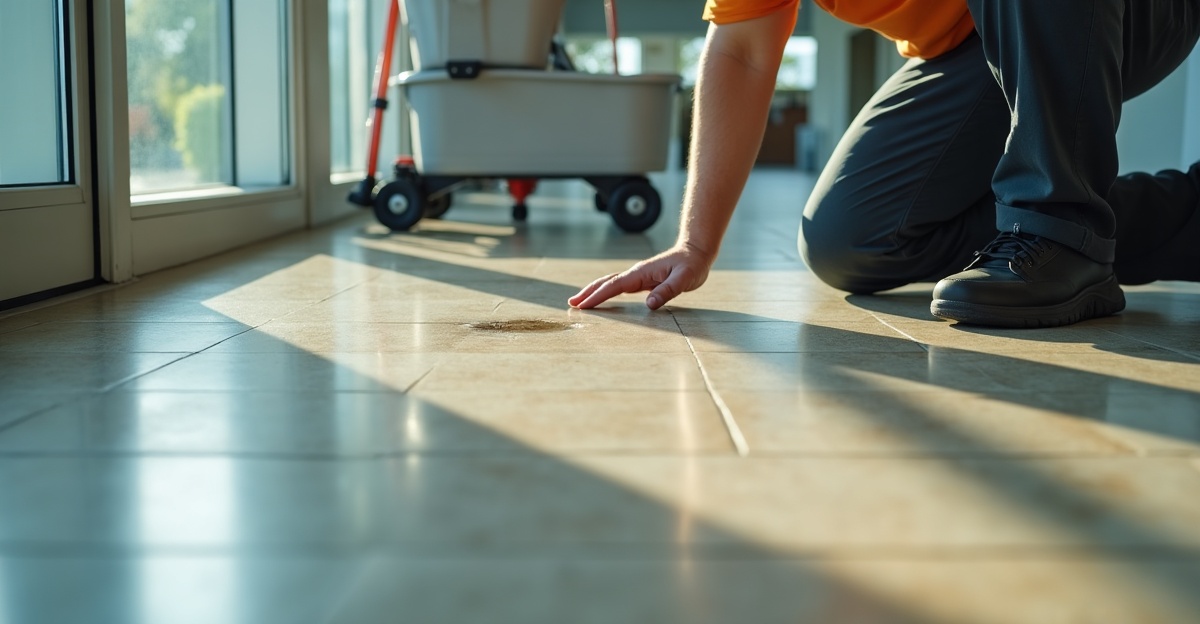
Many facility managers ask why floors feel sticky after cleaning. In commercial facilities, the cause usually traces back to detergent residue left behind from incorrect dilution, poor rinsing, or equipment problems. Sticky floors point to process gaps such as weak supervision, dirty mop water, or incomplete extraction. These issues raise slip risk, trigger complaints, and drive long-term maintenance costs.
Key Takeaways
- Sticky floors after cleaning usually result from excess detergent residue caused by incorrect dilution or skipped rinse steps.
- Teams often create tacky film by reusing dirty mop water, allowing cross-contamination, or rushing tasks that spread soil instead of removing it.
- Tile and textured hard floors tend to trap more residue because porous grout and surface profiles hold cleaning solution.
- In commercial facilities, sticky floors increase slip hazards, create compliance exposure, and damage a facility’s reputation.
- We prevent recurring residue issues by controlling dilution, rinsing thoroughly, maintaining equipment, and supervising processes with clear standards.
Sticky Floors After Cleaning: What It Really Signals in a Commercial Facility
In most commercial environments, the answer to why is my floor sticky after cleaning is straightforward: detergent residue has been left behind on the surface. A floor sticky after cleaning usually points to excess chemical that has not been properly removed during the rinse or extraction stage.
Product defects are rarely the sole cause. In practice, sticky floors signal a process issue involving incorrect dilution, skipped rinse steps, poor equipment maintenance, or limited supervision. Even capable teams can face this issue if systems are not clearly defined and monitored.
In commercial facilities, this matters for several reasons:
- Increased slip hazards in high-traffic areas
- Workplace safety and compliance obligations
- Complaints from staff, tenants, or visitors
- Reputational risk in offices, medical facilities, and government buildings
Residue creates a light film that attracts dirt quickly. Floors look dull within hours. In high-use corridors and entries, that film combines with moisture and traffic to create avoidable risk.
The key point is this: a sticky floor after cleaning is preventable. With correct technique, measured dilution, proper rinsing, and consistent quality checks, the surface should feel clean, dry, and neutral underfoot.
The Most Common Operational Causes of Sticky Floors in Commercial Settings
Sticky residue typically results from recurring operational gaps rather than one-off mistakes.
Incorrect chemical dilution is the leading cause. Over-concentrating neutral cleaners leaves excess surfactants on the surface after drying. These compounds attract soil and create tackiness. Undertraining or unreliable dispensing systems often contribute to this problem.
The “more is better” mindset also causes issues. Adding extra product does not improve sanitation. It increases residue, dulls finishes, and raises long-term maintenance costs.
Mop water management is another factor. If water is not changed frequently enough during large-area cleans, contaminated solution redistributes soil and detergent back onto the floor. This is common in facilities with tight cleaning windows.
Skipping or rushing rinse steps leads to similar outcomes. Cleaning solution must be removed fully. Otherwise, suspended soil and chemical remain on the surface and dry as a tacky layer.
Cross-contamination between chemicals can also create film. Mixing incompatible products, even unintentionally through shared equipment, affects drying performance and surface finish. Clear protocols on minimising cross-contamination reduce this risk significantly.
Over time, residue buildup compounds. Each clean adds a thin layer if extraction is ineffective. Eventually, teams notice a persistent sticky floor after cleaning, even if the most recent service appeared thorough. In multi-site facilities with rotating staff, these patterns often go unnoticed without structured audits.
Why Tile and Hard Floors Feel Sticky More Often
Complaints about a tile floor sticky after cleaning are common in commercial properties. Surface structure plays a major role.
Porous grout lines trap detergent residue. Textured or non-slip tiles hold more solution than smooth surfaces. Under strong lighting, film and streaking become highly visible on hard finishes.
Auto-scrubbers can also contribute if not set correctly. Insufficient pad pressure, worn squeegees, or poor water recovery leave cleaning solution behind. That residue dries evenly across large areas, creating a uniform sticky feel.
Product compatibility is equally important. Understanding which chemical used for floor cleaning suits each surface makes a measurable difference. Neutral pH cleaners are generally suitable for sealed floors. Stronger alkaline products may be necessary for heavy soil but must be rinsed properly. If not, they leave visible film and a tacky finish.
In most cases, a tile floor sticky after cleaning results from a combination of chemistry, surface type, equipment setup, and incomplete extraction.
What to Check If Your Floor Is Sticky After Cleaning (Facility Manager Diagnostic Guide)
When a floor sticky after cleaning becomes a recurring issue, a structured review helps identify the root cause. We recommend assessing the following points:
- Are dilution ratios measured precisely, or estimated manually?
- Is a two-bucket system or microfiber flat mop system in place?
- How often is mop water changed during large-area cleans?
- Are rinse steps documented and supervised?
- Are neutral pH cleaners used for sealed floors where appropriate?
- Has a periodic deep clean been completed to remove accumulated residue?
- Are auto-scrubber tanks, pads, and squeegees maintained for full recovery?
Reviewing cleaning specifications is equally important. Check whether methods align with floor type and traffic load. Confirm that supervisory inspections are documented and corrective actions recorded.
The objective is not to assign blame. Operational pressures are real, particularly in multi-tenant buildings and facilities with extended hours. A calm review of process, equipment, and training typically identifies the cause quickly.
If residue has accumulated over time, a corrective program such as professional deep cleaning services may be required to strip film and reset the surface properly.
Risk, Compliance, and Reputation: Why Sticky Floors Should Not Be Ignored
Sticky residue increases slip potential, especially in entryways, lift lobbies, corridors, and amenities. Combined with moisture from weather or spills, the risk intensifies.
Employers and facility operators must take reasonable steps to minimise hazards in commercial environments. A floor that feels tacky underfoot can shift from hygiene issue to safety concern quickly.
Indirect impacts are also significant:
- Increased complaints about cleanliness
- Perception of poor hygiene standards
- Reduced confidence in facility management
In medical facilities and government buildings, presentation standards are non-negotiable. Visitors interpret sticky or dull floors as a sign of inadequate maintenance, even if disinfection practices meet standards.
Addressing residue supports compliance obligations and protects brand reputation. It also reduces rework, lowering overall cleaning costs over time.
Preventing Sticky Floors Through Proper Technique and Quality Control
Preventing residue requires consistent, process-driven cleaning systems.
Accurate chemical dilution is the foundation. Controlled dispensing systems remove guesswork and standardise results. Teams should understand correct concentrations for each surface type.
Two-bucket or microfiber flat mop systems limit cross-contamination and reduce re-depositing soil. Clear water-change schedules based on area size and traffic load keep solution effective throughout the shift.
Rinse procedures must be followed where required. Floors should be left clean and chemically neutral. For larger facilities, auto-scrubbers with correct pad selection and fully maintained recovery systems improve consistency. Regular servicing ensures squeegees and tanks extract solution completely. Guidance on equipment professional cleaners use highlights how the right tools directly influence outcomes.
Periodic corrective work is equally important. Over time, even well-managed sites can develop subtle buildup. Understanding why regular deep cleaning is essential for businesses helps prevent long-term residue layers that create recurring tackiness.
Supervision closes the gap between theory and execution. Documented inspections, spot checks, and clear reporting standards keep performance consistent across shifts and sites.
Structured janitorial services built on these principles prevent most complaints before they arise. For facilities already experiencing ongoing issues, a professional commercial floor cleaning service can assess surface condition, review methods, and implement corrective action safely.
A sticky floor after cleaning is rarely unavoidable. In nearly every case, clear procedures, correct products, maintained equipment, and steady oversight resolve the issue. Reviewing current cleaning specifications or arranging a structured site assessment allows facilities to identify process gaps early and prevent recurring residue problems.