
How to Schedule Cleaning With Minimal Business Disruption
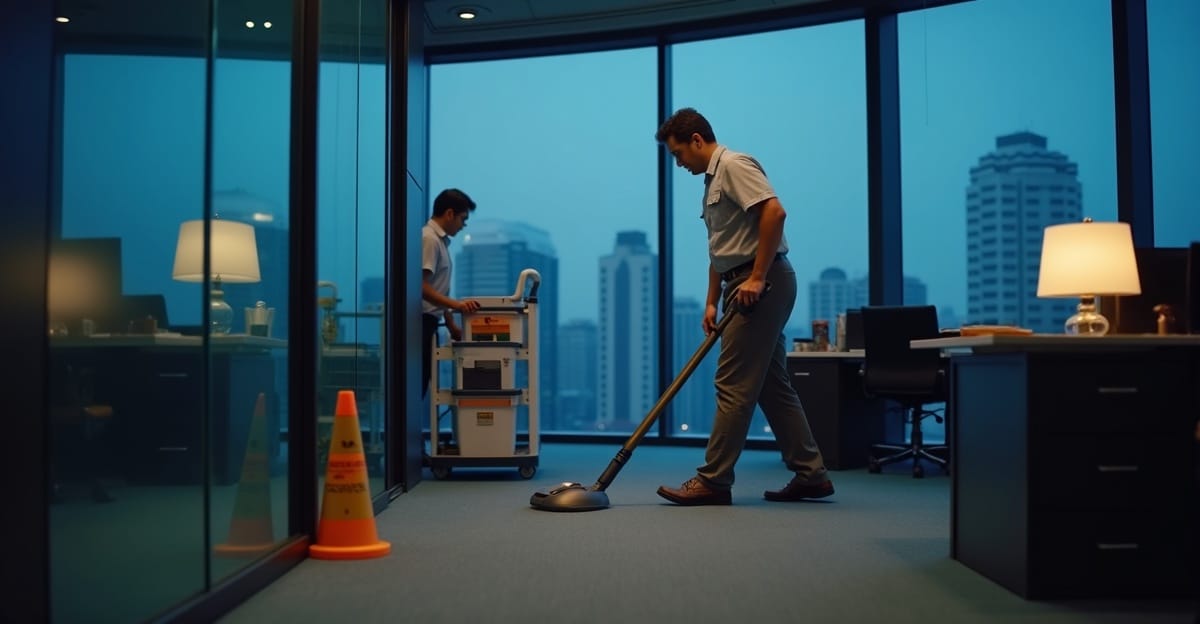
Scheduling cleaning around business hours requires aligning tasks with occupancy patterns, security protocols, and compliance standards to protect productivity and daily operations. We build structured schedules based on site type, risk level, and workflow so we minimise disruption while maintaining presentation, safety, and consistent results.
Key Takeaways
- Minimal business disruption means we protect productivity, privacy, safety, workflow access, and brand perception during cleaning activities.
- The right scheduling model—after-hours, daytime, staggered, zone-based, or hybrid—must align with the building’s operational rhythm.
- Corporate, medical, and government sites require focused plans that address occupancy demands, infection control measures, and security procedures.
- Noise control, clear signage, compliant chemical use, and documented access procedures reduce operational risk.
- A clear scope of works, defined KPIs, and agreed flexibility terms prevent confusion and support consistent service delivery.
What “Minimal Business Disruption” Really Means in Commercial Environments
Cleaning around business hours means aligning cleaning activity with daily operations so productivity, safety, and presentation remain intact. Minimal disruption is measured by how well cleaning supports workflow, protects privacy, and maintains compliance without interfering with staff or visitors.
In practical terms, low disruption focuses on five areas.
Noise control comes first. We use low-decibel equipment and avoid peak meeting times, large presentations, and high-call periods. Vacuuming and machine scrubbing shouldn’t compete with board meetings or training sessions.
Privacy protection is essential in corporate, medical, and government spaces. Cleaning teams must work around confidential documents, secure workstations, and sensitive files without compromise. Government building cleaning, in particular, often requires restricted access and strict discretion.
Safety and compliance cannot be compromised. Clear walkways, correct signage, and approved chemical handling aligned with workplace health and safety standards are baseline requirements. Slip risks during floor cleaning must be managed without creating operational bottlenecks.
Workflow continuity matters as much as hygiene. Lifts, meeting rooms, reception areas, and emergency exits must remain accessible. Cleaning plans should avoid blocking access to critical areas during peak staff movement.
Brand image and client perception round out the picture. Cleaners working during business hours should present professionally and operate discreetly. Daytime cleaning is visible. That visibility must reinforce trust, not distract from business activity.
Large operations face higher pressure. A 200+ staff office across multiple floors cannot absorb random disruption. Medical facility cleaning schedules must consider patient flow, consultation turnover, and infection control. Government facilities include approvals, escort requirements, and layered security protocols. Multi-level commercial properties need coordination across tenants and departments.
Minimal disruption protects productivity, compliance, and employee experience at the same time. The objective isn’t just a clean building. It’s a clean building that supports how teams actually work.
Choosing the Right Scheduling Model for Your Facility
Commercial cleaning schedules vary by operational need, building layout, and risk profile. No single approach fits every site. The right model reduces friction and supports compliance while maintaining cleaning standards.
Below is a practical comparison of common scheduling models.
| Model | Ideal Use Case | Disruption Level | Compliance Considerations |
|---|---|---|---|
| After-hours commercial cleaning | Standard 9–5 corporate offices | Low staff interaction | Secure access, alarm protocols |
| Early morning cleaning | Sites opening mid-morning | Moderate, supervised | Access control and WHS setup |
| Daytime office cleaning | High-traffic or public-facing sites | Low-impact visible presence | Professional presentation, quiet equipment |
| Staggered cleaning shifts | Multi-level or multi-tenant facilities | Controlled by area | Coordination with departments |
| Zone-based cleaning | Large or secure environments | Isolated by section | Restricted access compliance |
| Hybrid model | 24/7 operations, medical facilities | Balanced approach | Infection control and documented procedures |
After-hours commercial cleaning works well in traditional office settings. Heavy tasks such as carpet extraction or floor machine use can occur without interrupting staff. Secure key control and alarm management systems must be clearly defined. Many organisations prefer structured after-hours commercial cleaning for this reason.
Early morning cleaning offers a balance between oversight and reduced foot traffic. Teams complete core tasks before peak arrival times.
Daytime office cleaning suits high-traffic environments where presentation must remain consistent throughout the day. This low-impact model focuses on touchpoints, washrooms, and waste management. Quiet equipment and discreet movement are essential for office cleaning without disruption.
Staggered cleaning shifts divide work by floor or department. Instead of cleaning the entire site at once, tasks are phased across the day or week. This approach is effective in multi-tenant properties.
Zone-based cleaning sections off defined areas at scheduled times. Government environments and large commercial properties benefit from this controlled structure.
Hybrid models combine daytime maintenance with deeper after-hours work. Medical facility cleaning schedules often require this format due to patient turnover and infection control standards. Ongoing janitorial services can support these layered requirements.
Low-disruption cleaning services succeed because the schedule matches the building’s rhythm, not the other way around.
How to Match the Schedule to Corporate, Medical, and Government Sites
Corporate offices in Brisbane and on the Gold Coast require alignment with occupancy patterns. Peak usage often occurs between mid-morning and mid-afternoon. Cleaning plans should reflect meeting calendars and high-collaboration periods. Coordination with HR or operations ensures any visible daytime office cleaning activity is communicated in advance. Heavy vacuuming and floor machine use should avoid peak call blocks.
Structured corporate office cleaning supports performance and staff comfort. In competitive business environments, small disruptions quickly translate into complaints or lost focus.
Medical facilities demand strict infection control protocols and documented procedures. Cleaning sequences must align with consultation hours and patient turnover. Compliance documentation isn’t optional. Staff must be trained in handling biohazard zones and chemical safety. Hybrid scheduling models allow continuous presentation and deeper sanitisation outside patient peaks.
Government buildings introduce additional constraints. Security clearances, access logs, escort requirements, and confidentiality clauses all factor into the plan. Restricted zones may require separate shifts or authorised supervisors on-site.
Multi-site commercial properties require consistency across locations. Facilities managers expect standardised reporting, measurable KPIs, and the ability to scale schedules during expansions or contract transitions. Coordinated commercial property cleaning ensures visibility and control across portfolios.
Facility cleaning planning should be strategic. Reactive schedule changes often cause more disruption than the cleaning itself.
Risk Mitigation: Protecting Safety, Compliance, and Daily Operations
Low disruption depends on structured systems. Flexible timing alone isn’t enough.
Workplace health and safety alignment is foundational. Correct signage and temporary barricades control movement during floor cleaning. Slip risks must be actively managed. Chemical storage and labelling must meet cleaning compliance requirements and site-specific policies.
Noise-reduction equipment supports office cleaning without disruption. Backpack vacuums, controlled-speed scrubbers, and quieter machinery reduce impact in open-plan environments.
Professional presentation also matters. Discreet uniforms and visible identification reassure staff and visitors that authorised contractors are working on-site.
Security and access management must be clearly documented. This includes key control registers, alarm code protocols, contractor inductions, and clear incident reporting pathways. Escalation procedures ensure issues are addressed immediately without affecting daily operations.
Consistency supports risk control. Reliable scheduling and supervision reduce variation and support compliance. For deeper insight into the operational impact of reliability, review why consistency matters in commercial cleaning.
Setting Clear Expectations in Your Service Agreement
A detailed scope of works defines what is cleaned, how often, and to what measurable standard. Vague agreements lead to inconsistent outcomes and operational friction.
Clear commercial cleaning schedules outline frequency by area. High-traffic zones may require daily servicing, while low-use meeting rooms may need periodic attention. For broader planning guidance, understanding how often a business should be professionally cleaned helps align frequency with actual risk.
KPIs should include response times, quality inspections, and supervision frequency. Multi-site operations benefit from standardised reporting dashboards to track performance.
Confidentiality clauses are essential for medical and government facilities. Terms around access, documentation, and data handling must be unambiguous.
Flexibility provisions in a commercial cleaning contract should define how schedule adjustments occur. Temporary increases during peak seasons or special events must be structured, not improvised.
Cost evaluation should consider operational protection. Preventing disruption preserves productivity. Reduced staff complaints protect morale. Stable vendor partnerships lower transition risk. Established commercial cleaning Brisbane and Gold Coast commercial cleaning providers offer long-term reliability that supports operational planning.
Practical Checklist: Questions to Ask Before Finalising Your Cleaning Schedule
Before approving any schedule, clarify operational realities. Use this checklist to guide internal review:
- Identify peak occupancy and high-traffic periods.
- Confirm which areas cannot be accessed during operating hours.
- Flag compliance-sensitive zones such as medical suites, secure offices, or executive floors.
- Determine acceptable visibility for daytime office cleaning.
- Define security and access protocols for contractors.
- Set performance measurement and reporting expectations.
- Assess whether a hybrid or zone-based cleaning approach is better than full after-hours commercial cleaning.
Frequently Asked Questions
The best way to manage cleaning around business hours is to align tasks with occupancy patterns and peak activity periods. High-noise or heavy-duty work should be scheduled outside core hours, while low-impact tasks like waste removal and washroom checks can occur during the day. Using quiet equipment and clear communication helps maintain workflow and reduce distractions.
Yes, poorly planned cleaning around business hours can interrupt meetings, calls, and focused work. However, a structured schedule that avoids peak periods and high-traffic zones prevents most disruptions. When cleaners follow defined access routes and noise controls, productivity remains protected while hygiene standards are maintained.
Daytime commercial cleaning is safe when supported by proper signage, slip prevention controls, and compliant chemical use. Clear walkways and visible safety markers reduce risk during floor care or spill response. Staff training and adherence to workplace health and safety procedures ensure daily operations continue without incident.
Security during cleaning around business hours is managed through documented access procedures and supervision protocols. This includes key control registers, alarm coordination, and restricted area approvals. Clear identification and sign-in processes protect confidential spaces while allowing cleaners to complete tasks efficiently.
A hybrid cleaning schedule is ideal for facilities with extended operating hours or compliance requirements. It combines daytime maintenance for presentation and touchpoint hygiene with after-hours deep cleaning for intensive tasks. This approach supports infection control, reduces operational friction, and keeps the environment consistently professional.