
What to Know About After-Hours Cleaning Services
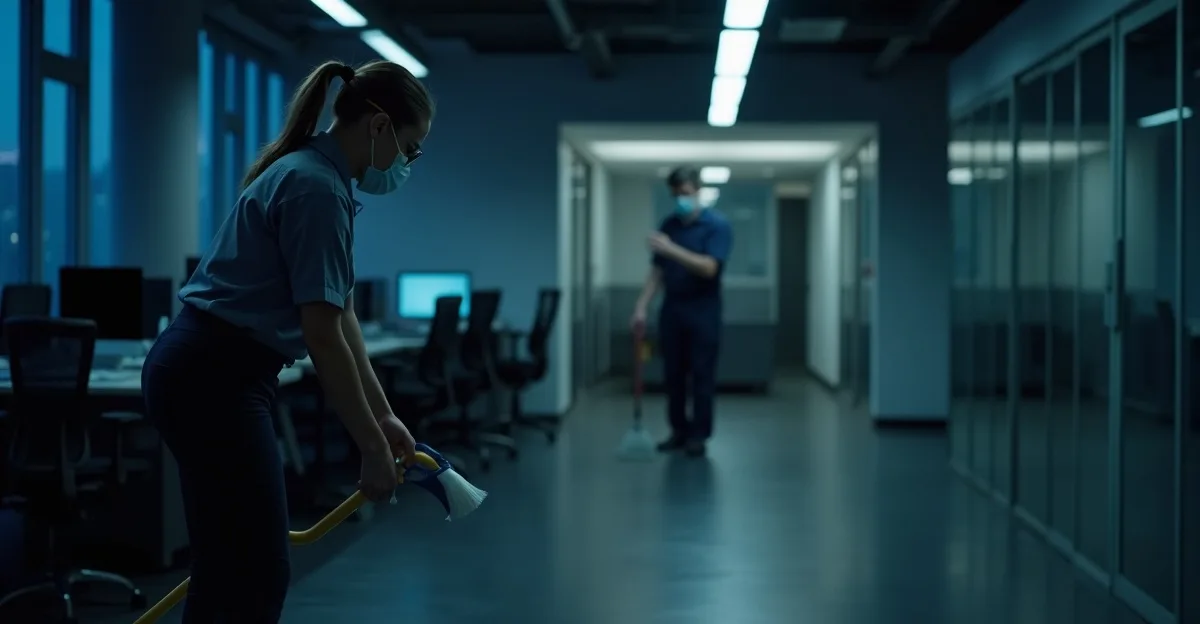
After hours office cleaning protects productivity while maintaining strict hygiene and compliance standards. We structure these services to support corporate, medical, and government facilities without interrupting daily operations, meetings, or client interactions.
Key Takeaways
- After hours office cleaning is scheduled outside business hours and typically covers workstations, amenities, kitchens, waste removal, floor care, and touchpoint disinfection.
- Security protocols such as controlled key management, alarm procedures, access logs, and background-checked staff are critical to reducing risk.
- WHS compliance requires documented SWMS, risk assessments, insurance cover, infection control procedures, and site-specific inductions.
- Structured supervision and quality assurance systems, including SLAs and digital reporting, replace real-time oversight during overnight cleaning.
- Evaluating a provider should include reviewing security controls, compliance documentation, supervision frameworks, escalation processes, and contract clarity.
After hours office cleaning runs outside standard operating times, usually in the evening or overnight. We cover workstations, shared amenities, kitchens, waste streams, flooring, and high-touch surfaces during these shifts. This schedule allows staff and visitors to work without distraction while we complete thorough cleaning tasks efficiently.
Security remains a top priority during unattended service periods. We implement controlled key management, strict alarm procedures, secure access logs, and comprehensive background checks for all team members. Our supervisors monitor site access and document every entry and exit. These measures reduce risk and protect sensitive information, equipment, and property.
WHS compliance shapes every stage of our service delivery. We maintain current SWMS documentation, conduct site-specific risk assessments, and verify insurance coverage before work begins. Our teams follow documented infection control procedures and complete detailed site inductions. Clear processes prevent incidents and demonstrate compliance during audits or inspections.
Structured supervision replaces real-time client oversight during overnight cleaning. We assign area supervisors who inspect completed work and log results in digital reporting systems. Service Level Agreements define measurable standards, response times, and escalation pathways. Digital audit trails provide transparency and proof of performance.
Facility managers should assess more than price during procurement. We recommend reviewing security controls, compliance documentation, supervision frameworks, escalation procedures, and contract terms in detail. Clear scope definitions prevent misunderstandings and protect service consistency. Strong governance delivers reliable results and reduces operational risk across every site.
How After Hours Office Cleaning Works and What It Typically Covers
After hours office cleaning takes place outside normal business operating times. Cleaning is completed in the evenings, overnight, early mornings, or on weekends to avoid interrupting staff, clients, and daily operations.
In medium to large organisations, after hours office cleaning is scheduled around access windows, security protocols, and building management requirements. We coordinate directly with facility managers to confirm alarm access, keys, lift use, and any restricted areas. This planning ensures cleaning runs smoothly without impacting productivity.
The scope of work in most after hours cleaning services includes:
- Workstation and desk area cleaning
- Kitchens and breakout areas
- Bathrooms and amenities
- Waste removal and recycling
- Vacuuming and mopping of common areas
- Touchpoint disinfecting such as lifts, door handles, and shared equipment
Additional services can be integrated into night office cleaning services as required. These may include carpet steam cleaning, strip and seal of hard floors, high-level dusting, and consumable supply management. Many organisations combine routine cleaning with periodic deep cleaning under contract office cleaning services to maintain presentation standards year-round.
Commercial office cleaning at night differs from daytime cleaning in several ways. Workflow is uninterrupted because staff are off-site. Access must be pre-authorised. Supervision happens through structured reporting systems rather than live client walkthroughs. Processes are documented clearly because issues cannot be resolved face-to-face in the moment. That structure allows after hours cleaning services to operate effectively at scale.
Why Many Organisations Choose Cleaning at Night – Benefits and Trade-Offs
Minimal disruption is the primary reason organisations move to commercial office cleaning at night. Staff work without vacuum noise, wet floors, or equipment in shared corridors. Meetings run without interruption. Client-facing areas remain presentable throughout the day.
Night cleaning also reduces health and safety risks during peak foot traffic. There are fewer trip hazards. Equipment can move freely through common areas. Larger tasks can be completed safely without working around people.
Corporate offices, medical centres, and government facilities often rely on structured corporate office cleaning services delivered after hours to protect brand image and maintain confidentiality. In medical environments, medical office after hours cleaning supports infection control without disrupting patient care.
There are trade-offs to consider. Client representatives are usually off-site overnight, which limits real-time supervision. If an issue arises, communication may not occur until the next morning.
Professional providers reduce these risks through:
- Clear reporting lines and escalation procedures
- Scheduled site inspections by supervisors
- Digital communication logs and service reporting systems
These controls matter in Brisbane and Gold Coast commercial environments where facility managers manage multiple contractors and competing priorities. Commercial cleaning quality control must be structured, documented, and reliable to give decision-makers confidence that standards are maintained even when the building is empty.
Security, Access Control and Key Management: Reducing Risk After Hours
Security is often the biggest concern with after hours cleaning services. Cleaners are working in secure environments without client staff present. That requires formal commercial cleaning security protocols.
Effective key management cleaning services include coded key registers, restricted access to keys, and sign-in sign-out processes. Keys are never duplicated without written approval. Access rights are limited to authorised personnel assigned to the site.
Alarm access cleaning procedures must also be documented. This includes authorised alarm codes, access logs, and confirmation of lock-up checks at the end of each shift. Lock-up checklists verify doors, windows, and sensitive areas are secured before departure.
Background checks, ID verification, and site-specific inductions are standard requirements in professional contract office cleaning services. These are not optional safeguards; they are basic risk controls.
Certain sectors require stricter measures. Government office cleaning services may involve confidentiality obligations and restricted records. Multi-tenant buildings require adherence to building management access controls. Medical office after hours cleaning introduces additional responsibilities around patient information and controlled zones. Providers experienced in healthcare cleaning services understand these access limitations and hygiene standards.
Documented processes reduce liability exposure and demonstrate accountability if an incident occurs. Facility managers benefit from knowing there is an audit trail for keys, alarms, and entry logs.
WHS and Office Cleaning Compliance Requirements You Cannot Overlook
WHS cleaning compliance obligations apply to both the client and the cleaning contractor. Employers must provide a safe workplace. Contractors must follow documented safety procedures.
Office cleaning compliance requirements typically include Safe Work Method Statements (SWMS), risk assessments, chemical handling records, and equipment maintenance logs. These documents confirm that staff are trained and systems are in place to manage hazards.
Site-specific inductions are essential. Medical environments may involve sharps risks or biohazard controls. Government offices may store archived records that require secure handling. Each location has its own hazard profile, and night office cleaning services must align with those conditions.
Infection control standards are particularly important in healthcare or high-touch office settings. Touchpoint disinfection procedures must be clearly defined, monitored, and updated when health guidelines change.
Insurance coverage is also a core requirement. Public liability and workers compensation policies protect both parties if an incident occurs during after hours office cleaning.
Compliance documentation supports safe operations, reduces disputes, and protects property and personnel. Decision-makers reviewing general commercial cleaning services should always verify current compliance records before confirming contracts or renewals.
Communication, Supervision and Quality Assurance in Night Office Cleaning Services
Supervision for night office cleaning services operates differently from daytime models. On-site team leaders conduct regular spot checks. Senior supervisors complete scheduled inspections. Management may perform random quality audits without prior notice.
Commercial cleaning quality control systems rely on documentation. Cleaning teams record completed tasks, issues are logged, restocking requirements are flagged, and maintenance observations are reported to building management.
Within contract office cleaning services, service level agreements (SLAs) define measurable frequencies and response times. These might outline how often bathrooms are deep cleaned, how quickly consumables are replenished, or how rapidly issues are rectified after reporting.
Clear reporting builds transparency. Facility managers can review performance history rather than relying on impressions. That visibility strengthens long-term accountability, even when staff are not present during cleaning hours.
For organisations comparing service structures, understanding janitorial and commercial cleaning helps clarify whether daytime attendants or dedicated overnight teams better match operational needs.
How to Evaluate an After Hours Cleaning Provider (Practical Checklist for Decision-Makers)
Selecting after hours cleaning services requires structured evaluation. Decisions should reflect security, compliance, supervision, and long-term reliability.
When reviewing or switching contract office cleaning services, confirm the following:
- What commercial cleaning security protocols are documented?
- How are keys and alarm codes controlled and audited?
- What WHS cleaning compliance documentation is provided, including SWMS and insurance certificates?
- How is commercial cleaning quality control measured and reported?
- What supervision structure supports after hours office cleaning teams?
- How are issues escalated and resolved when identified overnight?
Contract clarity matters. Scope definitions should outline inclusions and exclusions. Frequency schedules should match operational needs. Variation processes must be documented. Cost structures depend on floor area, cleaning frequency, security requirements, and regulatory obligations.
Before renewing agreements, facility managers should review current performance against SLAs and compliance obligations. Gaps often appear gradually in long-running contracts. A structured review reduces operational risk.
Reliable after hours office cleaning supports business continuity. Processes should reduce disruption, protect security, and maintain compliance confidence without adding administrative pressure.
For organisations reassessing their approach, structured guidance on choosing the right commercial cleaning company can help clarify evaluation criteria. Where operational changes are required, professional commercial cleaning services should align with documented compliance standards and operational realities.
Long-term value comes from consistency and clear communication. After hours cleaning must operate quietly in the background while delivering visible results each morning.
Frequently Asked Questions
After hours office cleaning is a commercial cleaning service scheduled outside normal business hours, usually in the evening, overnight, or early morning. Cleaning teams perform tasks such as workstation sanitising, restroom cleaning, waste removal, and floor care while employees are off-site. This approach allows cleaners to work efficiently without disrupting meetings, productivity, or daily operations inside the workplace.
Many businesses choose after hours office cleaning to avoid interruptions during working hours. Cleaning activities such as vacuuming, floor mopping, and restroom maintenance can create noise or temporary access restrictions. Scheduling these tasks overnight keeps the workplace presentable for staff and clients throughout the day while allowing cleaners to complete larger tasks safely and efficiently.
Yes, professional after hours office cleaning providers use strict security protocols to protect workplaces. These typically include background-checked staff, controlled key management, alarm access procedures, and detailed entry logs. Secure cleaning procedures help ensure that confidential documents, equipment, and restricted areas remain protected while cleaning work is carried out when the building is unattended.
After hours office cleaning usually covers workstations, meeting rooms, kitchens, restrooms, reception areas, and shared spaces. Services often include dusting surfaces, disinfecting high-touch points, emptying bins, vacuuming carpets, and mopping floors. Many businesses also add periodic deep cleaning tasks such as carpet steam cleaning, floor polishing, or detailed sanitisation to maintain long-term hygiene standards.
Choosing a reliable after hours office cleaning provider involves reviewing more than pricing. Businesses should evaluate security procedures, compliance documentation, insurance coverage, and supervision systems. A reputable provider will also offer clear service agreements, quality assurance reporting, and structured communication processes to ensure cleaning standards remain consistent even when work is performed overnight.