How often should an office be cleaned?
Understanding how often an office should be cleaned depends on foot traffic, occupancy levels, risk exposure, and the purpose of each area in the workplace. Cleaning schedules must combine routine daily tasks with periodic deep cleaning to maintain hygiene standards, meet compliance requirements, and present a professional image.
Key Takeaways
- Low-traffic offices require cleaning 2–3 times per week, while medium to high-traffic workplaces require daily service.
- Bathrooms, kitchens, and high-touch surfaces require daily cleaning in most commercial environments, with multiple services per day in high-use settings.
- Routine cleaning must be reinforced with scheduled deep cleaning of carpets, floors, upholstery, vents, and windows to prevent long-term wear.
- Cleaning frequency should reflect actual space usage, seasonal demands, and infection control requirements.
- Clear, structured cleaning schedules reduce complaints, support compliance efforts, and maintain a consistent workplace appearance.
Quick Answer: Recommended Commercial Cleaning Frequencies by Office Type and Risk Level
Cleaning frequency depends on foot traffic, public access, and risk exposure. Industry benchmarks provide a clear guide for how often should an office be cleaned in real-world settings.
For low-traffic offices with small teams and limited visitors, general cleaning 2–3 times per week is typically sufficient. Bathrooms and kitchens should be cleaned at least three times per week, and high-touch points should be sanitised daily.
Medium-traffic corporate offices generally require cleaning five days per week. Bathrooms and kitchens should be cleaned daily. High-touch areas and meeting rooms need daily attention to maintain hygiene and presentation.
High-traffic or public-facing offices require daily full cleaning. Bathrooms and kitchens often need servicing multiple times per day. High-touch points should be cleaned at least daily and more often during peak occupancy.
Medical, government, and compliance-sensitive environments require daily cleaning as a minimum. Many also require documented cleaning schedules and multiple cleans per day in line with infection control requirements.
In commercial settings, “cleaned” means routine maintenance plus scheduled deep cleaning. This includes carpets, upholstery, hard floors, air vents, and detailed sanitisation. Without both elements, standards drop over time.
How often are offices cleaned should be based on actual usage—not assumptions. A small office may need less frequent visits, while a busy reception area requires daily care regardless of overall size.
What “Cleaned” Actually Means in a Commercial Office
Clarity matters. Office cleaning involves both routine services and periodic deep cleaning.
Routine cleaning covers daily or weekly essentials that maintain hygiene and presentation. This includes:
- Emptying bins and replacing liners
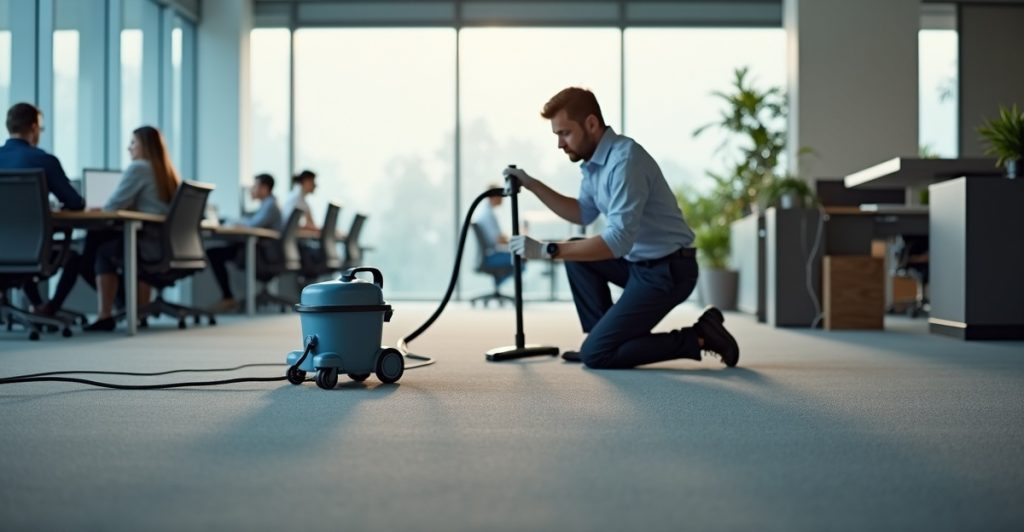
- Vacuuming carpets and mopping hard floors
- Wiping desks, counters, and shared surfaces (where permitted)
- Cleaning and disinfecting bathrooms, kitchens, and breakout areas
- Sanitising high-touch points such as door handles, lift buttons, taps, and shared equipment
These tasks form the backbone of professional commercial cleaning services.
Periodic tasks prevent long-term deterioration. They typically follow monthly, quarterly, or annual schedules.
Monthly tasks include detailed appliance cleaning and spot carpet treatments. Quarterly services often involve steam cleaning carpets in high-traffic zones, machine scrubbing hard floors, and upholstery cleaning. Annual tasks may include high dusting and comprehensive window cleaning. For guidance on glazing maintenance intervals, see how often commercial windows should be cleaned.
Carpet cleaning should never be left too long. High-traffic carpeted areas often require quarterly attention, as outlined in how often office carpets should be cleaned.
Post-pandemic expectations remain elevated. Staff expect visible disinfecting of shared surfaces and documented touchpoint cleaning. Many businesses have retained regular professional sanitisation services to meet these standards.
Effective cleaning acts as risk management. It reduces complaints, supports staff wellbeing, and maintains a professional work environment. That’s why understanding what commercial cleaning involves is critical for managers and facilities teams.
Cleaning Frequency by Area: Practical Benchmarks for Decision-Makers
Different areas within one office often require different cleaning intervals.
Workstations and desks vary according to usage. In lightly used private offices with clear desk policies, surface cleaning 2–3 times per week may be sufficient. Standard open-plan offices should receive daily wipe-downs of accessible areas. Shared desks and hot-desking setups require daily disinfecting at a minimum.
High-touch points demand consistent attention. Door handles, lift buttons, handrails, shared printers, and taps should be cleaned at least daily. During flu season or peak occupancy, twice-daily cleaning reduces cross-contamination risk.
Bathrooms must be cleaned daily in all commercial environments. Public-facing or high-traffic buildings often require multiple services per day to maintain hygiene, supply levels, and presentation.
Kitchens and breakout areas should be cleaned daily. Benchtops, sinks, appliance fronts, and floors require consistent care. In medium to high-use offices, mopping should occur every weekday.
Reception and public-facing zones represent the business. Floors should be vacuumed or mopped daily. Glass and entry areas need daily checks for smudges and marks.
Meeting rooms should be checked and reset daily. In high-turnover spaces, disinfecting between uses prevents hygiene concerns.
Compliance-sensitive environments require stricter standards. Government and medical facilities typically follow documented checklists under structured janitorial services programs. Infection control protocols dictate minimum daily cleaning, with some areas serviced multiple times per day.
How often do offices get cleaned should align with how often each space is used. A rarely used boardroom does not require the same attention as a busy staff kitchen.
Adjusting Frequency Based on Foot Traffic, Occupancy, and Season
A standard template rarely works across all businesses.
Low occupancy offices with fewer than 20 staff and limited visitors may operate effectively on 2–3 cleans per week. Bathrooms and touchpoints still require regular attention.
Medium occupancy offices with 20–100 staff generally require five-day-per-week cleaning. Consistency prevents issues from building up.
High occupancy offices, or multi-tenant buildings with 100+ staff and regular visitors, require daily cleaning. Many also benefit from daytime touchpoint checks.
Seasonal factors matter. Flu season justifies increased disinfecting of shared equipment and touchpoints. Event periods or peak operational months often require temporary increases in cleaning.
Post-pandemic expectations remain strong. Staff and tenants are quick to notice falling hygiene standards. Visible cleaning builds confidence and reduces complaints.
Multi-site organisations benefit from consistent schedules across locations. Standardised processes help maintain equal hygiene levels across Brisbane and surrounding metro areas. Our after-hours cleaning service supports operational continuity without disrupting teams.
Consistency matters as much as frequency. A structured approach ensures tasks aren’t skipped. Understanding why a cleaning schedule is important helps businesses maintain reliable standards over time.
Signs Your Office Needs More Frequent Cleaning
Warning signs often appear before formal complaints.
Common indicators include increased comments about bathroom cleanliness or kitchen hygiene. Overflowing bins before the next scheduled visit suggest insufficient frequency. Visible dust buildup or marked glass indicates cleaning gaps.
Rising absenteeism during flu season can highlight hygiene shortcomings. Audit findings or compliance flags in regulated industries require immediate action.
Negative client feedback about presentation should never be ignored. First impressions influence trust.
If cleaning tasks are frequently deferred due to workload or time constraints, the schedule likely needs review. In these cases, how often are offices cleaned may not match the operational reality of the building.
Building a Cleaning Schedule That Supports Compliance, Presentation, and Operational Efficiency
An effective schedule aligns with industry requirements, risk exposure, and brand expectations. Medical and government offices require strict documentation. Corporate offices focus on consistent presentation and staff wellbeing.
Small private offices differ greatly from large multi-tenant facilities. A generic “once a week” approach rarely delivers consistent results.
Outcomes should guide decisions. Scheduled maintenance reduces complaints. It supports hygiene confidence and compliance assurance. It also maintains presentation standards for staff and clients. The long-term benefits of scheduled maintenance cleaning extend well beyond surface appearance.
Frequency should also align with operations. Coordinating services around business hours prevents disruption. Practical guidance on aligning cleaning plans with business operations ensures cleaning supports productivity, not hinders it.
A professional assessment makes the difference. Site-specific evaluation of layout, occupancy, and workflow allows realistic scheduling. Our experienced team delivers structured office cleaning services across Brisbane with clear scopes and consistent staff.
How often should an office be cleaned depends on real conditions, not assumptions. We provide practical recommendations based on risk, usage, and compliance needs. For tailored guidance, businesses can request a detailed assessment through our cleaning quote service.
Frequently Asked Questions
How do I know if my office needs cleaning more often?
Your office likely needs more frequent cleaning if bins overflow, dust builds up quickly, restrooms become untidy, or employees frequently report unpleasant odours or allergies. Increased staff numbers, customer traffic, and seasonal illnesses can also increase cleaning requirements. Monitoring these signs helps you adjust your cleaning schedule before hygiene and workplace presentation decline.
What office areas should be cleaned every day?
High-use areas should be cleaned daily to maintain hygiene. This includes reception desks, workstations, kitchens, bathrooms, door handles, lift buttons, meeting rooms, and other frequently touched surfaces. Daily cleaning helps minimise bacteria, creates a better first impression, and keeps the workplace comfortable for employees and visitors.
Does office size affect how often it should be cleaned?
Yes. Larger offices generally require more frequent cleaning because they have more occupants, larger common areas, and higher foot traffic. Smaller offices with fewer employees may only need professional cleaning a few times each week, while larger workplaces often benefit from daily cleaning to maintain consistent hygiene standards.
Should offices schedule regular deep cleaning?
Yes. Routine cleaning removes everyday dirt, while deep cleaning targets carpets, upholstery, vents, hard-to-reach areas, and accumulated grime. Most offices benefit from professional deep cleaning every three to six months, although healthcare facilities and high-traffic workplaces may require it more frequently.
Can a customised office cleaning schedule save money?
Yes. A customised cleaning schedule focuses services where they’re needed most instead of applying the same routine everywhere. Adjusting cleaning frequency based on occupancy, business hours, and workspace usage helps maintain cleanliness while reducing unnecessary labour and long-term maintenance costs.
How often should high-touch surfaces be disinfected?
High-touch surfaces should generally be disinfected every day and more frequently during flu season or illness outbreaks. Items such as door handles, keyboards, phones, shared equipment, kitchen appliances, and lift buttons can harbour germs that spread quickly throughout the workplace.
Does regular office cleaning improve employee productivity?
Yes. A clean workplace reduces distractions, improves comfort, and creates a healthier working environment. Cleaner offices may also reduce dust, allergens, and illness-related absences, allowing employees to remain more focused and productive throughout the workday.
Should office cleaning frequency change during winter or flu season?
Yes. During periods of increased illness, businesses often increase disinfecting of shared surfaces, restrooms, kitchens, and meeting rooms. Temporary increases in cleaning frequency can help support workplace hygiene and reduce the spread of viruses among employees.
Is it better to clean an office after business hours?
For many businesses, after-hours cleaning is the preferred option because it minimises disruptions to employees and visitors. It also allows cleaners to access all work areas safely and complete tasks more efficiently without interrupting daily operations.
How often should a commercial office cleaning schedule be reviewed?
Review your cleaning schedule at least every six to twelve months or whenever staffing levels, office layout, operating hours, or business activities change. Regular reviews ensure the cleaning program continues to meet workplace hygiene requirements without overspending on unnecessary services.