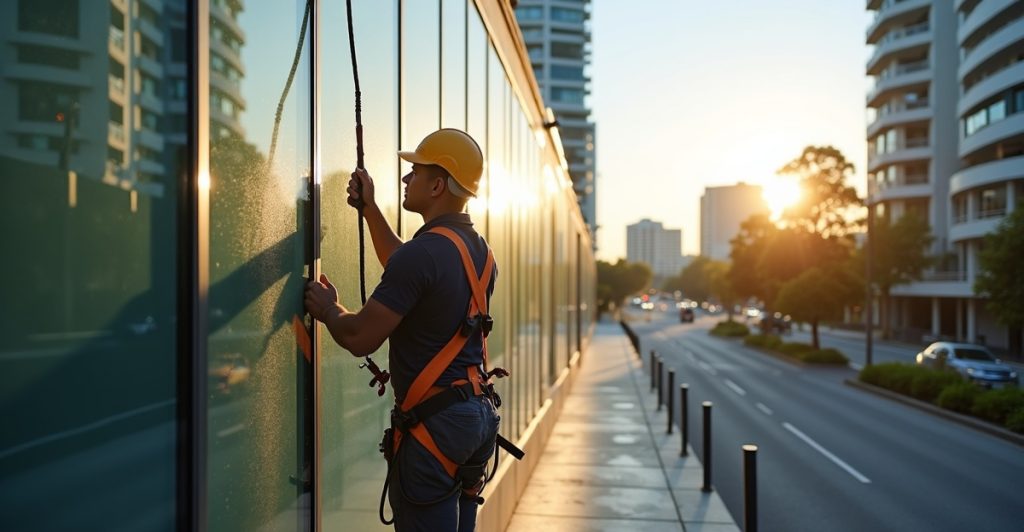
How long does window cleaning take?
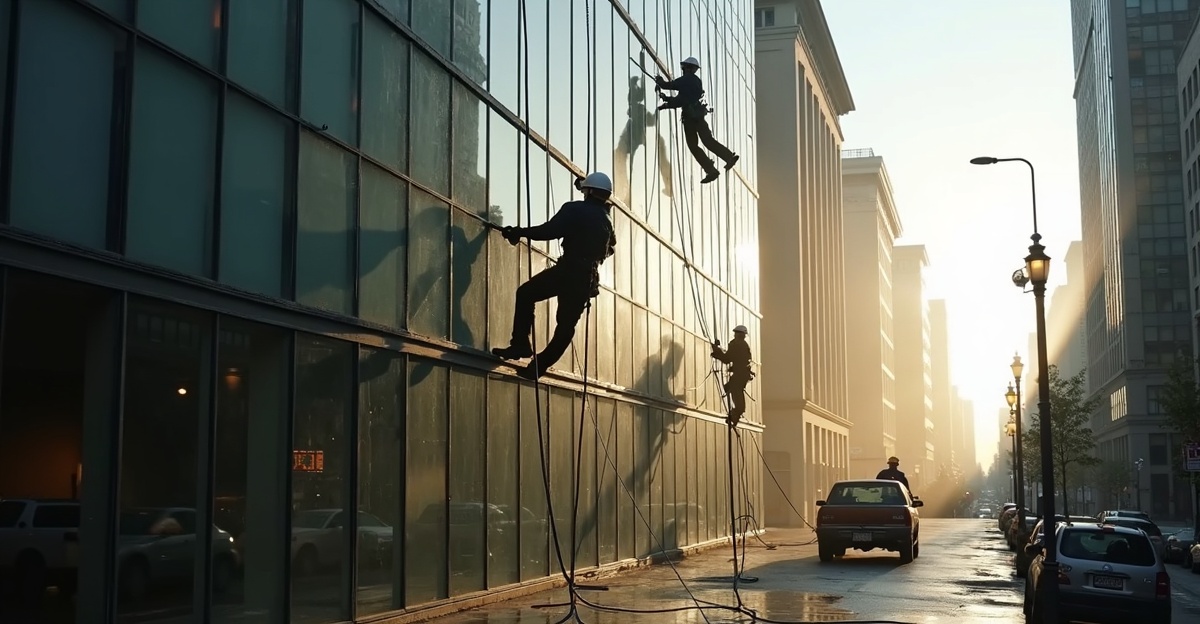
How long window cleaning takes depends on building height, access requirements, safety controls, and maintenance history rather than glass size alone. For commercial properties, timeframes range from 2–6 hours for low-rise buildings to several days or weeks for high-rise sites that require rope access, EWPs, or staged façade work.
Key Takeaways
- Low-rise commercial buildings (1–2 storeys) typically take 2–6 hours, while 3–5 storey buildings generally require 1–2 full working days.
- High-rise and large commercial properties often take several days or multiple weeks due to access systems, staging, and compliance requirements.
- Building design, restricted access areas, and safety protocols often extend timelines more than square metre estimates suggest.
- First-time or overdue cleans take longer because dirt, mineral deposits, and coastal residue build up over time.
- Scheduling around trading hours, tenant activity, weather conditions, and site inductions can extend the overall calendar schedule, even if daily onsite hours stay consistent.
What to Expect: Typical Timeframes for Commercial Window Cleaning
For commercial properties, how long window cleaning takes depends on building height, access, and site conditions. In practical terms, most low-rise buildings take 2–6 hours, medium buildings take 1–2 days, and large or high-rise buildings can take several days to multiple weeks.
For 1–2 storey commercial buildings, professional window cleaning is usually completed within a single half day or full day. A standard low-rise office with external glass only will often take a two-person crew between 2 and 6 hours. Add internal glass, partitions, and detailed frame cleaning, and the timeframe increases.
For medium-sized commercial buildings (3–5 storeys), expect 1–2 full working days. Access setup, elevated equipment, and safety controls extend the job beyond simple square metre estimates.
High-rise and large commercial buildings are different again. The timeframe can range from several days to multiple weeks. Rope access teams, Elevated Work Platforms (EWP), or Building Maintenance Units (BMU) add setup time, staging, and compliance requirements.
These ranges answer the core question of how long professional window cleaning takes, but accurate timelines always depend on operational factors. Glass volume matters, but façade design, access, staging, and safety requirements often define the real schedule.
Anyone wanting a clearer picture can review our professional window cleaning services to understand how scope influences time onsite.
Window Cleaning Timeframes by Property Type and Environment
Different property types require different approaches. On the ground, how long a window cleaner takes is shaped as much by environment as by height.
Small Commercial Offices (1–2 Storeys)
A small commercial office in Brisbane or the Gold Coast typically takes 2–6 hours for a full exterior clean. Most jobs are completed by a two-person crew using water-fed poles and ladder access where required.
If we include internal glass, meeting room partitions, and entry façades, extra time is required. Interior access coordination often slows the process more than exterior work.
Routine cleans move faster. First-time or overdue cleans take longer due to built-up dirt, coastal residue, or environmental staining common in South East Queensland.
Medium, Large, and High-Rise Buildings
For 3–5 storey offices, medical centres, or mixed-use sites, 1–2 full days is typical. Additional factors include:
- Site inductions and safety briefings
- Working at heights controls
- Infection control measures in healthcare settings
- Access to roof spaces or secure plant rooms
High-rise buildings require specialist access. Rope technician teams need setup time. EWPs require safe positioning and permits. BMU systems demand coordination with building management.
Large sites can extend across several days or weeks. Staging becomes essential. Buildings are often divided into vertical drops or façade sections to manage safety and keep pedestrian zones open.
Retail centres and high-traffic properties follow a different pattern. In these environments, timelines depend heavily on trading hours and customer flow. Work is often split into early morning or evening shifts to reduce disruption. That can stretch the calendar duration while keeping daily onsite hours shorter.
In Brisbane CBD and coastal Gold Coast locations, pedestrian flow and shared access zones also affect duration. These operational realities matter more than generic size assumptions.
What Factors Affect Window Cleaning Timeframes?
Anyone asking how long it takes to clean windows in a commercial setting should look beyond surface area. Several operational factors can significantly extend or reduce onsite time.
Building Design and Access Limitations
Façade design plays a major role. Curtain walls, recessed windows, deep atriums, and architectural fins increase labour time. Obstructed glass requires repositioning equipment or manual detailing.
Street frontage and internal layout also influence speed. Limited access areas, confined courtyards, or restricted zones require additional setup. Traffic management plans and public exclusion zones slow progress but protect safety.
Equipment choice changes timelines. Water-fed poles allow faster coverage for low to mid-rise sites. Rope access requires specialist technicians and setup procedures. EWPs demand safe ground conditions and positioning space.
Safety and compliance are non-negotiable. Risk assessments, Safe Work Method Statements (SWMS), and site inductions add to total project hours. Healthcare facilities require infection control protocols that further shape timing.
Maintenance History, Glass Condition, and Weather
Cleaning frequency has a direct effect on duration. A property maintained on a regular schedule moves quickly. For guidance on ideal intervals, many facility managers review how often commercial windows should be cleaned to plan proactively.
First-time cleans take longer. Removing built-up grime, hard water staining, oxidation, mineral deposits, or construction residue increases labour hours. In coastal areas, salt exposure adds additional detailing requirements.
Weather in Brisbane and the Gold Coast also influences timelines. High winds stop rope access work. Heavy rain reduces safety and visibility. Summer heat requires controlled pacing for crews. Storm seasons often require flexible scheduling buffers.
Residential assumptions rarely apply to commercial sites. A house might take a few hours. A multi-level commercial building involves permits, safety systems, and coordinated access. That difference explains why timeframes vary so widely across property types.
How Scheduling Impacts Business Disruption and Operational Planning
Timeframes affect more than cleaning crews. They influence daily operations, tenant satisfaction, and workplace productivity.
After-hours cleaning reduces staff disruption and limits privacy concerns. However, splitting work across evenings can extend the total calendar duration. Daytime cleaning may compress the schedule but require closer coordination with staff and tenants.
We coordinate with building management on practical details:
- Lift bookings and goods lift priority
- Loading zone access
- Rooftop and plant room entry
- Tenant notifications
Medical centres prioritise patient flow. Government and secure sites require controlled access and escorts. Retail environments focus on customer movement and visibility.
Weather buffers are important in South East Queensland. Strong winds or storm activity can cause unavoidable delays. Planning with realistic flexibility protects both timelines and safety.
Facility managers often review broader service planning, including commercial cleaning services, to align window cleaning with other maintenance tasks. Coordinated scheduling reduces repeated disruptions and improves efficiency.
Clear communication prevents surprises. A realistic scope review onsite always produces a more accurate answer than a square metre estimate provided remotely.
Frequently Asked Questions
How long does a window cleaner take for a standard commercial office?
For a 1–2 storey office, expect 2–6 hours with a two-person crew for exterior glass. If the building is 3–5 storeys, allow 1–2 full working days depending on access and scope.
How long does professional window cleaning take for a high-rise building?
High-rise buildings can take several days to weeks. Duration depends on rope access or EWP use, drop staging, façade complexity, and compliance requirements.
How long does it take to clean windows that have not been maintained regularly?
First-time or overdue cleans take longer. Built-up grime, mineral deposits, and environmental staining significantly increase labour time compared to routine maintenance.
How long does window cleaning take in retail or medical environments?
In high-traffic settings, work is often staged outside peak hours. Infection control protocols and tenant coordination can extend the overall calendar duration even if daily onsite hours remain controlled.
Does regular window cleaning reduce the time needed for future visits?
Yes. Windows that are cleaned on a regular maintenance schedule usually take less time because dirt, mineral deposits, and environmental contaminants have not had time to build up. Routine cleaning also allows technicians to work more efficiently and maintain consistent results. For commercial properties, scheduled maintenance often reduces labour time and long-term cleaning costs.
How much longer does a first-time window cleaning take?
A first-time professional window cleaning usually takes longer than ongoing maintenance because technicians must remove built-up dirt, hard water stains, bird droppings, and other contaminants. Additional detailing around frames and tracks may also be required. Once the initial deep clean is completed, future maintenance visits are generally much faster.
Does cleaning inside and outside windows take longer?
Yes. Cleaning both interior and exterior glass requires additional time because technicians must work inside occupied areas while protecting furniture, flooring, and equipment. Internal glass partitions, fingerprints, and office layouts can also affect productivity. Combined interior and exterior cleaning provides a more complete result but increases the total service time.
Can employees stay in the building during window cleaning?
In most commercial buildings, employees can continue working while professional window cleaning is carried out. Cleaning contractors often work in sections and schedule high-traffic areas during quieter periods to minimise disruption. For high-rise or specialised access work, temporary safety zones may be established around the building exterior.
How does building access affect window cleaning time?
Building access has a major impact on project duration. Restricted parking, security procedures, locked areas, roof access requirements, and limited lift availability can all slow the cleaning process. Providing clear site access before technicians arrive helps reduce delays and improves overall efficiency.
What happens if it rains after the windows have been cleaned?
Light rain shortly after professional window cleaning usually does not make clean windows dirty again because most grime has already been removed. However, heavy rain combined with dust, construction debris, or polluted runoff can leave marks on the glass. Many professional cleaners monitor weather conditions and schedule work to achieve the best results.