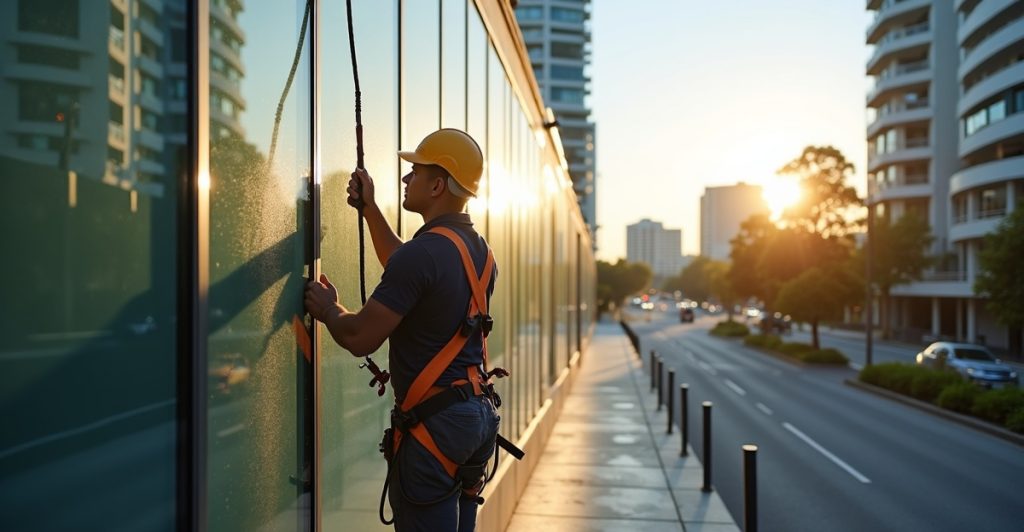
What does deep cleaning include?
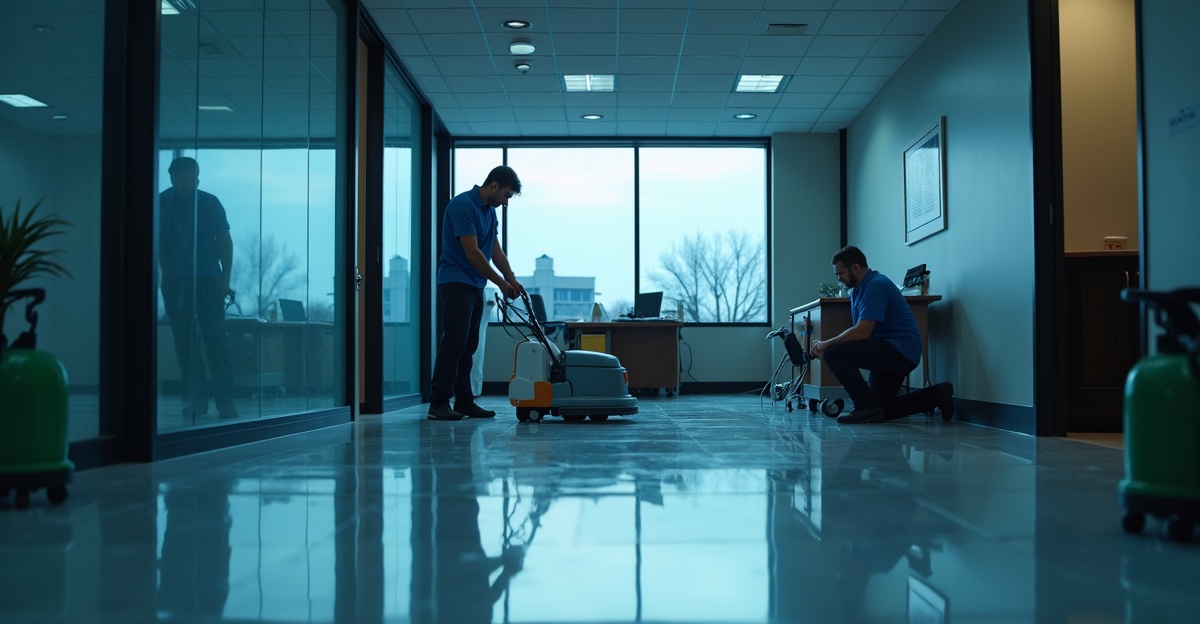
Understanding what deep cleaning includes helps us set clear standards, reduce risk, and plan maintenance beyond routine cleaning. In commercial environments, deep cleaning removes built-up grime, bacteria, and residue from flooring systems, fixtures, and hard-to-reach areas. We shape the scope around industry regulations, compliance demands, and operational pressures.
Key Takeaways
- Deep cleaning follows a structured, intensive process that removes contamination and build-up that routine commercial cleaning leaves behind.
- Scope shifts based on facility type, risk level, foot traffic, and compliance requirements, especially in medical or government sites.
- Typical inclusions cover mechanical floor scrubbing, grout descaling, high-touch surface sanitisation, internal glass detailing, and cleaning behind fixed furniture.
- Teams trigger deep cleaning after renovations, infection concerns, complaints, audits, or end-of-lease obligations rather than on a fixed schedule.
- A clearly documented scope of works outlines tasks, equipment, timeframes, and compliance controls so we deliver measurable results and protect budget certainty.
What Deep Cleaning Covers in a Commercial Facility
Commercial deep cleaning is a structured, intensive cleaning process that addresses contamination, build-up, and areas missed during routine services. It is performed periodically based on site risk, industry requirements, and operational needs. For facility and operations managers, it provides clarity around standards, scope, and measurable outcomes.
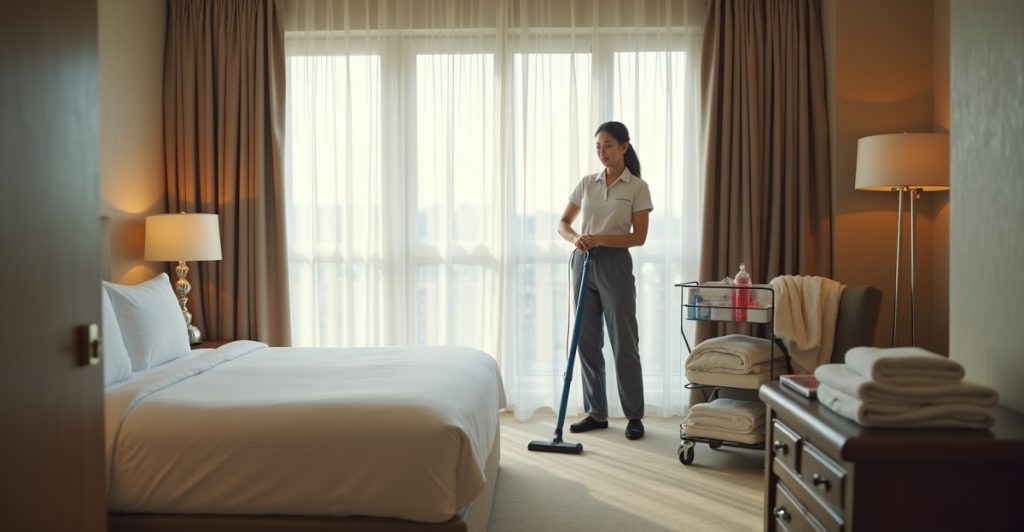
In a commercial setting, what does deep cleaning include? It includes targeted removal of built-up grime, bacteria, dust, and debris from high-touch surfaces, flooring systems, fixtures, and hard-to-reach areas. It extends beyond daily presentation cleaning and focuses on restoring hygiene and extending asset life.
Many decision-makers reviewing what does a deep cleaning service include are comparing providers or justifying budgets. Others are assessing complaints, preparing for audits, or evaluating infection risks. In all cases, the scope must be site-specific. Office buildings, medical centres, government facilities, and multi-tenant premises each carry different risk profiles.
A properly scoped commercial deep clean supports:
- Reduced hygiene and infection risks
- Improved professional presentation
- Extended lifespan of carpets, floors, and fixtures
- Fewer complaints from staff and visitors
- Stronger readiness for compliance or health inspections
For a detailed overview of standard inclusions, we outline the full scope within our commercial deep cleaning services framework, customised to each facility.
Is Deep Cleaning Different from Routine Commercial Cleaning?
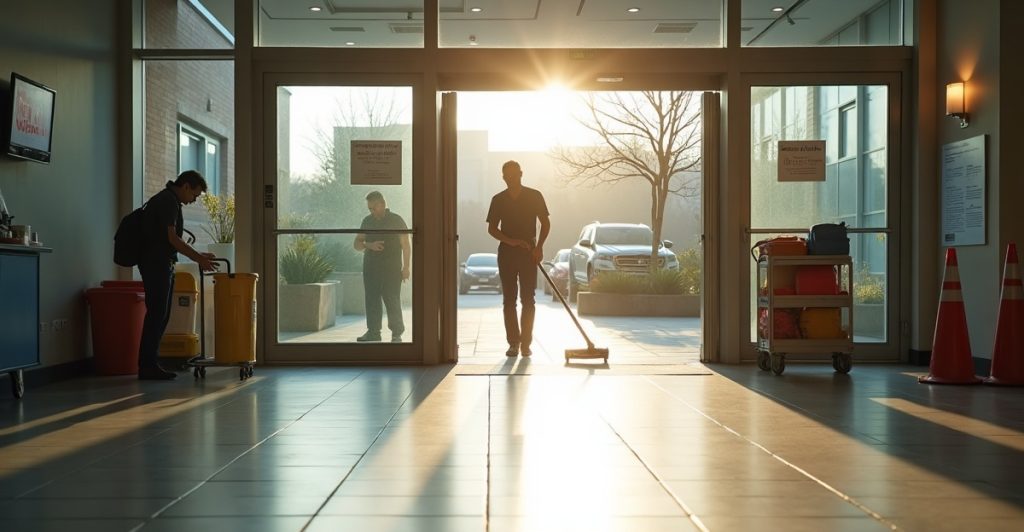
Routine commercial cleaning maintains day-to-day standards. It focuses on visible surfaces and frequently used areas. Deep cleaning restores areas affected by gradual build-up and addresses risks that routine cleaning cannot resolve.
Routine services typically include:
- Emptying bins and managing waste
- Wiping desks and common touch surfaces
- Vacuuming and mopping accessible floors
- Basic restroom cleaning and replenishment
Deep cleaning includes more intensive processes and specialist equipment. For example:
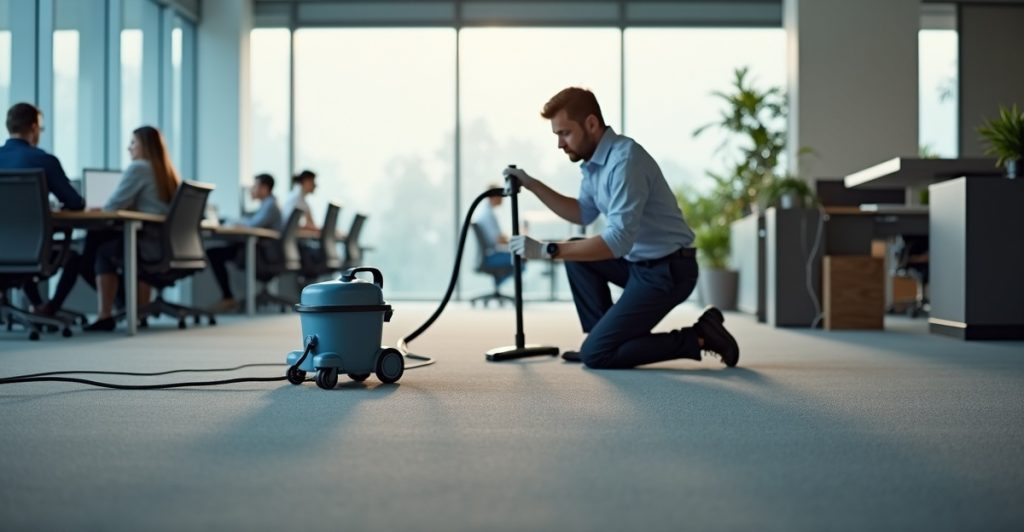
- Mechanical scrubbing and extraction of hard floors
- Grout descaling and tile detailing
- High-touch sanitisation beyond basic wipe-downs
- Cleaning behind and under fixed furniture
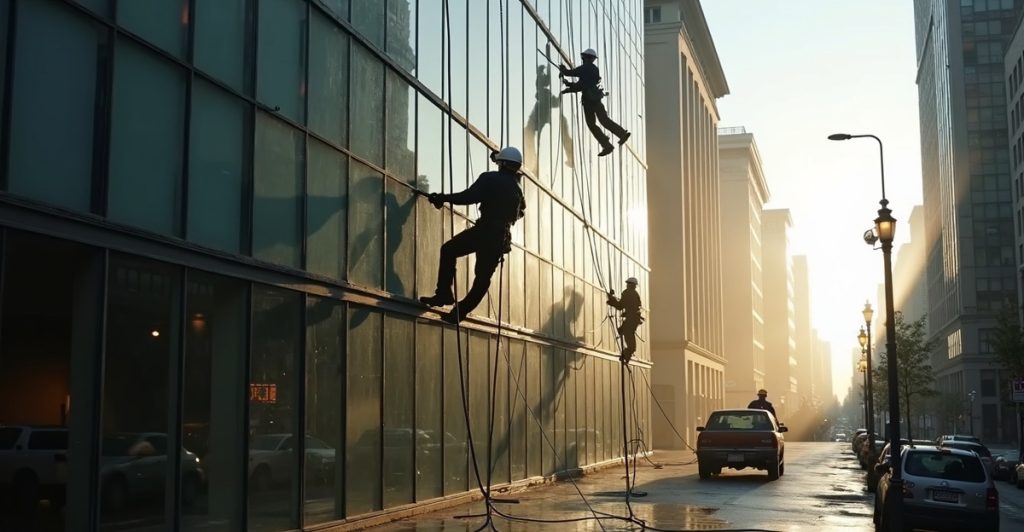
- Internal glass and partition detailing
- HVAC vent cleaning and high-level dust removal
Daily services maintain standards. Deep cleaning resets them.
It is important to note that deep cleaning is not automatically required on a fixed calendar. Frequency depends on foot traffic, industry compliance, infection risks, previous maintenance levels, or event-based triggers. Certain sectors, including medical facilities and government buildings, operate under stricter infection control expectations. In these environments, enhanced sanitisation protocols may align with professional workplace sanitisation services to support risk mitigation.
Deeper labour, specialised machinery, and after-hours scheduling are common. This minimises disruption while ensuring a thorough outcome.
Detailed Breakdown: What a Deep Cleaning Service Includes by Area
While each site differs, a commercial deep clean typically covers the following areas.
Key Areas Commonly Addressed
Before scheduling works, we define precise tasks for each zone:
- Workstations and Offices: High-touch disinfection of keyboards, phones, door handles, and switches. Cleaning behind monitors and in cable management areas. Internal glass and partition detailing. Dust removal from skirting boards, tracks, ledges, and vents.
- Floors: Mechanical scrubbing of vinyl and hard surfaces. Edge detailing and corner build-up removal. Grout descaling in tiled areas. For soft flooring, extraction or low-moisture treatment through professional commercial carpet cleaning. Hard surfaces may require periodic machine floor cleaning to restore finish and remove embedded soil.
- Restrooms: Descaling of toilets, urinals, basins, and taps. Deep sanitisation of partitions and fittings. Wall tile washing with grout attention. Floor pressure cleaning where safe and appropriate.
- Kitchens and Breakrooms: Internal appliance cleaning including fridges and microwaves. Degreasing of splashbacks and tiled areas. Detailed sink and tap treatment to remove scale and residue.
- High and Hard-to-Reach Areas: Behind and under fixed furniture. High-level dusting of ledges, ducts, and vents. Cleaning of storage rooms and low-traffic zones often neglected in routine schedules.
In regulated environments, we apply infection control awareness consistent with industry expectations. High-risk settings require strict handling procedures and clearly documented processes. Deep cleaning in these facilities must align with compliance obligations without disrupting daily operations.
For a broader view of routine service scope, we explain what is involved in commercial cleaning and how deep cleaning integrates into a wider maintenance plan.
When a Deep Cleaning Is Appropriate
Deep cleaning is situational. It responds to operational triggers rather than following a fixed universal schedule.
Common scenarios include:
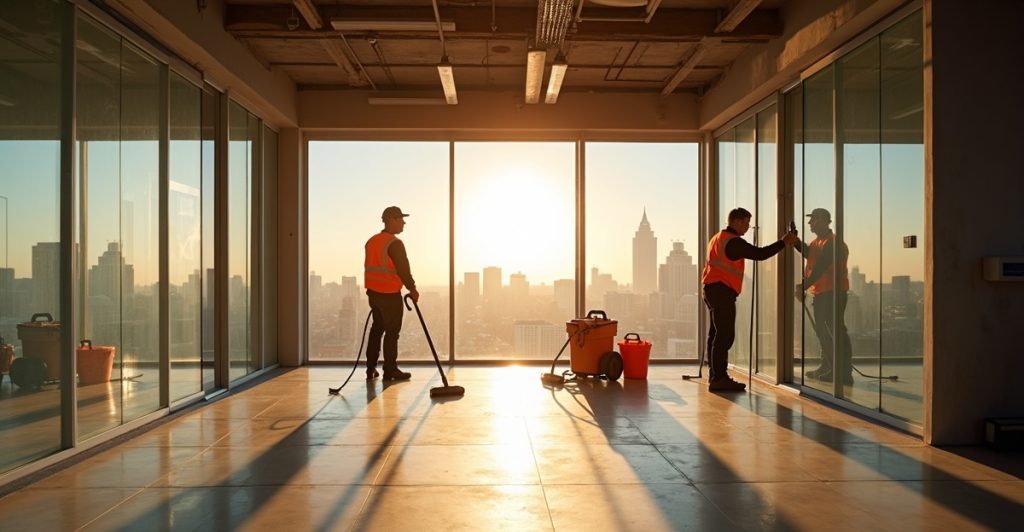
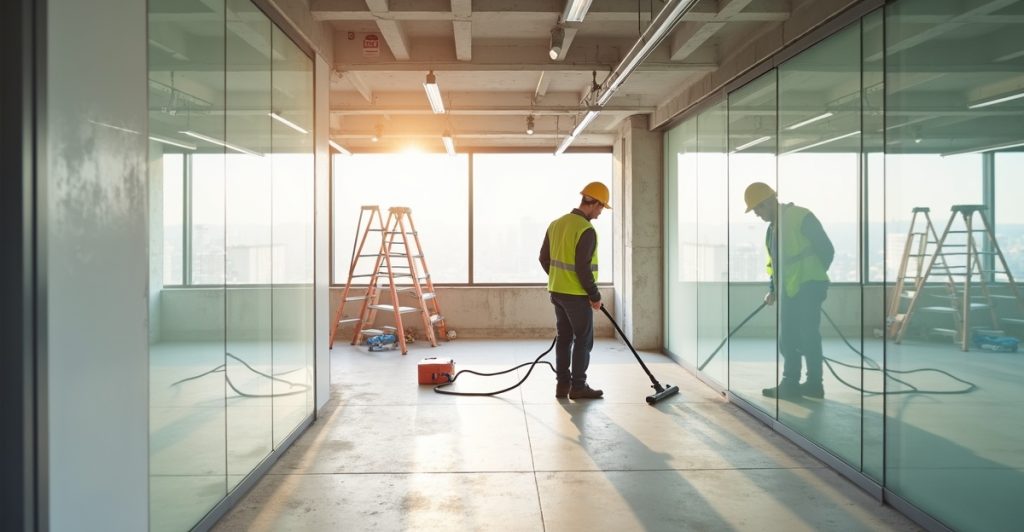
- Post-renovation or fit-out works often leave behind construction dust, fine debris, and residue. These environments benefit from specialised post-construction cleaning services before occupation.
- High-traffic periods, including seasonal peaks or large corporate events, can accelerate floor wear and surface contamination.
- Infection risks or outbreak responses demand enhanced sanitisation and disinfection protocols beyond routine wiping.
- Complaint resolution may reveal build-up in grout lines, carpets, or internal glass that daily services cannot correct.
- End-of-lease transitions frequently require deeper restoration to meet tenancy obligations.
- Compliance audits or workplace health and safety reviews also trigger hygiene standard assessments.
Facility managers across Brisbane, the Gold Coast, and surrounding metro areas often manage tight schedules and multiple sites. Decisions around deep cleaning must balance risk, cost, and disruption. Where location-specific support is required, services such as Brisbane deep cleaning and Gold Coast deep cleaning help coordinate local operational constraints.
Understanding scheduled maintenance cleaning also assists in planning preventative cycles that reduce the need for reactive interventions.
Factors That Influence Scope, Disruption, and Cost
The scope of works directly affects labour, equipment, scheduling, and pricing. Budget planning must consider practical realities.
Key influences include facility size, layout complexity, and the mix of flooring types. Carpet, vinyl, tile, and specialty surfaces require different processes.
Industry requirements matter. Medical and government environments require heightened infection control procedures. Compliance-sensitive sites may need detailed documentation and supervision.
Access restrictions and security protocols can affect working hours. Many facilities require after-hours scheduling to avoid operational downtime. That adds coordination but protects productivity.
The frequency of prior deep cleaning also impacts workload. Deferred maintenance increases time and equipment usage.
Clear budgeting starts with transparent scope. Decision-makers often compare providers by reviewing deep cleaning cost considerations and general commercial cleaning service costs, including benchmarks on hourly commercial cleaning rates. These guides support realistic planning rather than guesswork.
What Should Be Documented in a Professional Scope of Works
A professional deep cleaning proposal must clearly define tasks and outcomes. Vague descriptions create gaps and disputes.
Each scope should include a detailed task list by area. It must outline inclusions and exclusions without ambiguity.
Equipment and processes should be specified. Mechanical scrubbers, extraction machines, pressure equipment, and approved disinfectants must be identified upfront.
Compliance considerations should be documented where relevant. This includes infection control protocols in medical or government environments.
Timeframes, access arrangements, and supervision plans must be confirmed before work begins. Reporting or sign-off procedures create accountability and measurable results.
Facility managers reviewing current providers should revisit the core question: what does a deep cleaning include in our specific site context? If scope lacks detail, risk and cost uncertainty increase.
A structured site assessment clarifies priorities, defines deliverables, and supports budgeting decisions aligned with operational realities. Clear documentation provides measurable outcomes—reduced hygiene risk, improved presentation, extended asset life, and fewer complaints.
Frequently Asked Questions
Does deep cleaning include disinfecting surfaces?
Not always. Deep cleaning focuses on removing built-up dirt, grease, dust, and grime from surfaces, while disinfecting targets bacteria and viruses using approved disinfectants. Many commercial cleaning providers offer both services together, but they are separate processes. If infection control is a priority, ask whether disinfection is included in your deep cleaning service.
How often should a commercial property receive a deep clean?
Most commercial properties benefit from professional deep cleaning every six to twelve months. High-traffic facilities such as medical centres, schools, gyms, and hospitality venues may require quarterly deep cleaning to maintain hygiene standards, improve presentation, and reduce long-term maintenance costs.
How long does a commercial deep cleaning service take?
The time required depends on the building size, level of contamination, and the services included. Small offices may be completed within several hours, while large commercial facilities can require a full day or multiple visits. A site inspection provides the most accurate timeframe.
What areas are commonly included in a commercial deep clean?
Deep cleaning usually covers floors, carpets, workstations, kitchens, washrooms, windows, high-touch surfaces, skirting boards, vents, light fittings, and hard-to-reach areas that are often missed during routine cleaning. The exact scope depends on your facility and cleaning requirements.
Will deep cleaning interrupt normal business operations?
Not necessarily. Many commercial cleaning companies schedule deep cleaning after business hours, overnight, or on weekends to minimise disruption. Flexible scheduling allows businesses to maintain productivity while ensuring the premises receive a thorough clean.
Is deep cleaning suitable for every type of commercial facility?
Yes. Deep cleaning can be tailored for offices, healthcare facilities, schools, retail stores, warehouses, hospitality venues, government buildings, and industrial sites. Each environment has different cleaning priorities, so the service is customised to meet operational and compliance requirements.
Should businesses continue routine cleaning after a deep clean?
Yes. Deep cleaning restores the workplace to a higher standard, but regular cleaning is still necessary to maintain cleanliness between intensive services. Combining scheduled maintenance with periodic deep cleaning helps extend the life of flooring, furnishings, and workplace finishes.
What affects the cost of commercial deep cleaning?
Pricing depends on factors such as the size of the facility, level of dirt buildup, floor types, specialised equipment required, access restrictions, cleaning frequency, and whether additional services like carpet extraction or disinfection are included. A site assessment provides the most accurate quote.
How should you prepare your workplace before a deep cleaning service?
Businesses can help the cleaning process by removing personal belongings, securing confidential documents, providing access to restricted areas, and informing staff of the scheduled service. Good preparation allows cleaners to work more efficiently and complete the job with minimal disruption.
Can deep cleaning improve workplace air quality?
Yes. Deep cleaning removes accumulated dust, allergens, mould spores, and debris from carpets, upholstery, vents, and other surfaces that affect indoor air quality. Cleaner indoor environments can contribute to a healthier workplace and create a more comfortable space for employees and visitors.