How much do commercial cleaning services cost?

Understanding how much commercial cleaning services cost in Brisbane and the Gold Coast requires a close look at square metre rates, hourly pricing, contract structures, and compliance obligations rather than relying on broad national averages. In 2026, we see office cleaning priced between $2.50 and $6.00 per square metre, $40 to $65 per hour, or $800 to $5,000+ per month depending on site size, cleaning frequency, risk profile, and service scope.
Key Takeaways
- Routine office cleaning in 2026 generally ranges from $2.50 to $6.00 per square metre, with lower unit costs for larger sites that we service more frequently.
- Hourly rates average between $40 and $65 per cleaner, influenced by risk level, supervision structure, equipment requirements, and compliance obligations.
- Fixed monthly contracts commonly fall between $800 and $5,000+, with higher costs for medical, regulated, or multi-site facilities that require tighter controls.
- Pricing depends on scope, layout complexity, foot traffic, frequency, consumables, and documented compliance standards.
- The lowest quote often excludes supervision, insurance coverage, or quality assurance systems, which increases operational risk and long-term management costs.
Commercial Cleaning Costs in Brisbane and the Gold Coast: Realistic 2026 Price Guide
Commercial cleaning costs in Brisbane and the Gold Coast vary based on size, frequency, compliance needs, and site complexity. In 2026, most businesses can expect the following indicative ranges:
For routine office cleaning, pricing typically sits between $2.50 and $6.00 per square metre. Smaller sites and less frequent schedules are usually at the higher end. Larger facilities cleaned five days per week often benefit from lower per-square-metre rates due to efficiency.
Hourly rates generally range from $40 to $65 per hour per cleaner. Risk profile, required inductions, supervision levels, and specialist equipment all influence this range. Our guide on commercial cleaner hourly rates in Australia explains how these figures compare across service types.
Fixed monthly contracts are common for ongoing work. Small to mid-sized facilities often range from $800 to $5,000+ per month. Large sites, medical centres, schools, and multi-site organisations can exceed this depending on scope and frequency.
Medical and compliance-driven facilities usually sit above standard office pricing. Infection control protocols, documentation, audits, and staff qualifications add cost but are essential for risk management.
Many clients ask:
- How much do cleaning services cost?
- What’s the average cost of commercial cleaning service in Queensland?
- How much does a commercial cleaning service cost for our specific building?
- How much does a commercial clean cost per visit?
The answer is always tied to scope. Queensland pricing differs from national averages because wages, travel, and site access conditions vary. Brisbane CBD high-rise buildings operate differently to suburban retail or Gold Coast industrial estates.
True costs reflect frequency, risk profile, compliance requirements, supervision, and consistency. Labour hours matter, but so do systems, insurance, and quality control.
For businesses wanting local clarity, our Brisbane commercial cleaning services and Gold Coast commercial cleaning services teams provide site-specific assessments aligned with 2026 market conditions.
How Commercial Cleaning Services Are Priced
Commercial cleaning services are typically structured under four main pricing models. Each suits different operational needs.
Per Square Metre Pricing
This model is common for offices and retail spaces. Rates are calculated based on total floor area, layout, and cleaning frequency.
Open-plan layouts cost less per square metre than densely partitioned offices. Multiple bathrooms, kitchens, lifts, and breakout areas increase labour time. Higher frequency lowers unit cost because cleaners become familiar with the site and workflows improve.
Hourly, Fixed, and Scope-Based Pricing
Hourly rates are often used for ad-hoc work or changing scopes. They are suitable for irregular tasks, event support, or trial arrangements.
Fixed monthly contracts are most common for ongoing office and facility cleaning. Pricing is calculated from assessed labour time, supervision requirements, equipment, consumables, insurance, and compliance overhead. While the client sees a single monthly fee, it reflects a breakdown of operational components.
Scope-based pricing applies to specialist services such as:
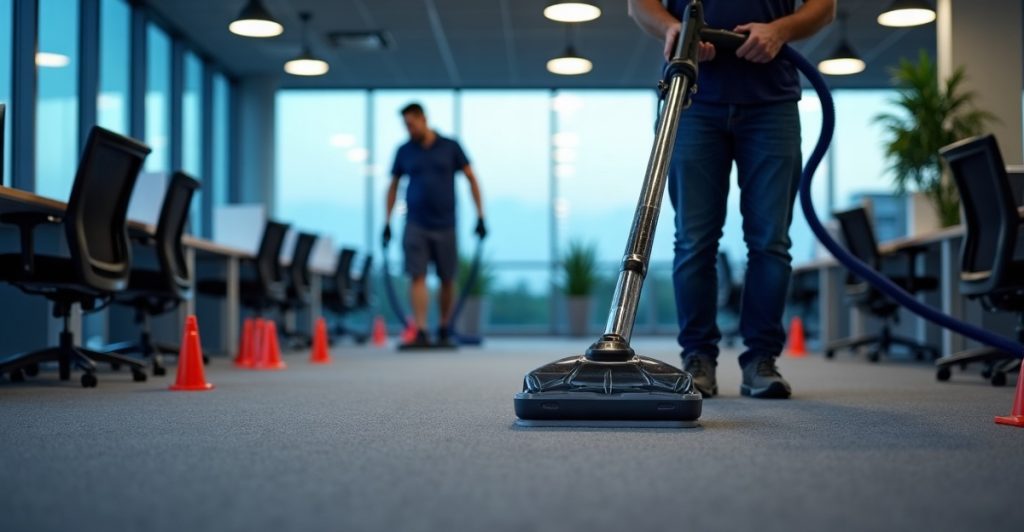
- Carpet steam cleaning.
- Strip and seal or vinyl floor maintenance.
- High-access cleaning.
- Infection control cleaning.
- Post-construction or periodic deep cleans.
These services require specific equipment, trained staff, and additional safety controls. For example, carpet cleaning cost varies significantly based on soil level and access, while window cleaning cost increases for high-access or external work requiring elevated platforms.
Transparent providers conduct site inspections before confirming pricing. Remote quotes without a walkthrough often miss key details and lead to variations later.
Key Factors That Influence the Cost of a Commercial Clean
Several operational variables shape the final contract value.
Facility size and layout complexity directly impact labour time. Open-plan offices are faster to service than multi-level buildings with stairwells, car parks, or fragmented floorplates. Partitioned offices require more surface detail and touchpoint cleaning.
Cleaning frequency changes efficiency. Five visits per week typically reduce the per-visit cost compared to one or two visits, because buildup is minimal and processes stay consistent.
Foot traffic and usage intensity matter. High-traffic retail areas, shared amenities, and large reception zones require frequent touchpoint disinfection and floor maintenance.
Compliance requirements can significantly increase cost. Medical centres, government buildings, and certain industrial sites require documented processes, staff inductions, police checks, infection control protocols, and audit-ready reporting.
After-hours access and security constraints may require key-holding procedures, alarm codes, inductions, and coordination with building management.
Consumables and waste management also influence pricing. Toilet paper, hand towels, soap refills, sanitary bin servicing, and recycling streams must be defined upfront.
Specialist services add to the baseline contract. Periodic tasks such as carpet steam cleaning, floor strip and seal programs, high-access dusting, or deep cleaning services are often scheduled separately but impact total annual spend.
Operational realities also affect pricing. Supervision, quality inspections, training, replacement staff for leave coverage, insurance, equipment maintenance, and administrative support all form part of a reliable service. These components protect consistency and reduce disruptions.
What Is Included in a Standard Contract vs. Charged Separately
A standard contract for commercial cleaning typically includes day-to-day essentials required to maintain hygiene and presentation.
Most ongoing contracts cover:
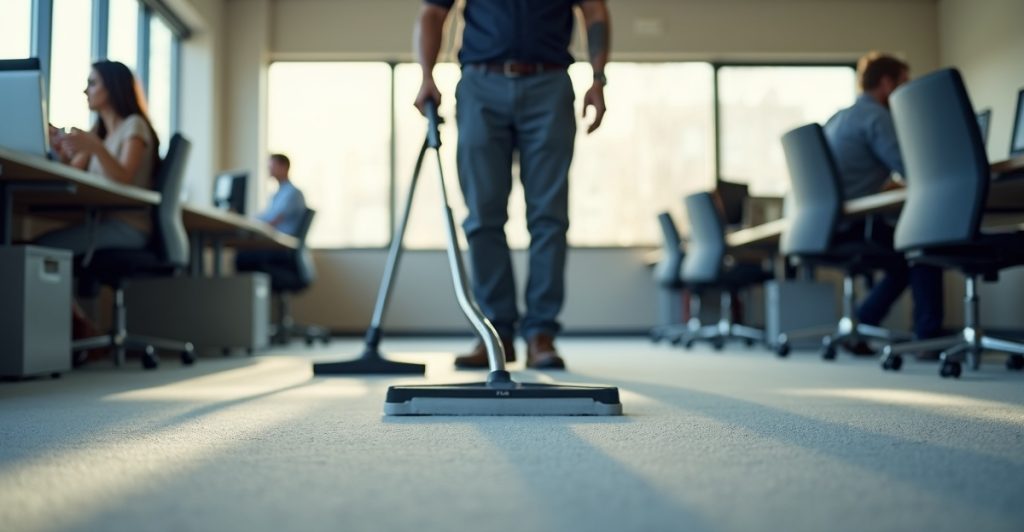
- Vacuuming carpets and mopping hard floors.
- Emptying bins and managing general waste.
- Cleaning kitchens and staff amenities.
- Bathroom cleaning and restocking where consumables are provided.
- Surface wiping and high-touch point disinfection.
These services form the core of office cleaning services and general workplace maintenance.
Often quoted separately:
- Carpet steam cleaning.
- External or high-access window cleaning.
- Upholstery cleaning.
- Strip and seal or major floor restoration.
- Post-construction cleans or major initial cleans.
Clear documentation of inclusions and exclusions prevents misunderstandings. Reviewing scopes line-by-line reduces assumptions and future disputes.
Why the Cheapest Quote Can Cost More Long-Term
Low pricing is not automatically a problem. Some efficient operators can offer competitive rates. However, very low quotes often reflect reduced scope or limited infrastructure behind the service.
Common trade-offs include fewer hours allocated than required, minimal supervision, high staff turnover, limited compliance documentation, or reduced training. Underinsurance is another hidden risk.
Operational consequences may include hygiene complaints from staff or tenants, audit failures in regulated environments, and contract disruptions due to staffing instability.
These risks create internal workload for facilities managers. Issues require follow-up, escalation, and sometimes full provider changes. Over time, this increases operational strain.
Value is measured in stability, communication, and accountability. Consistent service with transparent reporting often reduces total management time and protects brand reputation. Our guide on measuring ROI on commercial cleaning explains how service quality links to productivity and risk reduction.
How to Evaluate a Commercial Cleaning Quote Beyond Price
Comparing quotes requires more than checking totals at the bottom of a proposal. Alignment of scope is critical.
Before signing any agreement, confirm:
- Is pricing linked to a clearly documented scope of works?
- Was a full site inspection completed before the quote was issued?
- Are compliance requirements clearly detailed?
- Are supervision, quality checks, and communication processes defined?
- Are police checks, inductions, insurance, and safety systems confirmed?
- Are consumables and periodic services clearly identified?
When asking how much does a commercial clean cost, ensure each provider has quoted the same service level. Differences often sit in frequency, square metre assumptions, or exclusions.
Businesses in Queensland operate under local conditions. Brisbane high-rise buildings, Gold Coast retail centres, and industrial estates each present different challenges. That’s why we conduct structured site assessments before issuing final pricing through our janitorial services and broader service programs.
For decision-makers needing clarity on budget forecasting, our article on office cleaning costs breaks down common pricing structures in detail.
Accurate estimates start with understanding the building, its usage, and its compliance environment. A documented assessment creates defensible pricing and reduces variation later. For businesses ready to review their current contract or explore alternatives, we provide structured site evaluations through our commercial cleaning quote process aligned with Brisbane and Gold Coast operational realities.
Frequently Asked Questions
How is commercial cleaning priced?
Commercial cleaning is usually priced by the hour, per square metre, or through a fixed monthly contract. The pricing method depends on the building size, cleaning frequency, service scope, and industry requirements. Requesting a detailed quote helps you compare providers more accurately.
Is it cheaper to book regular commercial cleaning services?
Yes. Regular weekly or daily cleaning is generally more cost-effective than one-off bookings because cleaners can maintain the property more efficiently and spread costs over ongoing visits. Long-term service agreements may also include discounted rates.
What factors have the biggest impact on commercial cleaning costs?
The biggest cost factors include floor area, cleaning frequency, number of bathrooms and kitchens, specialised services, after-hours scheduling, and the overall condition of the property. High-traffic facilities typically require more labour and supplies.
Do commercial cleaning quotes include cleaning supplies and equipment?
Most commercial cleaning companies include standard cleaning products and equipment in their pricing. However, specialised equipment, consumables, carpet extraction, window cleaning, or eco-friendly products may be charged separately. Always confirm what is included before signing a contract.
What is the difference between hourly rates and fixed-price cleaning contracts?
Hourly pricing charges for the actual time spent cleaning, making it suitable for occasional jobs. Fixed-price contracts provide predictable monthly costs based on an agreed cleaning scope, making budgeting easier for businesses with ongoing cleaning needs.
Are commercial cleaning services tax deductible in Australia?
In many cases, commercial cleaning expenses are considered legitimate business operating costs and may be tax deductible. Businesses should keep invoices and consult their accountant or tax professional to confirm eligibility based on their circumstances.
How can businesses reduce commercial cleaning costs without sacrificing quality?
Businesses can reduce costs by scheduling regular maintenance cleaning, keeping workspaces organised, bundling multiple services, and selecting a cleaning schedule that matches actual usage. Preventative cleaning often costs less than periodic deep cleaning.
Should businesses get multiple commercial cleaning quotes?
Yes. Comparing several quotes allows businesses to evaluate pricing, service inclusions, insurance coverage, staff experience, and contract terms. The lowest price is not always the best value if important services are excluded.
Are eco-friendly commercial cleaning services more expensive?
Eco-friendly commercial cleaning may have a slightly higher upfront cost due to specialised products, but many businesses find the difference minimal. Green cleaning can improve indoor air quality, support sustainability goals, and create healthier workplaces.
Does office size determine the final commercial cleaning price?
Office size is an important factor, but it is not the only one. Layout complexity, employee numbers, shared facilities, flooring types, and cleaning frequency all contribute to the overall cost. Two offices of the same size may have significantly different cleaning requirements.