What to Include in a Cleaning Request for Proposal (RFP)

A well-structured document built on cleaning RFP best practices helps organisations define a clear scope, compliance standards, KPIs, pricing models, and transition expectations before entering the market. We include detailed site data, safety requirements, and measurable performance criteria to reduce risk, improve proposal comparisons, and strengthen long-term service outcomes in a commercial cleaning RFP.
Key Takeaways
- We define clear objectives, accurate site details, and a detailed scope of works to improve pricing accuracy and service consistency.
- We specify compliance, WHS, insurance, staffing, supervision, and equipment requirements to reduce operational and audit risk.
- We include measurable commercial cleaning KPIs, reporting frameworks, and rectification timeframes to embed accountability.
- We outline transparent pricing models, variable cost treatments, and contract terms to prevent disputes and support fair evaluation.
- We require structured transition plans and apply weighted evaluation criteria focused on total value, capability, and reliability rather than lowest price alone.

Why a Well-Written Cleaning RFP Reduces Risk and Improves Outcomes
Applying cleaning RFP best practices reduces operational risk and improves service outcomes from day one. A structured commercial cleaning RFP gives us clear comparisons between providers and increases the likelihood of securing a reliable long-term cleaning partner.
Without defined cleaning contract requirements, providers often underquote to win work. Scope gaps emerge later. Service inconsistencies follow. Transition disruptions then affect staff, tenants, and compliance outcomes.
A clear RFP creates practical business benefits. It sets expectations early, supports smoother onboarding, and defines measurable commercial cleaning KPIs. Accountability becomes part of the agreement, not an afterthought.
Operational pressures are real. Audit failures damage reputation. Staff complaints erode confidence in facilities management. Tenants escalate issues if standards drop. Multi-site operations face inconsistent cleaning performance without standardised scope and reporting.
We encourage decision-makers to focus on total value, risk reduction, and service quality rather than lowest price alone. The cheapest quote often carries the highest hidden risk.
Workplace health and safety cleaning compliance Australia must also sit at the centre of any RFP. Offices, medical facilities, and government buildings operate under strict obligations. Cleaning services directly influence infection control, slip prevention, chemical handling, and overall WHS performance.
A well-prepared commercial cleaning RFP reduces surprises. It strengthens proposal comparisons. It supports better outcomes over the life of the contract.

When You Should Issue a Cleaning RFP
Timing plays a major role in the facility cleaning tender process. Proactive planning prevents rushed decisions and service disruption.
Common triggers include contract renewal approaching, recurring complaints, or visible service inconsistency. Business growth also drives change. New sites and multi-site expansion require scalable cleaning support and standardised specifications.
Compliance risks often prompt internal review. WHS findings or infection control gaps demand stronger performance standards. In these cases, delaying an RFP increases exposure.
Incumbent provider transitions also carry risk. A rushed process can result in unclear onboarding, missed inductions, and asset handover confusion. Defining transition plan cleaning contractor expectations within the RFP prevents disruption.
Different facility types require tailored RFP focus:
- Office cleaning RFP documentation typically defines after-hours access, open-plan layouts, meeting rooms, and shared amenities.
- Medical cleaning RFP requirements prioritise infection control procedures, colour-coded systems, higher disinfection standards, and documentation compliance.
- High-traffic public facilities require visible day cleaning presence, rapid response capability, and strong supervision.
A well-timed RFP allows proactive decision-making. It replaces reactive problem-solving with structured planning aligned to operational objectives.
Define Clear Objectives, Site Details, and Scope of Works
Strong RFPs begin with outcomes. Tasks follow later.
Clear objective wording may read: “Maintain a consistently clean, safe, and audit-ready workplace with minimal disruption to staff and visitors.” This statement frames expectations beyond basic task lists.
Site details must be accurate and current. We recommend including:
- Total square metres, number of levels, and estimated daily foot traffic.
- Building usage type such as office, medical, or mixed-use.
- Access hours and security procedures.
- Multi-site considerations and geographic spread.
Incomplete site data is one of the most common cleaning RFP mistakes. Outdated floor plans lead to inaccurate pricing and inconsistent service.
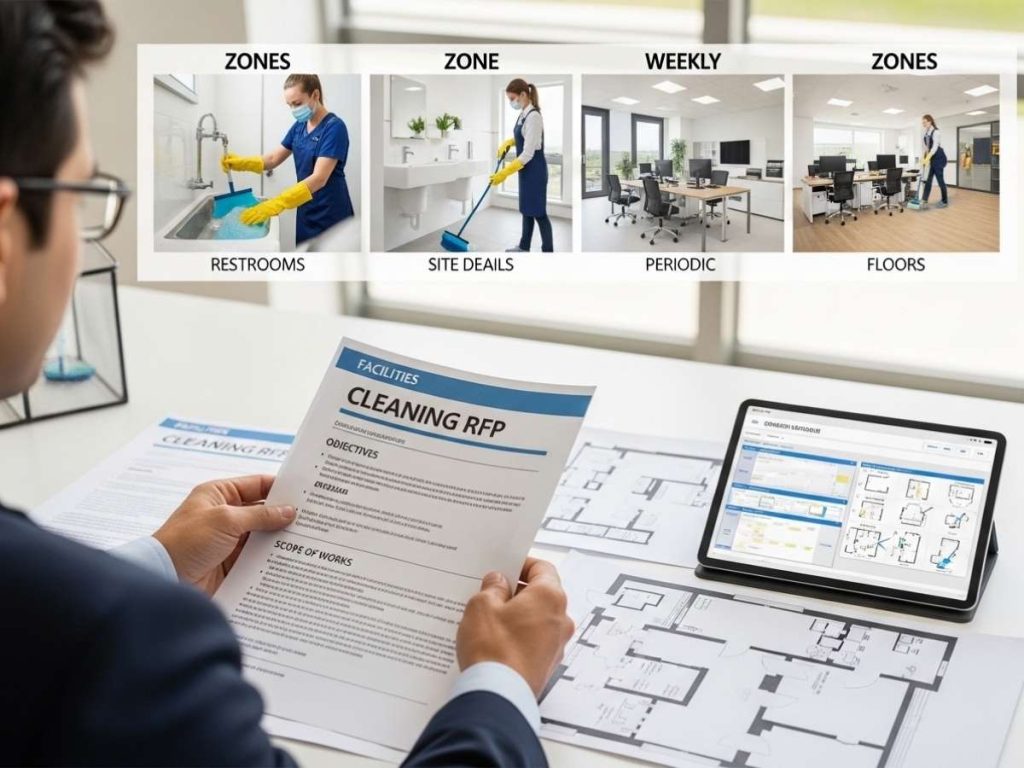
A detailed commercial cleaning scope of works supports clear pricing and accountability. Frequency should be defined across daily, weekly, and periodic tasks.
- Daily services may include bin removal, high-touch disinfection, restroom sanitation, and kitchen surface cleaning.
- Weekly tasks often cover detailed kitchen cleans, glass spot cleaning, and deeper amenity scrubs.
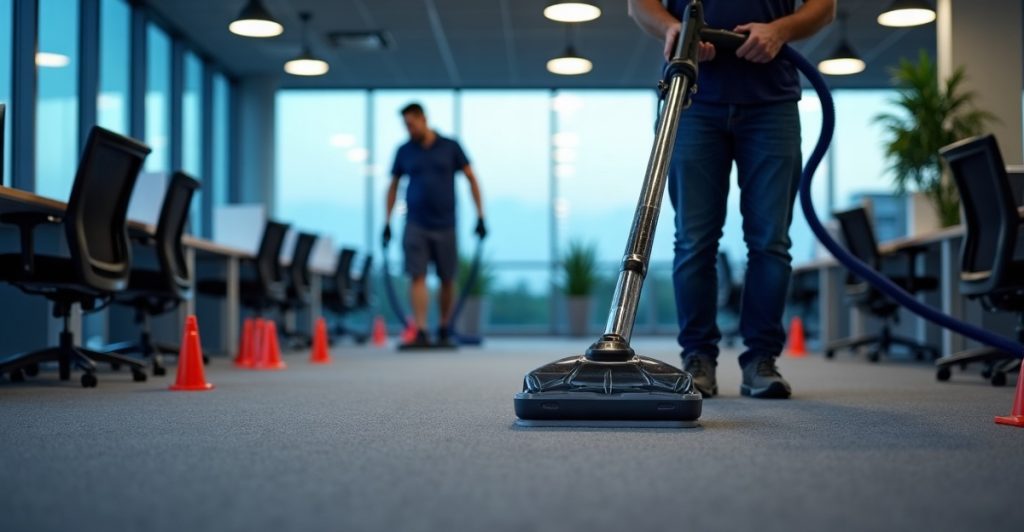
- Periodic services can include carpet steam cleaning quarterly and floor strip and seal annually.
Consumables must also be addressed. Toilet paper, hand towels, and soap supply should be clearly stated if included.
Specialised requirements such as infection control procedures, hard floor restoration, or window cleaning must appear in scope documentation. Vague wording causes confusion when evaluating cleaning proposals.
For deeper context on contract structure, refer to what is a commercial cleaning contract and how it governs expectations throughout the agreement.
Teams preparing documentation for the first time often review what to include in a cleaning contract to strengthen clarity before issuing a tender.
Clarity improves pricing accuracy. It also supports better long-term service stability.
Compliance, Staffing, Equipment, and Safety Requirements
Compliance standards should be explicit, not implied.
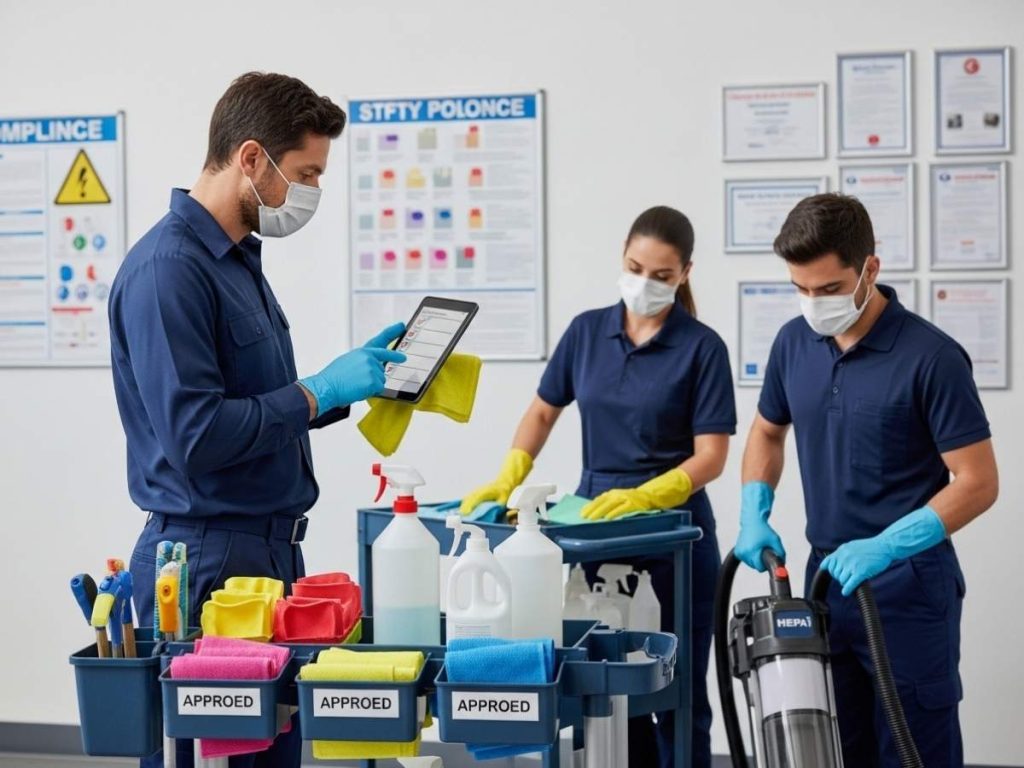
Workplace health and safety cleaning compliance Australia must align with Safe Work Australia expectations. This includes safe chemical handling, manual handling training, PPE use, and documented risk management processes.
Insurance requirements should specify minimum public liability insurance coverage, workers’ compensation, and evidence of currency. These documents must be submitted with the proposal.
Medical cleaning RFP requirements should clearly define infection control protocols. Colour-coded systems, disinfectant standards, and waste handling procedures must meet industry and regulatory expectations.
Police checks may be mandatory for government buildings or sensitive sites. Include this requirement directly within the RFP.
Staffing and supervision models also require detail. We recommend defining:
- Minimum training standards for cleaners.
- Frequency of supervisor site inspections.
- Backup staffing plans for leave or illness.
Equipment specifications matter. HEPA-filtered vacuums may be required in certain environments. If sustainability is a priority, request low-toxicity or environmentally preferable chemicals.
These cleaning contract requirements reduce operational risk. They protect occupants. They strengthen audit readiness.
Facilities operating in regulated environments often engage government cleaning specialists or providers experienced in compliance-driven industries to support these standards.
Clear compliance expectations produce safer workplaces and fewer surprises later.

KPIs, Pricing Structure, Transition Plan, and Contract Terms
Strong RFPs include measurable commercial cleaning KPIs.
Sample wording may state: “All washrooms to meet visual inspection standard of no visible debris or odour during business hours.” Another example: “Rectification of service issues within 24 hours of notification.”
Service levels should also define reporting frameworks. Monthly performance reports and scheduled review meetings create structured communication. Digital logbooks or site communication books provide transparency.
The pricing structure cleaning RFP section must eliminate ambiguity. Define whether pricing is fixed monthly or includes variable components.
Clarify rates for out-of-scope services. Confirm how consumables and periodic services are costed. Transparent pricing supports fair evaluating cleaning proposals and prevents future disputes.
Transition plan cleaning contractor expectations must appear clearly in the document. We recommend specifying:
- Pre-commencement site walkthrough.
- Asset, alarm code, and key handover protocols.
- Staff induction and WHS briefing requirements.
- Communication plan for incumbent transition.
Contract term length should be defined upfront, along with review cadence such as annual performance assessments.
Teams comparing structured agreements often reference what commercial contracts include to benchmark terms and ensure completeness.
Clear KPIs and defined pricing enable objective comparison. They also create long-term performance stability.

Common Cleaning RFP Mistakes and How to Evaluate Proposals Effectively
Several recurring mistakes weaken the facility cleaning tender process.
Vague or generic scopes limit pricing accuracy. Focusing solely on lowest price increases risk. Ignoring transition planning creates onboarding delays. Outdated site data skews cost calculations. Overly complex procurement language confuses operational teams.
A practical evaluation framework improves outcomes.
Simple Evaluation Checklist
- Apply weighted scoring across price, experience, compliance capability, staffing model, and references.
- Require mandatory site inspections before final pricing submission.
- Verify insurance certificates and compliance documentation.
- Conduct reference checks from similar facility types such as office, medical, or multi-site operations.
- Assess transition timelines and supervision structures carefully.
Price remains important, but total value and service reliability reduce long-term risk.
Organisations reviewing providers can benefit from guidance on evaluating cleaning proposals effectively before final selection.
If we are preparing a commercial cleaning RFP and want feedback on scope clarity, compliance requirements, or transition planning, early review strengthens results. Structured planning improves confidence before releasing any tender to market.
Frequently Asked Questions
What are cleaning RFP best practices for commercial facilities?
Cleaning RFP best practices involve clearly defining objectives, site details, scope of work, compliance requirements, and measurable service standards. A well-structured RFP also outlines pricing models, reporting expectations, and transition plans. These elements allow organisations to compare proposals accurately, reduce operational risks, and select a cleaning provider based on reliability, capability, and long-term value rather than price alone.
Why is a detailed scope of work important in a cleaning RFP?
A detailed scope of work ensures cleaning contractors understand exactly what tasks must be completed, how often they occur, and which areas are included. This clarity improves pricing accuracy and prevents service gaps later in the contract. It also helps organisations compare proposals fairly because each vendor is quoting on the same cleaning requirements and service expectations.
What compliance requirements should be included in a commercial cleaning RFP?
A commercial cleaning RFP should specify workplace health and safety standards, insurance requirements, chemical handling procedures, and staff training expectations. Some facilities may also require police checks, infection control protocols, or specialised equipment. Including these compliance requirements ensures contractors meet regulatory obligations and helps reduce operational, legal, and safety risks.
How do KPIs improve accountability in cleaning contracts?
Key performance indicators (KPIs) define measurable service standards that cleaning providers must meet. Examples include response times for issue resolution, inspection standards for restrooms or common areas, and reporting frequency. KPIs make expectations clear and allow facility managers to monitor performance consistently, address service issues quickly, and maintain accountability throughout the contract period.
When should an organisation issue a cleaning RFP?
Organisations should issue a cleaning RFP before an existing contract expires or when service quality becomes inconsistent. Other triggers include business expansion, new facility openings, or compliance concerns. Planning the RFP process early allows enough time for site inspections, proposal evaluation, and transition planning, which helps prevent service disruptions during contractor changeovers.