How long does carpet cleaning take?
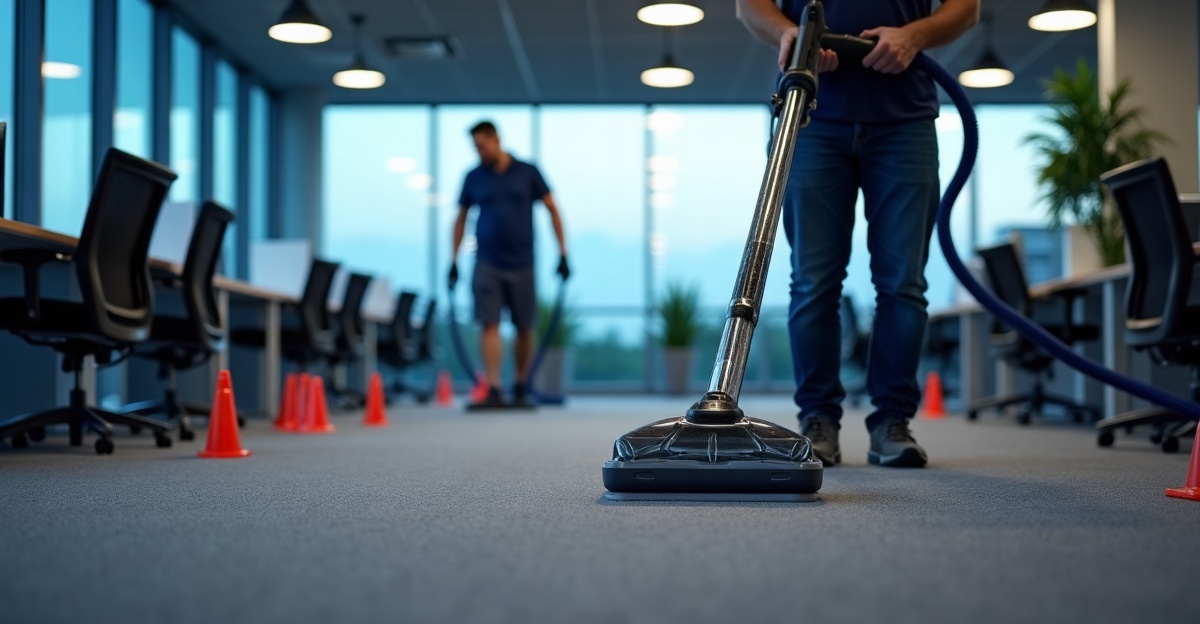
Understanding how long carpet cleaning takes in a commercial facility requires accurate measurement of square metreage, the selected cleaning method, site access, and drying conditions. In most offices, we see production rates between 200–700 sqm per hour, depending on the method. Drying times of 1–12 hours often affect operations more than the cleaning process itself.
Key Takeaways
- We calculate cleaning time based on square metres per hour, cleaning method, soil levels, and access constraints.
- A 1,000 sqm office typically requires 3–6 hours of active cleaning, while larger facilities are completed across multiple shifts to maintain workflow.
- Hot water extraction requires longer drying times (4–12 hours), while encapsulation dries faster (1–2 hours).
- Drying time usually determines when areas can reopen safely, not the cleaning duration itself.
- We use structured zoning, after-hours scheduling, and airflow management to minimise disruption in active workplaces.
What Facility Managers Can Expect: Realistic Commercial Carpet Cleaning Timeframes
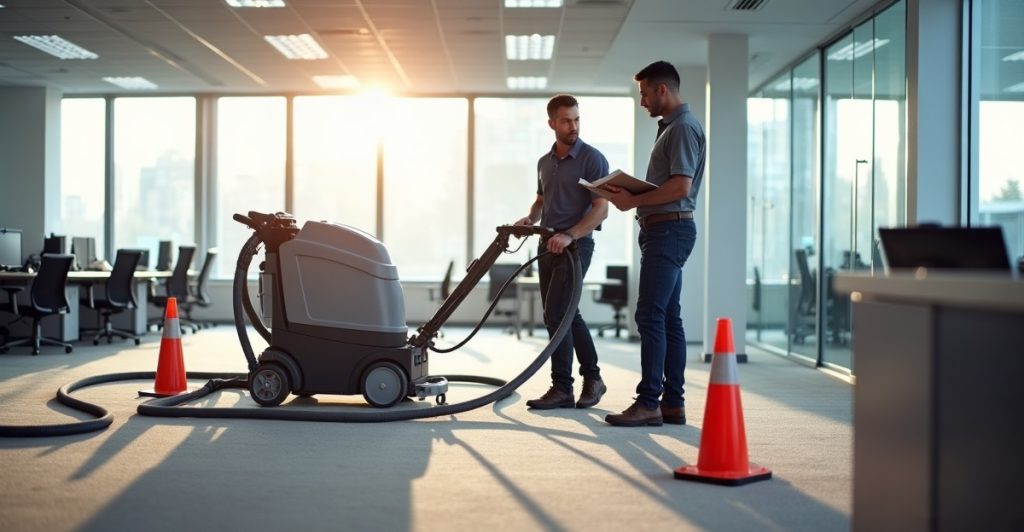
Commercial carpet cleaning timelines are measured in square metres per hour. In open-plan office environments, hot water extraction (commonly called steam cleaning) typically achieves 200–400 square metres per hour, depending on soil levels and site access.
For a 1,000 sqm floor plate, we generally allow 3–6 hours of active cleaning time, plus drying. Smaller tenancies in the 300–500 sqm range are commonly completed within 2–4 hours under standard conditions.
Larger assets require structured scheduling. A multi-floor building of 3,000–5,000 sqm is often programmed across multiple nights to minimise operational disruption and ensure safe reopening of high-traffic zones.
Method selection matters. Encapsulation cleaning can increase productivity to 400–700 square metres per hour in low-to-moderate soiling conditions. This makes it well suited to maintenance programs where faster turnaround is a priority.
In commercial settings, carpet cleaning how long does it take is never based on guesswork. We calculate it using three measurable factors:
- Total square metreage
- Cleaning method selected
- Access and logistical constraints
It is also critical to separate cleaning time from drying time. The technicians may complete the physical cleaning within one shift, but drying often becomes the bigger operational consideration for facilities teams.
Cleaning Time vs Drying Time: The Critical Difference for Operations
Cleaning time refers to the period our technicians are on-site performing the service. This includes setup, pre-treatment, machine cleaning, and final inspection.
Drying time begins after the cleaning process is complete. For hot water extraction, carpets typically take 4–8 hours to dry under normal ventilation. In humid conditions, including Brisbane and Gold Coast weather patterns, drying can extend to 8–12 hours.
Encapsulation systems dry much faster. In most office environments, carpets are dry within 1–2 hours, allowing areas to reopen the same shift in many cases.
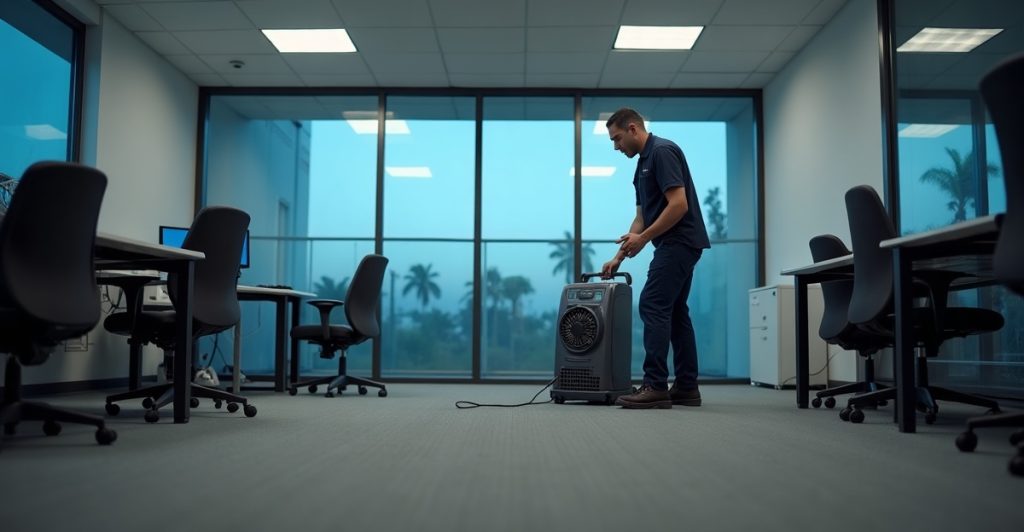
Weather and airflow have a significant impact. High humidity slows evaporation. Poor ventilation extends downtime. We use air movers and commercial extraction equipment to reduce moisture levels and accelerate drying wherever practical.
From an operational standpoint, the key question is how soon staff can safely re-enter the space. High-traffic corridors and reception areas may reopen sooner with controlled air circulation strategies. Private offices may remain temporarily offline until moisture readings confirm safe use.
When discussing how long does professional carpet cleaning take in a commercial building, we always clarify both phases. The same applies to how long does a professional carpet cleaning take in medical centres, education facilities, and government environments. Drying often determines operational continuity more than cleaning itself.
Key Factors That Directly Impact How Long a Carpet Cleaning Takes
Carpet cleaning duration varies for specific, measurable reasons. Clear planning starts with understanding these variables.
Primary Time Drivers in Commercial Carpet Cleaning
Several operational factors influence production rates:
- Total square metreage: This is the primary driver. Larger areas scale proportionally based on method and crew size.
- Level of soiling and stain treatment: Heavy soil, food spills, coffee staining, and gum removal reduce productivity. Additional spot treatment takes time.
- Cleaning method used:
- Hot water extraction delivers a deeper clean but involves longer drying.
- Encapsulation provides faster turnaround and suits maintenance cycles.
- Equipment capacity and crew size: Truck-mounted systems generally outperform portable units in extraction power. A two-person crew increases efficiency compared to a single technician.
- Access restrictions: Lift availability in high-rise buildings, security clearances in government sites, and limited loading dock access all affect setup time.
- After-hours vs daytime scheduling: Night works may extend overall shift windows but reduce tenant disruption.
- Compliance and infection-control protocols: Medical centres and secure environments often require additional process steps and documentation, adding structured time requirements.
Rather than using vague phrases, we quantify each of these elements during site assessment. If facilities teams are comparing methods, our overview of which carpet cleaning method suits specific commercial conditions provides helpful context.
For managers budgeting service windows alongside cost planning, our breakdown of commercial cleaning services cost explains how scope and frequency influence scheduling models.
Operational Planning: Minimising Disruption in Active Workplaces
Commercial carpet cleaning doesn’t need to halt business operations. Structured staging allows partial occupancy in most office layouts.
In large open-plan environments, we divide the workspace into zones. Teams complete one section while staff relocate temporarily to another. High-noise equipment, particularly extraction machinery, is typically programmed after standard business hours.
Reopening timelines depend on the method:
- Encapsulation areas generally reopen within 1–2 hours.
- Steam-cleaned areas typically reopen the same day or the following morning, depending on airflow and humidity.
High-traffic corridors, lobbies, and medical waiting rooms are often prioritised for overnight works to reduce risk and inconvenience.
Across Brisbane and Gold Coast metro areas, coordinated scheduling becomes essential for multi-site portfolios. We align service windows with tenancy requirements and peak occupancy periods to limit productivity interruptions.
Several practical steps reduce disruption:
- Pre-inspection to confirm scope and access
- Zoning and phased cleaning schedules
- Clear safety signage and temporary barriers
- Air movers positioned strategically to accelerate drying
Where carpets form part of a broader hygiene program, we often integrate them with deep cleaning services to maintain compliance and presentation standards across the entire facility.
Facilities managers reviewing overall service inclusions can also refer to what is involved in commercial cleaning to understand how carpet maintenance aligns with routine site services.
The outcome we aim for is minimal downtime, maintained compliance, and consistent tenant satisfaction without unexpected schedule changes.
Common Misconceptions About Carpet Cleaning Timelines
Marketing claims that promise carpets will be “clean in 1 hour” typically apply to small residential rooms. They do not reflect medium or large commercial facilities.
A 2,000+ sqm office floor cannot be compared to a single lounge room. Access, equipment scale, crew size, and compliance requirements differ significantly.
Speed also does not equal usability. A carpet can be cleaned quickly but still be damp. In many commercial scenarios, drying time carries greater operational impact than active cleaning time.
Another misconception involves stain removal expectations. Outcomes depend on fibre type, age of staining, and cleaning method. Our article on steam cleaning and stain removal explains these limitations in practical terms.
Overpromising unrealistic turnaround times undermines reliability. Transparent providers explain both cleaning duration and realistic reopening windows at the quoting stage.
For facilities teams asking carpet cleaning how long does it take, or how long does a carpet cleaning take in a commercial tower, the accurate answer must include preparation, active cleaning, and verified drying projections. Anything less risks operational misalignment.
Planning Your Carpet Cleaning Schedule With Confidence
Accurate scheduling begins with site assessment. Square metreage, soil levels, access logistics, method selection, and compliance requirements all influence timeframe projections.
For a standard 1,500–2,000 sqm commercial office, we generally allocate a single evening shift or split coverage across evenings, depending on soil condition and chosen method. Encapsulation can compress timelines. Hot water extraction may require extended drying windows.
Weather forecasting and ventilation assessment play a role in drying projections, particularly across Brisbane and Gold Coast sites. Factoring this in upfront avoids reopening delays.
Close coordination between facilities, procurement, and operations teams reduces productivity loss. Advance communication with tenants supports smoother staging where required.
In practical terms, how long does carpet cleaning take in a commercial facility depends on measurable, operational factors. It should never be treated as an estimate based on assumption.
For reliable scheduling, we recommend a detailed inspection and a written service timeline. Facilities managers can request a clear scope breakdown and projected cleaning and drying windows through our quote request page. This allows confident planning, accurate communication with stakeholders, and controlled reopening of cleaned areas.
Frequently Asked Questions
Is carpet cleaning time the same as carpet drying time?
No. Carpet cleaning usually takes between 20 and 60 minutes per room, while drying can take anywhere from 2 to 24 hours depending on the cleaning method, carpet thickness, humidity, and airflow. Planning for both cleaning and drying ensures the carpet is ready for normal use.
How many rooms can be professionally cleaned in one visit?
Most professional carpet cleaners can clean three to five average-sized rooms within two to four hours. The total time depends on room size, furniture movement, stain removal requirements, and the cleaning method used.
Does moving furniture increase carpet cleaning time?
Yes. Moving furniture adds extra preparation and finishing time. Large items such as sofas, beds, and cabinets require careful handling, which can extend the appointment. Removing small furniture and personal items before the cleaners arrive helps speed up the process.
Which carpet cleaning method is the fastest?
Dry carpet cleaning and encapsulation methods are generally the fastest because they use very little moisture and often allow carpets to be used within one to two hours. Hot water extraction takes longer but provides a deeper clean for heavily soiled carpets.
Can I walk on the carpet immediately after cleaning?
Light foot traffic is usually acceptable if you wear clean socks or protective shoe covers, but it’s best to minimise walking until the carpet is completely dry. This helps prevent dirt from transferring back onto freshly cleaned fibres.
What can I do to make carpets dry faster?
Increasing airflow is the most effective way to reduce drying time. Open windows when weather permits, use ceiling fans or portable fans, turn on air conditioning, or use a dehumidifier to remove excess moisture from the room.
Does carpet type affect how long cleaning takes?
Yes. Thick plush carpets and high-pile fibres generally require more cleaning and drying time than low-pile or commercial carpets. Heavily soiled carpets may also need additional stain treatments that extend the appointment.
Should I vacuum before professional carpet cleaning?
Yes. Vacuuming removes loose dust, hair, and debris, allowing professional equipment to focus on embedded dirt and stains. Many cleaning companies recommend this simple step to improve cleaning efficiency and overall results.
Is commercial carpet cleaning faster than residential carpet cleaning?
Often, yes. Large commercial spaces are typically cleaned using high-capacity equipment designed for open areas and minimal disruption. However, the total duration depends on square metre coverage, furniture layout, and the chosen cleaning method.
When can I put furniture back after carpet cleaning?
Most professionals recommend waiting until the carpet is completely dry before returning heavy furniture. Placing furniture on damp carpet can leave permanent indentations, transfer stains from furniture legs, or trap moisture underneath.