What to Expect From a Professional Cleaning Contract

A clear understanding of professional cleaning contract terms helps us prevent service gaps, cost disputes, and performance issues before they impact operations. As facility managers and service partners, we review what to expect from a professional cleaning contract by focusing on scope definition, measurable service levels, compliance protections, pricing transparency, and clearly defined term and termination conditions.
Key Takeaways
- The scope of work must be site-specific and separate routine, periodic, and reactive services to prevent misunderstandings and additional charges. We define each service category in writing so we remove assumptions and control variations before they affect the budget.
- Service levels and KPIs should be documented with defined response times, inspection processes, and accountability measures to support measurable performance. We set clear benchmarks, track results consistently, and address gaps early to maintain standards.
- WHS compliance, insurance coverage, staff screening, and risk documentation must be clearly stated to reduce operational and legal exposure. We confirm licenses, verify policies, and document procedures so we protect both site occupants and stakeholders.
- Pricing structures should outline inclusions, exclusions, and cost triggers such as site size, traffic, access restrictions, and compliance requirements. We insist on transparent pricing models so we can forecast expenses accurately and justify costs with confidence.
- Contract terms, including renewal, variation procedures, and termination clauses, must be defined to protect service continuity and provide clear exit pathways if performance declines. We document these conditions upfront so we maintain control, preserve leverage, and ensure continuity of service.
Scope of Work: The Foundation of Any Reliable Cleaning Agreement
A commercial cleaning contract stands or falls on its scope of work cleaning services. This section defines exactly what gets cleaned, how often, and to what standard.
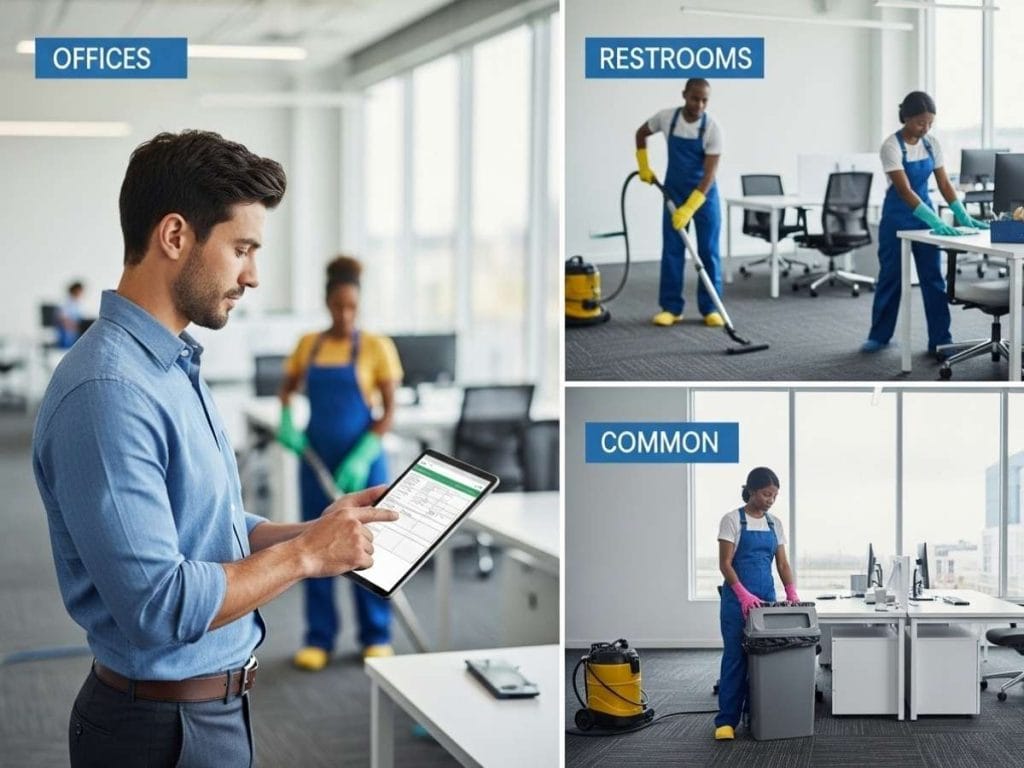
We make sure every agreement includes a clear, site-specific task list, consistent with effective cleaning management systems.That means detailing daily office cleaning, weekly amenities deep cleans, monthly high dusting, and quarterly carpet extraction where required. Generic wording causes confusion. Specific tasks prevent assumptions.
In a professional commercial cleaning contract, routine, periodic, and reactive services must be separated.
- Routine services include daily or weekly cleaning tasks.
- Periodic services cover programmed works like carpet steam cleaning or high window cleaning.
- Reactive services address spills, incidents, or urgent call-outs.
Without this separation, gaps appear. For example, a facility manager may assume quarterly carpet extraction is included. If it’s not written into the agreement, the contractor may legitimately treat it as an additional charge. That single omission can lead to dispute, budget pressure, and strained relationships.
Site variations also need to be addressed. Multi-level office buildings, medical facilities, government buildings, and multi-site operations across Brisbane and the Gold Coast all require different resource planning. Lift access, high-security zones, and public-facing areas must be clearly defined.
Cleaning contract inclusions and exclusions should be transparent. That includes:
- Consumables supply such as bin liners, hand towels, and soap
- Window cleaning scope and frequency
- High-level access requirements
- Specialised areas such as server rooms or clinical spaces
Service frequency and scheduling must be set in writing. After-hours cleaning reduces disruption for many sites, while others require business-hours presence. Public holiday coverage also needs to be addressed upfront.
A variation procedure is equally important. As businesses expand or restructure, scope changes follow. We recommend clear documentation on how scope adjustments are quoted, approved, and implemented. This protects both parties and supports flexible growth.
Clear scope protects operations. Vague scope creates risk.
Service Levels, KPIs and Quality Assurance Processes
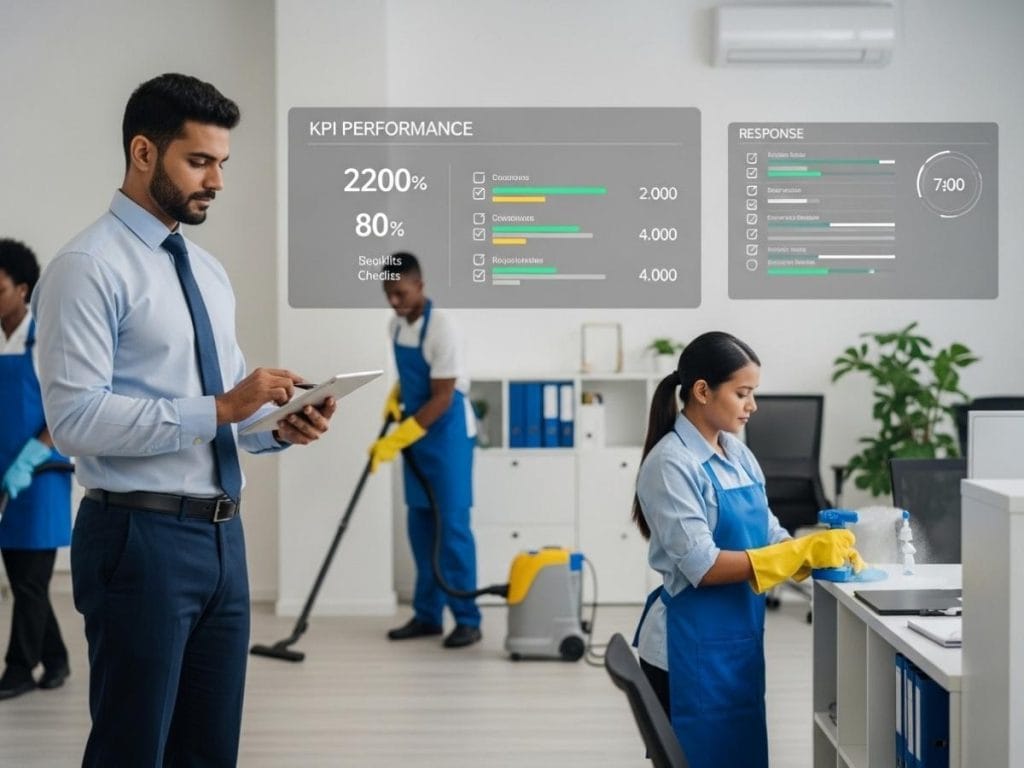
Well-defined commercial cleaning KPIs turn expectations into measurable standards. Without them, performance becomes subjective.
A strong service level agreement cleaning section outlines inspection scores, response times for urgent issues, complaint resolution timeframes, and attendance reliability. These performance benchmarks should appear directly in the contract.
For example, response times for urgent matters might be four hours. Complaint resolution might be documented within 24 hours. Attendance reliability should reflect consistent staffing coverage.
If KPIs aren’t defined, disputes escalate quickly. A client may feel standards are slipping. The contractor may believe delivery is adequate. Without metrics, resolution becomes opinion-based instead of evidence-based.
Quality assurance commercial cleaning processes must also be clear. We expect to see:
- Scheduled site inspections
- Digital reporting systems
- Structured audit checklists
- Documented corrective actions
Inspection frequency should be agreed in advance. Findings should be recorded and shared. Corrective actions must have timelines and accountability.
Communication protocols matter just as much as performance scores. A cleaning service agreement should specify who the primary contact is, who handles escalation, and how issues are reported. Email, portal-based systems, or formal incident reports should be agreed upon.
One of the most common pain points we see is unresolved performance frustration. Often, this stems from poorly defined professional cleaning contract terms rather than poor service. Clear expectations make improvement achievable and measurable.
Compliance, WHS and Insurance Protections You Should See in Writing
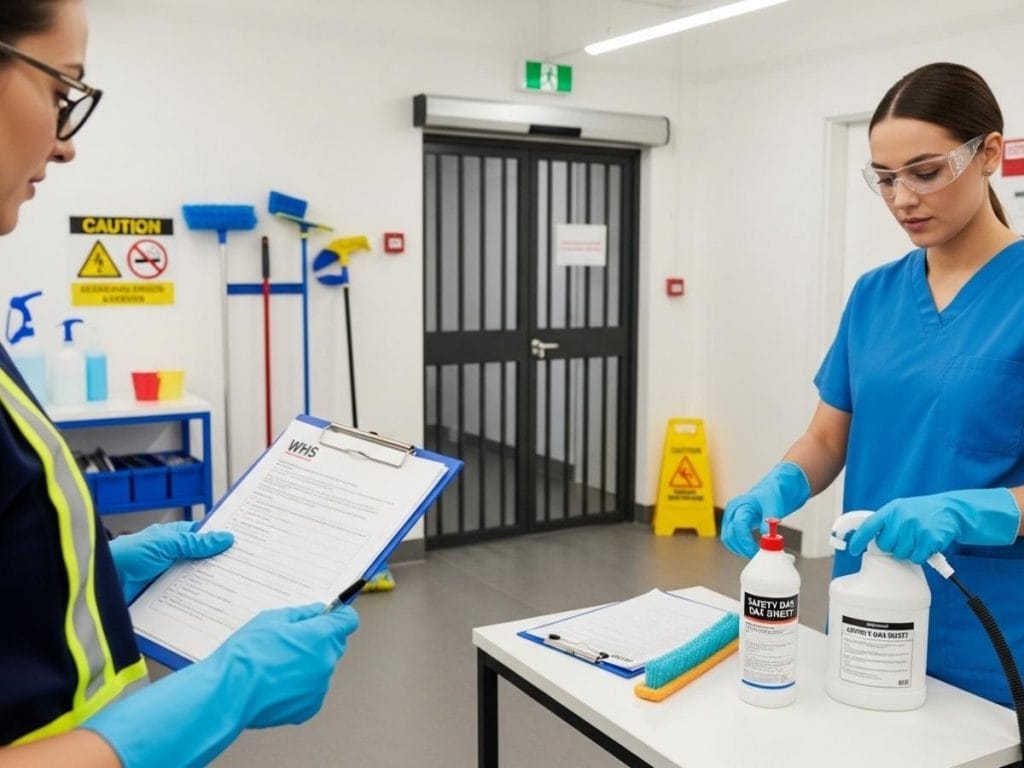
WHS compliance cleaning services must align with Australian Work Health and Safety legislation. This is operational risk management, not optional paperwork.
A proper cleaning service agreement should reference:
- Safe Work practices
- Site-specific risk assessments
- SDS (Safety Data Sheets) for chemicals used
- Incident reporting procedures
These documents show that hazards are identified and controlled. They also protect facility managers and procurement teams from avoidable liability.
Cleaning contractor insurance requirements must be clearly stated, particularly workers’ compensation insurance obligations.Public liability insurance and workers compensation cover should be current and verifiable. Coverage limits should be documented in the agreement.
Staff screening and training expectations should also be written into the contract. This is critical for medical centres, government facilities, and high-security environments. Background checks, site inductions, uniform standards, and ID requirements must be defined.
In healthcare settings, infection control standards carry added weight. Disinfection protocols and chemical selection must align with recognised practices. Services such as sanitisation services should be clearly described where relevant.
Liability boundaries must be understood by both parties. Contracts should clarify responsibilities for access, reporting hazards, and protecting sensitive areas. While this doesn’t replace legal advice, it establishes operational clarity.
Strong compliance documentation reduces incidents, claims, and disruptions. It also demonstrates responsible governance.

Pricing Structure and What Drives Cost Variations
Understanding the commercial cleaning pricing structure prevents budget surprises.
Most commercial cleaning contracts operate under one of two models: fixed monthly pricing or variable pricing. Fixed models provide predictable budgeting. Variable pricing adjusts based on usage, scope changes, or consumable supply.
Base pricing should clearly state what is included in the commercial cleaning contract inclusions. That usually covers agreed routine cleaning tasks. Periodic services, consumables, and emergency call-outs are often treated as additional charges.
Factors that drive price variation include:
- Site size and layout
- Foot traffic volume
- Operating hours and access restrictions
- Compliance requirements, including WHS and infection control
- Security clearances or supervision needs
Facilities operating extended hours or across multiple tenancies may require additional staffing. High-traffic retail or public-facing environments demand greater frequency. All of this affects labour allocation.
Transparency is critical. Detailed breakdowns offer clarity. Lump-sum figures without explanation create risk. Hidden cost issues often stem from unclear exclusions or undefined periodic works.
We recommend reviewing what commercial contracts include before signing. This provides useful context around typical inclusions and optional services.
A practical step before approval is requesting a summary page. This should list inclusions, exclusions, additional charge items, and contract review mechanisms. Upfront clarity protects both operational budgets and service consistency.
Staffing, Supervision and Communication Standards
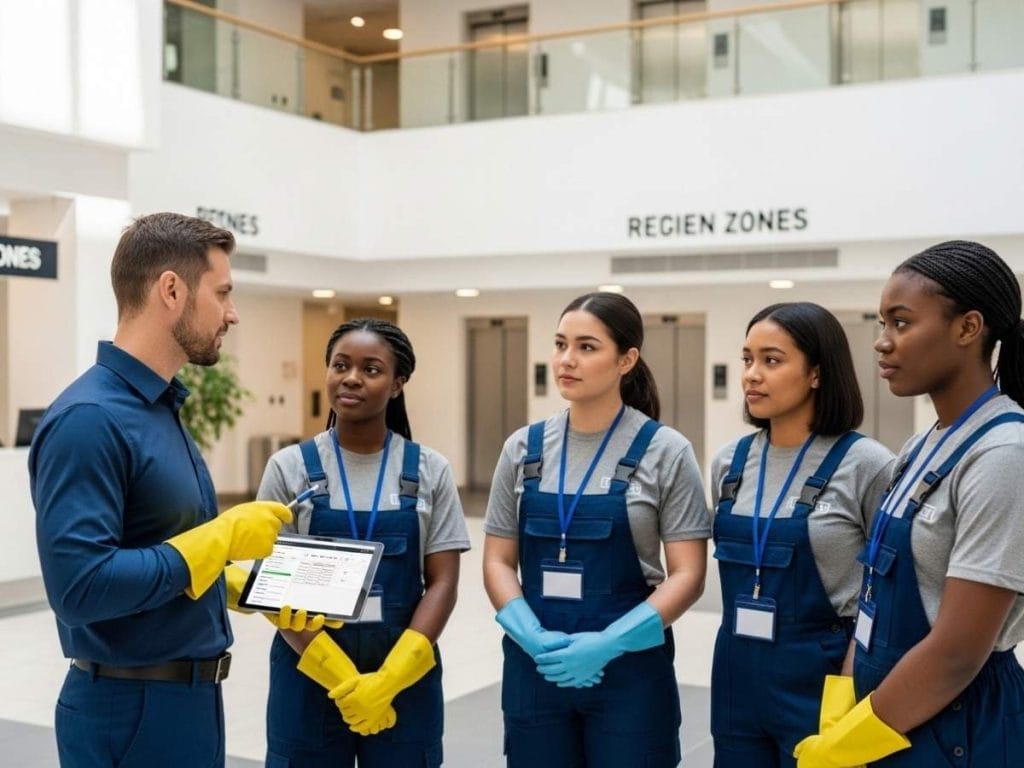
Service quality depends on people and oversight.
A reliable provider of Brisbane commercial cleaning services should specify staffing levels and backup coverage. Sick leave or unexpected absences must have contingency planning. Without backup systems, service reliability suffers.
On-site supervision structure should be documented. This includes account management responsibility and frequency of performance reviews. Regular review meetings strengthen accountability.
Communication standards must be practical. We recommend defining:
- Reporting dashboards or inspection summaries
- Escalation timeframes
- Regular review meeting schedules
Training expectations should also be listed. Uniformed staff, clear identification, and site-specific inductions are essential for corporate, strata, and multi-tenant premises. Services such as strata cleaning services often require coordination across committees and building managers, which increases the need for structured communication.
Consistent supervision across multiple sites ensures presentation standards remain aligned. For organisations operating across Brisbane metro areas, standardised protocols reduce variability.
Operationally, this means fewer disruptions and clearer responsibility. It also means predictable service delivery.

Term Length, Renewal, Termination and Pre-Signing Checklist
Most commercial cleaning contracts run for 12, 24, or 36 months. Renewal terms may be automatic or negotiated. This should be clearly stated.
The termination clause cleaning contract section is critical. Notice periods, early termination rights, and performance-based exit conditions must be defined. We recommend reviewing guidance on the termination clause for cleaning contracts to understand typical structures.
Dispute resolution processes linked to the cleaning contract termination clause should outline rectification periods. If performance slips, there should be a defined timeframe to correct issues before escalation or termination. This protects fairness and operational stability.
What to Look For Before Signing
A final review should confirm:
- The scope of work is detailed and site-specific.
- Commercial cleaning KPIs are measurable and documented.
- WHS compliance cleaning services obligations are clearly addressed.
- Insurance certificates are current and verified.
- The commercial cleaning pricing structure is transparent.
- Variation procedures are documented.
Strong contract clarity reduces disputes and protects continuity. Clear professional cleaning contract terms support consistent outcomes and reliable service delivery.
Frequently Asked Questions
What should be included in professional cleaning contract terms?
Professional cleaning contract terms should clearly outline the scope of work, service frequency, pricing structure, compliance requirements, and contract duration. A strong agreement also specifies routine, periodic, and reactive services so responsibilities are not misunderstood. Clear documentation helps prevent disputes, ensures measurable performance, and allows both parties to understand expectations, responsibilities, and procedures for handling changes or service issues.
How do service level agreements work in commercial cleaning contracts?
Service level agreements (SLAs) in cleaning contracts define measurable performance standards such as inspection scores, response times, complaint resolution timelines, and staffing reliability. These benchmarks allow facility managers to track whether cleaning services meet expectations. Documented KPIs and regular inspections create accountability and help resolve performance concerns using objective data rather than subjective opinions.
Why is the scope of work important in a cleaning service agreement?
The scope of work explains exactly what cleaning tasks will be performed, how often they occur, and which areas are included. A detailed scope prevents confusion over responsibilities and reduces the risk of additional charges for assumed services. Separating routine, periodic, and reactive cleaning tasks ensures all parties understand service expectations and budget requirements before the contract begins.
Can professional cleaning contract terms include pricing variations?
Yes, many professional cleaning contract terms allow for pricing variations based on factors such as site size, foot traffic, access restrictions, and compliance requirements. Contracts may use fixed monthly pricing or variable pricing models. Clear documentation of inclusions, exclusions, and triggers for additional charges helps organisations forecast costs accurately and avoid unexpected expenses.
When can a commercial cleaning contract be terminated?
A commercial cleaning contract can typically be terminated according to the conditions outlined in its termination clause. These terms usually include required notice periods, performance-related exit rights, and dispute resolution procedures. Clearly defined termination conditions protect both parties, allowing service issues to be addressed first while still providing a structured pathway to end the agreement if standards are not met.