How does carpet cleaning reduce allergies?
Understanding how does carpet cleaning reduce allergies comes down to removing embedded allergens such as dust mites, pollen, mould spores, and bacteria from deep within commercial carpet fibres. We use professional deep extraction methods to lower the concentration of these irritants, which limits their release into the air and improves indoor air quality in busy workplaces.
Key Takeaways
- Commercial carpets trap allergens that build up over time and create a constant source of airborne irritation. We often see this buildup in high-traffic offices where foot traffic grinds particles deep into the pile.
- Professional hot water extraction removes dissolved soil, bacteria, and allergens from deep within carpet fibres instead of simply disturbing the surface. We rely on this method because it flushes contaminants out rather than pushing them deeper.
- Routine vacuuming supports maintenance but has limited impact on deeply embedded contaminants. We recommend daily vacuuming with HEPA filtration, yet we know it won’t replace scheduled deep cleaning.
- Cleaning frequency directly affects allergen levels, and high-traffic areas require more frequent professional deep cleaning. We typically suggest quarterly or biannual services for commercial spaces, depending on usage and occupant sensitivity.
- Proper methods, moisture control, and ventilation minimise short-term disruption and lead to a long-term reduction in environmental allergy triggers. We manage drying times carefully to prevent mould growth and keep the workspace safe for staff and visitors.
Carpet Cleaning and Allergen Reduction in Commercial Workplaces
Understanding how carpet cleaning reduces allergies starts with one core principle: removal, not disturbance. Commercial carpets trap allergens deep within their fibres. Effective cleaning extracts contaminants rather than simply shifting them around.
In busy workplaces, carpets collect dust mites, pollen, mould spores, bacteria, and fine particulate matter. Standard foot traffic pushes these particles deeper into the pile. Over time, they build up and become a consistent source of airborne irritants.
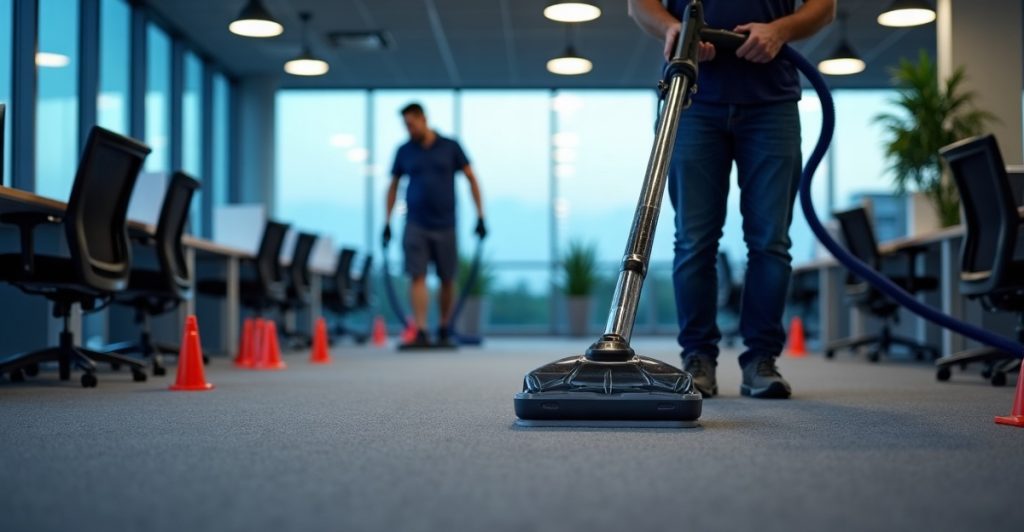
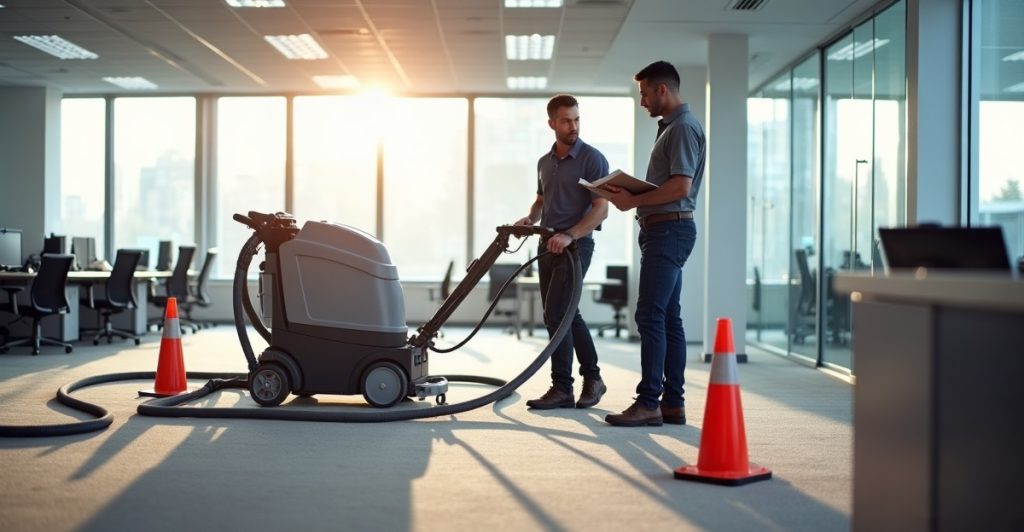
Professional cleaning methods target this embedded contamination. High-powered hot water extraction injects heated cleaning solution into the carpet and immediately removes it with strong suction. This process lifts dissolved soil, allergens, and bacteria from deep within the fibres. Encapsulation techniques surround soil particles in a crystallising compound for later removal during vacuuming. HEPA vacuuming captures fine airborne particles that ordinary vacuums miss.
The difference matters. Masking dust or performing light surface cleaning can temporarily improve appearance. It does not significantly reduce allergen load. Deep extraction reduces the concentration of irritants within the carpet itself.
Fewer embedded allergens means fewer particles released back into the air with daily movement. That supports better indoor air quality and reduces allergy-related complaints in offices, medical facilities, and government buildings. For a broader view of air health, we explain more in how cleaning affects indoor air quality.
Carpet cleaning supports allergy management by lowering environmental triggers. It does not cure allergies or asthma. However, reducing exposure plays a practical role in improving comfort and maintaining a healthier workplace.
How Allergens Accumulate in Commercial Carpets
Carpets act as reservoirs for airborne pollutants. Dust mites feed on organic debris trapped in fibres. Pollen enters through doors, windows, and clothing. Mould spores thrive in damp conditions. Bacteria attach to tracked-in dirt and organic matter.
Over time, these particles settle into the carpet pile. In high-traffic commercial spaces, movement releases them back into the air. Each step disrupts the surface and redistributes microscopic particles into breathing zones.
HVAC systems can contribute to this cycle. Airflow carries pollutants across open-plan offices and shared spaces. In Brisbane and the Gold Coast, humidity introduces additional risk. Excess moisture can become trapped in carpets if cleaning and drying are poorly managed. Damp fibres create conditions where mould can grow.
We often see workplaces where staff report persistent sneezing, throat irritation, or watery eyes. In many cases, carpet maintenance has been overlooked or limited to light vacuuming. Carpet fibres continue to store allergens until professional extraction removes them.
Unmanaged build-up also creates operational pressure. Repeated staff complaints about dust or odours impact morale and raise concerns about hygiene standards. For management teams, this becomes a risk management issue rather than just a cleaning matter.
Professional Deep Cleaning vs Routine Vacuuming
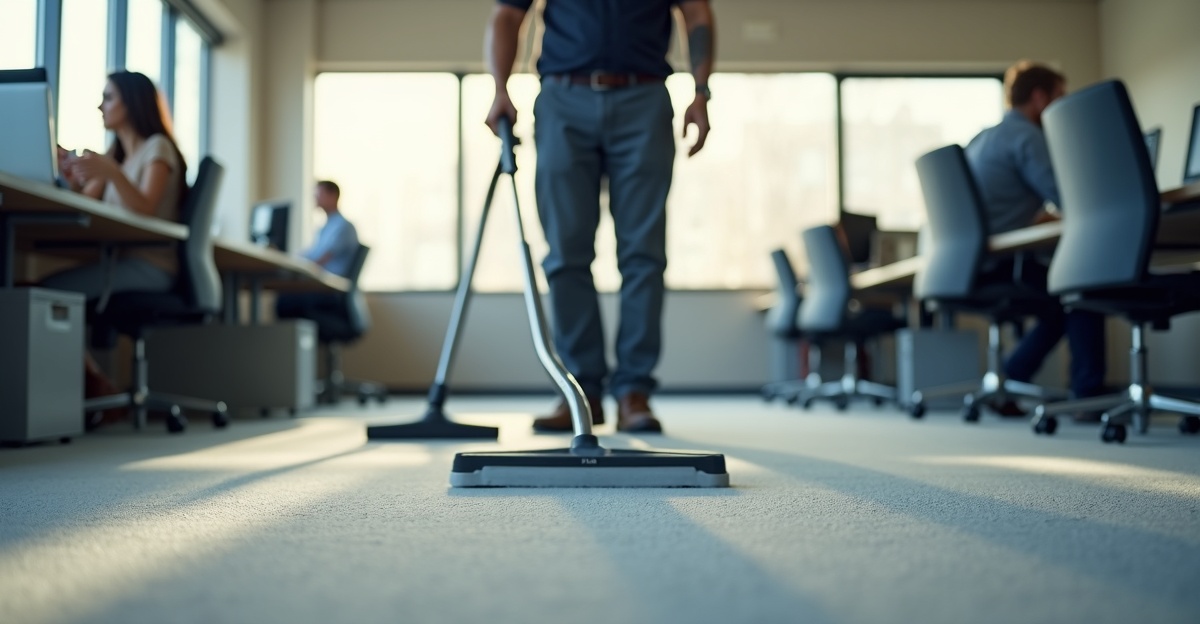
Routine vacuuming plays an important role in daily maintenance. It removes visible debris and reduces surface dust. However, the outcome depends heavily on equipment quality and filter efficiency.
Standard vacuum units without HEPA filters can release fine particles back into the air. Even HEPA-filter vacuuming, while beneficial, primarily addresses dry surface-level contaminants. It does not fully remove deep-seated allergens held within carpet backing and fibres.
Professional methods go further.
Key Differences in Cleaning Methods
The following comparisons highlight how carpet cleaning helps prevent allergies in practical terms:
- Routine vacuuming: Removes surface debris with limited impact on embedded allergens.
- HEPA vacuuming: Captures fine airborne particles, improving filtration but not flushing out deep contamination.
- Hot water extraction: Injects heated solution into carpet fibres and immediately extracts dissolved allergens and soil using powerful suction.
- Encapsulation: Binds soil particles in a crystallising compound for later removal, suitable for ongoing commercial maintenance cycles.
Hot water extraction remains one of the most effective deep-cleaning processes for commercial environments. It physically removes contaminants rather than redistributing them. For those comparing approaches, our guide on which carpet cleaning method to choose explains where each method works best.
Improper or infrequent cleaning can make symptoms worse. Light surface cleaning may disturb allergens without extracting them completely, temporarily increasing airborne particles before they settle again.
This is why businesses often ask: does carpet cleaning help allergies? The answer depends on the method and frequency used. Inadequate cleaning delivers limited benefit. Structured deep cleaning programmes reduce allergen load and support more stable indoor conditions.
Recommended Cleaning Frequency for Commercial Environments
Cleaning frequency directly affects allergen accumulation. The longer contaminants remain embedded, the higher the concentration within the carpet system.
We recommend the following general benchmarks:
- High-traffic commercial spaces and medical facilities: Professional deep clean every 3–6 months.
- Standard office environments: Every 6–12 months, supported by interim maintenance.
- Entryways, receptions, and shared corridors: More frequent spot and extraction treatment due to concentrated foot traffic.
These intervals may adjust based on staffing levels, public access, and environmental conditions. In Brisbane and the Gold Coast, humidity increases the importance of proper extraction and drying. Moisture control remains critical to reduce mould risk.
Preventative maintenance reduces long-term exposure and supports staff wellbeing. While cleaning is not a medical intervention, lowering environmental allergens contributes to a healthier workspace and helps management meet duty-of-care expectations.
Businesses investing in professional commercial carpet cleaning often see improved presentation standards alongside fewer cleanliness complaints. The focus shifts from reactive problem-solving to planned prevention.
Can Carpet Cleaning Cause Allergies? Addressing Common Concerns
Some managers ask whether carpet cleaning can trigger allergies. The concern usually relates to short-term irritation during the cleaning process.
During extraction, trapped particles are disturbed before removal. In poorly ventilated areas, this may briefly increase airborne dust. However, with correct equipment and process control, this disruption is temporary.
Real risks arise from poor cleaning practices:
- Low-grade chemical products that leave heavy residues.
- Excess moisture that remains in carpet backing.
- Inadequate ventilation that slows drying.
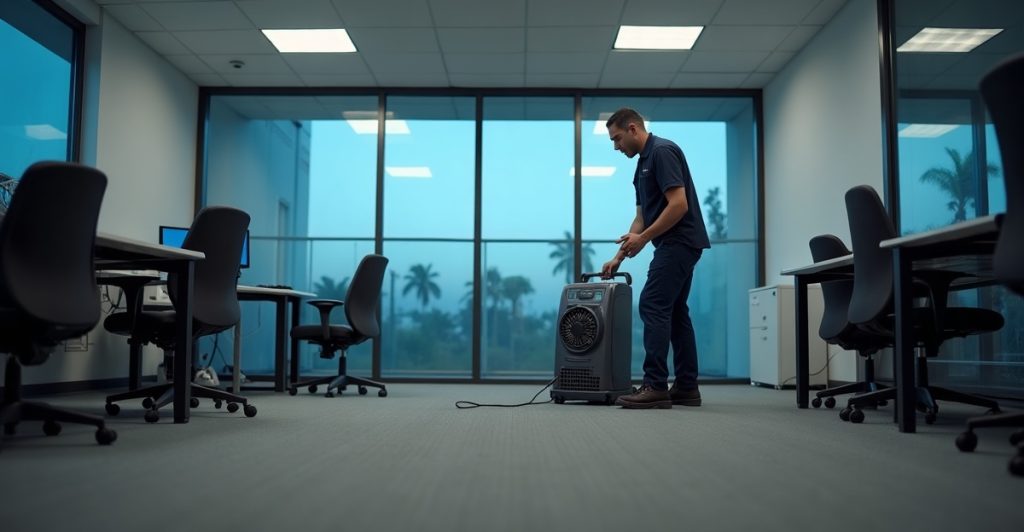
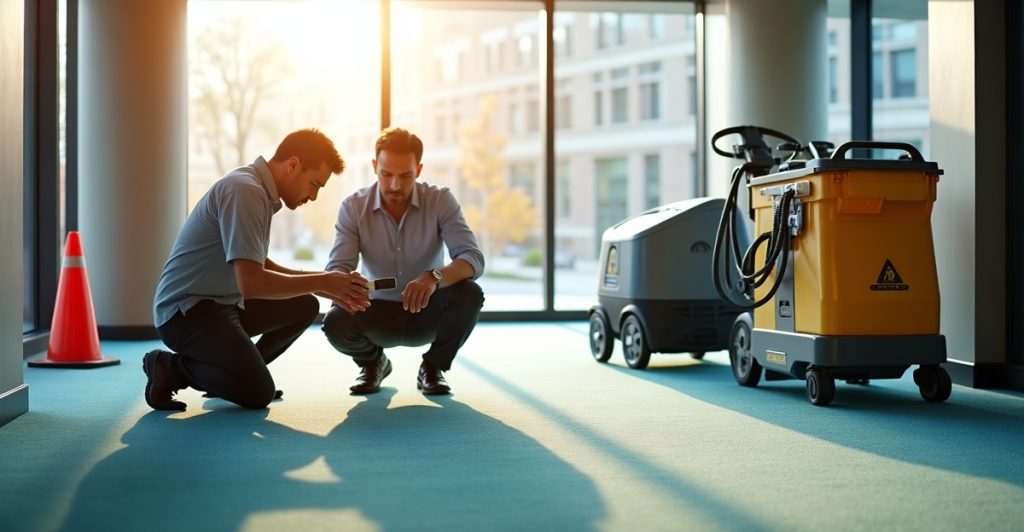
Professional controls minimise these issues. We use low-residue commercial-grade solutions that rinse cleanly during extraction. High-powered equipment removes the majority of moisture immediately. Controlled drying times reduce the likelihood of mould growth. Post-clean inspections confirm carpets are drying within expected timeframes.
The distinction is important. Temporary particle movement during cleaning differs from long-term allergen accumulation. When performed correctly, deep cleaning leads to an overall reduction in airborne irritants once drying is complete.
For workplaces with higher hygiene sensitivity, coordinated scheduling and ventilation planning further reduce disruption.
Choosing a Commercial Carpet Cleaning Partner
Carpet maintenance is a strategic workplace decision. The right provider focuses on operational outcomes, not just appearance.
We recommend assessing providers against several practical criteria:
- Proven experience in commercial environments rather than residential-only work.
- Knowledge of hot water extraction, encapsulation, HEPA vacuuming, and moisture control.
- Clear maintenance schedules aligned with traffic levels and building use.
- Understanding of compliance expectations in offices, medical settings, and government facilities.
Understanding how to choose a carpet cleaning company becomes critical where staff health and reputation are concerned. Cost also matters, and our breakdown of carpet cleaning costs helps businesses budget realistically without compromising quality.
For organisations operating in Southeast Queensland, structured programmes for Brisbane carpet cleaning and Gold Coast carpet cleaning must account for local humidity patterns and heavy foot traffic.
A well-managed cleaning schedule reduces recurring complaints, improves perceived hygiene, and supports better indoor air quality. Carpet cleaning will not eliminate allergies entirely, but it will reduce environmental triggers and create a cleaner, more stable work environment.
Scheduling a site assessment allows evaluation of traffic density, current cleaning frequency, and allergen risk exposure. From there, maintenance cycles can align with best practice and workplace priorities, helping management move from reactive cleaning to proactive environmental control.
Frequently Asked Questions
Can dirty carpets make allergies worse?
Yes. Carpets can trap dust mites, pollen, pet dander, mould spores, and other airborne particles that trigger allergic reactions. Every step on a dirty carpet can release these allergens back into the air, increasing exposure. Regular professional carpet cleaning helps remove these contaminants and creates a healthier indoor environment.
How often should carpets be professionally cleaned for allergy control?
Most homes and workplaces benefit from professional carpet cleaning every 6–12 months. If you have pets, children, asthma, or severe allergies, cleaning every 3–6 months can significantly reduce allergen buildup and help maintain better indoor air quality throughout the year.
Is steam cleaning better than dry carpet cleaning for allergies?
Steam cleaning, also known as hot water extraction, is generally more effective for allergy reduction because it penetrates deep into carpet fibres and removes embedded dust mites, pollen, and allergens. Dry cleaning offers faster drying times but may not remove deeply trapped particles as thoroughly.
Does carpet cleaning remove dust mites?
Yes. Professional carpet cleaning can remove a large percentage of dust mites, their waste particles, and accumulated debris hidden deep within carpet fibres. While no cleaning method permanently eliminates dust mites, regular cleaning significantly reduces their population and limits allergen exposure.
Can carpet cleaning help people with asthma?
Yes. Cleaner carpets reduce airborne allergens that may trigger asthma symptoms in sensitive individuals. Removing dust, pollen, mould spores, and pet dander can improve indoor air quality and create a more comfortable environment, especially when combined with regular vacuuming and proper ventilation.
Will carpet cleaning remove pet allergies?
Professional carpet cleaning removes much of the pet hair and dander trapped within carpet fibres, reducing one of the most common indoor allergy triggers. While it cannot eliminate pet allergies completely, routine cleaning combined with HEPA vacuuming helps minimise ongoing allergen exposure.
Can mould grow in carpets and trigger allergies?
Yes. Moisture trapped in carpets can encourage mould growth, producing spores that may cause allergy symptoms and respiratory irritation. Prompt drying after spills and professional carpet cleaning help prevent mould development and keep carpets hygienic.
Is regular vacuuming enough to remove carpet allergens?
No. Vacuuming removes surface dust and debris but cannot always reach deeply embedded allergens inside carpet fibres. Professional carpet cleaning uses specialised equipment and extraction methods that remove contaminants ordinary household vacuums often leave behind.
How can I keep my carpets allergy-friendly between professional cleanings?
Vacuum with a HEPA-filter vacuum at least twice a week, remove shoes indoors, clean spills immediately, control indoor humidity, and groom pets regularly. These simple habits help reduce allergen accumulation and extend the benefits of professional carpet cleaning.
Does professional carpet cleaning improve indoor air quality?
Yes. By removing accumulated dust, pollen, pet dander, bacteria, and other microscopic particles, professional carpet cleaning reduces airborne contaminants and improves indoor air quality. Cleaner carpets contribute to a healthier and more comfortable home or workplace for everyone.