Why is it important to have a clean workspace?

Understanding why it is important to have a clean workspace extends far beyond appearance. Clean environments protect health, strengthen compliance, improve productivity, and support long-term cost control. Across commercial, healthcare, and government settings, we use structured cleaning programs to lower infection risk, safeguard assets, meet WHS obligations, and reinforce brand credibility through consistent standards.
Key Takeaways
- A clean workspace reduces cross-contamination, lowers sick leave, and protects daily operations from disruption.
- Consistent cleaning supports WHS compliance by minimising slip hazards, improving indoor air quality, and reducing documented risk exposure.
- Structured hygiene practices improve staff focus, lift morale, and stabilise operations in high-traffic settings.
- Visible cleanliness reinforces brand perception and strengthens trust with clients, visitors, and stakeholders.
- Preventative, professional cleaning extends asset lifespan and supports predictable long-term facility budgeting.
A Clean Workspace Protects Health and Reduces Infection Risk
A clean workspace protects staff, visitors, and contractors from unnecessary exposure to bacteria and viruses. It directly answers why it is important to have a clean workspace in any shared commercial environment.
In offices, medical centres, and public facilities, high-touch surfaces act as transmission points. These include door handles, lift buttons, shared desks, keyboards, meeting tables, kitchen benches, appliances, and restroom fixtures. Each contact point creates an opportunity for cross-contamination.
Shared equipment and poorly maintained common areas allow bacteria and viruses to move quickly through teams. One unclean keyboard or communal fridge handle can affect an entire department. The result is higher absenteeism and ongoing operational disruption. For a detailed look at the role of commercial hygiene, see what commercial cleaning involves and why it matters.
We apply structured infection control principles in all professional settings. These approaches reduce risk and improve consistency:
- Colour-coded cleaning systems to prevent cross-use of cloths and equipment
- Correct chemical selection and measured dwell times for effective disinfection
- High-touch point protocols with defined cleaning frequencies
- Safe waste handling and compliant disposal practices
Healthcare and clinical environments introduce stricter expectations. Our medical cleaning services apply medical-grade standards aligned with patient safety requirements. In these spaces, sanitation is compliance-critical. The same discipline benefits high-traffic offices and public sites.
When we consider why it is important to maintain a clean workplace, the answer remains practical. Fewer infections mean fewer sick days. Reduced illness means fewer disruptions to projects, client work, and internal operations. A clean space supports safer daily interaction without adding complexity to workflows.
Workplace Safety and Compliance Are Legal and Operational Responsibilities
Workplace cleanliness supports Australian WHS obligations. While legislation varies by state, employers must provide safe working environments. Maintaining clean and orderly premises forms part of that responsibility.
Spills left unattended create slip hazards. Dust build-up can affect air quality and equipment performance. Cluttered pathways increase trip risks and restrict access to exits or emergency equipment. Contaminated surfaces in shared amenities introduce hygiene risks that can trigger complaints or non-compliance findings.
Consistent cleaning reduces these risks through clear operational controls. We focus on:
- Immediate spill response to prevent slips and falls
- Proper storage and handling of cleaning chemicals
- Compliant waste segregation and disposal
- Clear access to walkways, exits, and shared equipment
Government buildings and regulated facilities often require cleaning documentation and service checklists. Structured reporting supports audit readiness. It shows that processes are in place, followed consistently, and reviewed when needed.
For operations managers, the question of why it is important to keep the workplace clean goes beyond presentation. It is a form of risk management. Cleanliness reduces insurance exposure, WHS incidents, and compliance pressure. A structured janitorial service program supports that responsibility through routine oversight and record keeping.
Productivity, Focus, and Reduced Absenteeism in Commercial Settings
Illness-led absences disrupt workflow. When team members are away unexpectedly, workloads shift and deadlines tighten. Fewer infections naturally lead to fewer unplanned absences. Fewer absences reduce strain on remaining staff.
Regular sanitising plays a key role. We cover this in detail in why regular sanitising reduces employee sick leave. Consistent hygiene practices create measurable operational stability over time.
Visual clutter also affects concentration. Overflowing bins, stained carpets, and unclean kitchens signal disorder. Staff confidence can drop when the environment feels poorly maintained. A well-managed workspace, by contrast, supports focus and morale.
Air quality adds another layer. Dust accumulation on vents, carpets, and surfaces affects HVAC efficiency and indoor comfort. Stale or dusty air can contribute to discomfort and reduced concentration. We discuss this further in how cleaning impacts indoor air quality. Clean filters, maintained ducts, and controlled dust levels help maintain stable working conditions.
Facility and operations managers already manage tight deadlines, staffing pressures, and reporting requirements. Reliable office cleaning services remove one variable from that list. Consistent standards support daily operations without requiring constant oversight.
Brand Reputation and Client Perception Begin at the Front Door
Visitors form opinions quickly. Reception areas, entryways, meeting rooms, and restrooms shape first impressions before discussions even begin.
Stained carpets or scuffed floors suggest neglect. Odours in shared spaces undermine confidence. Unstocked or unsanitary restrooms create immediate concern. Overflowing bins signal inattention to detail.
In commercial settings, cleanliness forms part of brand positioning. Clients often associate visible standards with broader operational capability. If visible areas appear poorly managed, clients may question internal processes, documentation standards, or service quality.
Healthcare and government environments carry even higher expectations. In these sectors, visible hygiene reflects discipline and compliance awareness. A structured commercial cleaning service reinforces credibility across offices, healthcare sites, and public buildings.
Maintaining clean facilities supports trust. It shows that systems work, responsibilities are clear, and standards are consistent.
Long-Term Cost Control Through Asset Protection and Preventative Maintenance
Reducing cleaning frequency may lower short-term costs. Over time, it increases replacement and repair expenses.
Dirt and abrasive debris shorten the lifespan of flooring and carpets. Grit tracked across vinyl or tile surfaces accelerates wear. Stains left unattended set into fibres and require more aggressive treatment later.
Routine cleaning protects paintwork, fixtures, and shared equipment. Dust-free surfaces reduce corrosion and material degradation. Maintained kitchens and amenities extend appliance lifespan and reduce service calls.
HVAC systems also benefit from consistent cleaning schedules. Excess dust forces systems to work harder, increasing energy use and maintenance frequency. Structured maintenance supports more predictable operating costs. For further insight, we outline the benefits of scheduled maintenance cleaning and how it protects long-term facility budgets.
For asset managers and financial controllers, consistent cleaning contributes to lifecycle cost management. Predictable maintenance reduces unexpected capital expenditure and supports stable budgeting.
What Professional-Grade Commercial Cleaning Actually Involves
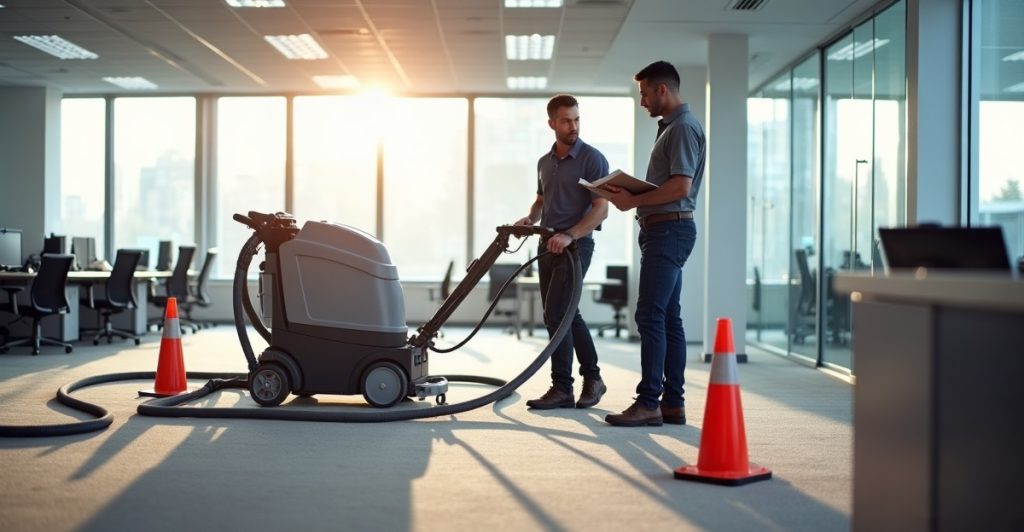
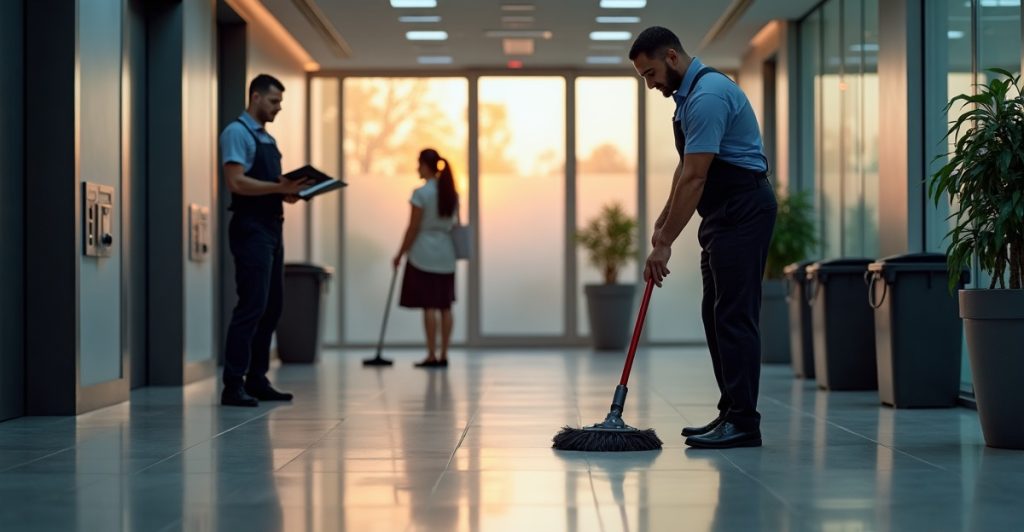
“Clean” in a commercial setting means more than a quick vacuum and surface wipe. Medium to large facilities require defined scopes of work, inspection systems, and frequency schedules linked to risk levels.
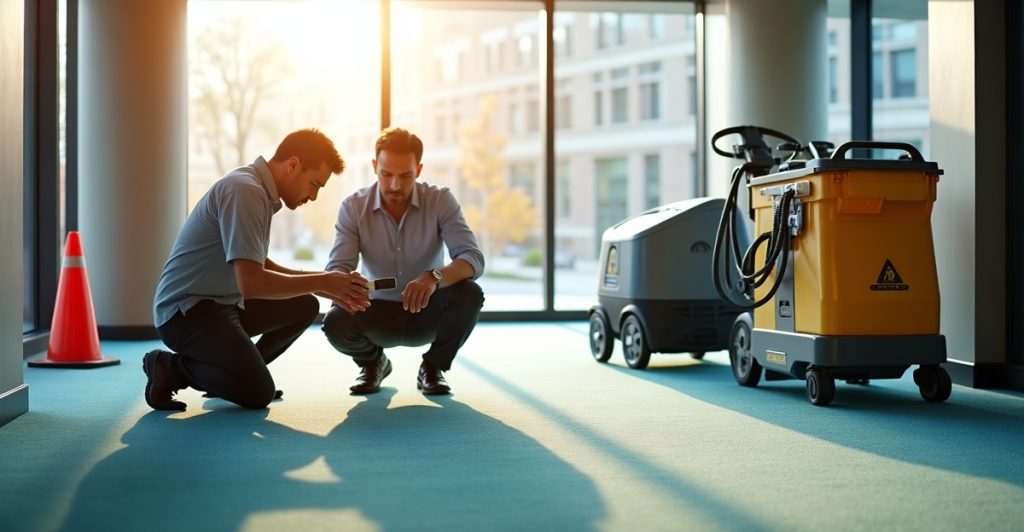
Professional cleaning programs include site-specific risk assessments. High-traffic zones receive increased attention. Sensitive areas follow strict protocols. Cleaning frequencies adjust based on occupancy, industry type, and compliance requirements.
Documentation supports accountability. Task checklists, service reports, and communication logs allow property managers to verify that standards are met. Multi-site operations rely on consistent reporting systems to maintain alignment across locations.
Industry-specific approaches strengthen performance. Healthcare settings require heightened infection control processes and staff training. Government offices may involve security awareness and restricted-access procedures. Our broader industry cleaning experience ensures cleaning models match operational realities.
Decision-makers reviewing cleaning contracts should assess four factors:
- Defined scope of work
- Compliance awareness
- Staff training standards
- Measurable quality assurance
These elements determine whether a service meets operational risk and compliance needs.
For organisations preparing for contract renewal or reviewing existing standards, comparing current performance against risk exposure, audit expectations, and staff wellbeing outcomes simplifies decision-making. Where improvements are required, structured support through professional programs delivers consistent, accountable results.
Frequently Asked Questions
Why does a clean workspace improve productivity?
A clean workspace minimizes distractions and helps employees stay organized and focused. When desks, meeting rooms, and shared areas are tidy, workers spend less time searching for items and more time completing tasks efficiently. Maintaining a consistent cleaning routine supports a more productive and professional environment.
Can a clean workspace reduce employee sick days?
Yes. Regular cleaning and disinfecting remove germs from high-touch surfaces such as keyboards, desks, door handles, and shared equipment. A cleaner environment helps reduce the spread of common illnesses, contributing to healthier employees and fewer workplace absences.
How does workplace cleanliness affect employee mental wellbeing?
A clean and organized workspace creates a calmer environment that can reduce stress and improve concentration. Employees often feel more motivated and comfortable when working in a clutter-free office, which supports better focus and overall job satisfaction.
What are the dirtiest areas in an office?
Some of the most frequently contaminated areas include keyboards, computer mice, phones, door handles, kitchen appliances, meeting room tables, and shared office equipment. These high-touch surfaces should be cleaned and disinfected regularly to maintain workplace hygiene.
How often should an office be professionally cleaned?
The ideal schedule depends on office size, employee numbers, and visitor traffic. Most businesses benefit from daily cleaning of common areas and regular deep cleaning of carpets, upholstery, windows, and hard-to-reach spaces to maintain a consistently healthy environment.
How does a clean office create a better impression for clients?
A clean office demonstrates professionalism, attention to detail, and respect for visitors. Clients are more likely to trust and feel confident in a business that maintains an organized, hygienic, and welcoming workspace from the moment they arrive.
What happens if a workspace is not cleaned regularly?
Neglecting workplace cleaning can lead to dust buildup, unpleasant odors, clutter, and increased bacteria on shared surfaces. Over time, these issues may contribute to employee illness, reduced productivity, lower morale, and a poor impression on customers and visitors.
Who is responsible for maintaining a clean workspace?
Keeping a workspace clean is a shared responsibility. Employees should keep their individual desks organized and dispose of waste properly, while professional cleaners handle routine sanitation, deep cleaning, and the maintenance of common areas to ensure consistent workplace hygiene.
Does indoor air quality affect workplace performance?
Yes. Dust, allergens, and poor ventilation can impact employee comfort and concentration. Regular cleaning of carpets, air vents, upholstery, and surfaces helps improve indoor air quality, creating a healthier and more productive office environment.
Why should businesses invest in professional commercial cleaning?
Professional cleaners use specialized equipment and proven cleaning methods to achieve a higher standard of hygiene than routine tidying alone. Regular commercial cleaning helps protect employee health, preserve office assets, maintain a professional appearance, and support long-term business productivity.