How to choose a carpet cleaning company?
Choosing a carpet cleaning company for commercial environments requires more than comparing prices, as we deal with higher foot traffic, compliance duties, and operational risk than residential sites. We must assess commercial experience, documented safety systems, suitable cleaning methods, and structured service agreements to protect assets, limit disruption, and stay audit-ready.
Key Takeaways
- We prioritise commercial experience and proven capability in similar facilities, including multi-site and high-traffic environments.
- We verify insurance coverage, WHS systems, SWMS documentation, and clear incident reporting processes to reduce liability risk.
- We confirm the provider uses commercial-grade equipment and methods that match carpet type, traffic levels, and required dry times.
- We compare quotes based on a clear scope of works, SLAs, reporting standards, and listed inclusions rather than price alone.
- We use structured questions and watch for red flags such as missing documentation, residential-only focus, or unusually low pricing.
What Matters Most When Selecting a Commercial Carpet Cleaning Partner
This guide explains how to choose a carpet cleaning company for commercial environments, not residential homes. Commercial carpet cleaning carries higher operational expectations and risk exposure than standard home services.
Many businesses deal with inconsistent results, tenant complaints, audit pressure, unreliable contractors, and last-minute cancellations. These issues disrupt operations and reflect poorly on facilities management.
Commercial carpet cleaning differs significantly from residential services due to:
- Higher foot traffic and faster wear
- Greater operational disruption risks
- Compliance, hygiene, and safety obligations
- Brand presentation and stakeholder expectations
Offices, medical centres, government sites, childcare facilities, and aged care environments demand precision and reliability. Cleaning must align with WHS requirements, internal policies, and public visibility.
Understanding how to choose a carpet cleaning company in a commercial setting means focusing on operational stability. The goal is not a one-off clean. We prioritise reducing risk, ensuring compliance, and securing a reliable long-term service partner who protects asset value and brand standards.
When reviewing providers, also consider the broader criteria outlined in how to choose the right commercial cleaning company. The same level of commercial accountability applies to carpets.
Commercial Experience and Operational Capability
A provider’s commercial experience directly affects consistency, safety, and communication.
Start by confirming whether the company has worked with facilities similar to yours. Offices operate differently from aged care. Childcare sites have strict hygiene controls. Government buildings involve security requirements. Medical facilities demand strong compliance discipline.
We recommend reviewing what qualifies as commercial cleaning experience before shortlisting providers. Experience reduces complaints and improves service predictability.
Request commercial references and case studies. Focus on:
- Sites of similar size
- Multi-level buildings
- Multi-site portfolios
- High-traffic environments
Consistency across locations matters. If facilities operate across Brisbane and the Gold Coast, confirm that service standards remain unified at each site. Providers offering structured regional services such as Brisbane carpet cleaning and Gold Coast carpet cleaning should demonstrate unified systems, training, and supervision.
Operational capability includes:
- After-hours scheduling options
- Defined account management structure
- Clear communication channels
- Escalation procedures
- Ability to scale during refurbishments or tenancy changes
Strong systems reduce disruption, support audits, and minimise internal follow-up for facilities managers.
Compliance, Insurance, and Risk Management Standards
Compliance gaps create serious exposure. A low-cost provider without appropriate protections increases liability risk.
Request certificates of currency for:
- Public liability insurance
- Workers’ compensation coverage
Insurance protects all parties. Without it, incident costs may shift back to the client.
Confirm documented WHS systems and Safe Work Method Statements (SWMS). Review whether staff are trained and inducted into site-specific requirements. Background checks may be necessary in childcare, medical, or government facilities.
Ask about:
- Incident reporting procedures
- Damage documentation processes
- Service-Level Agreements (SLAs)
- Written scope of works
Clear documentation creates accountability and supports audit readiness.
Before signing, review guidance on how to evaluate commercial cleaners before signing a contract. Structured evaluation reduces long-term risk exposure.
Cleaning Methods, Equipment, and Long-Term Maintenance Strategy
Commercial carpets require appropriate methods and commercial-grade equipment.
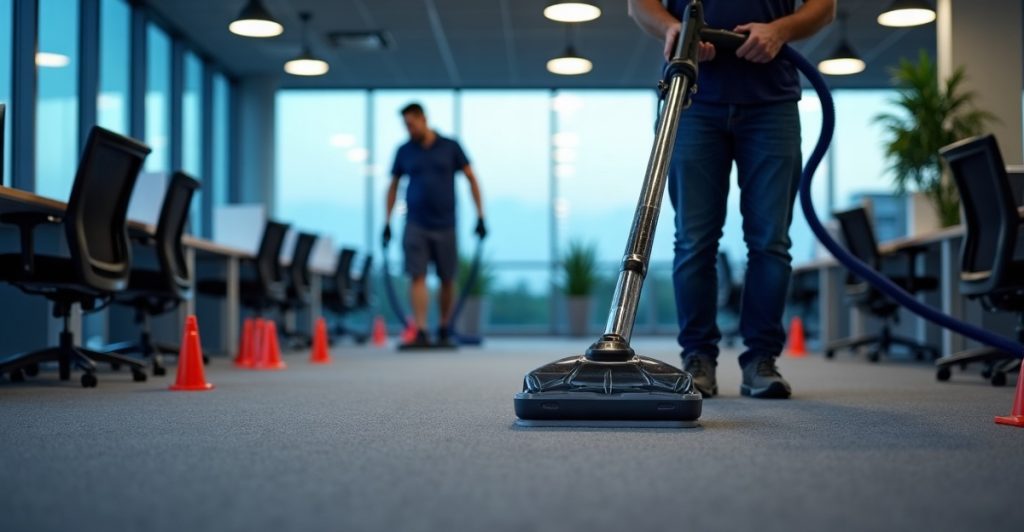
Common methodologies include:
- Hot water extraction
- Encapsulation cleaning
- Low-moisture systems for rapid drying
Each method suits different carpet types and traffic levels. For deeper comparison, review which carpet cleaning method you should choose.
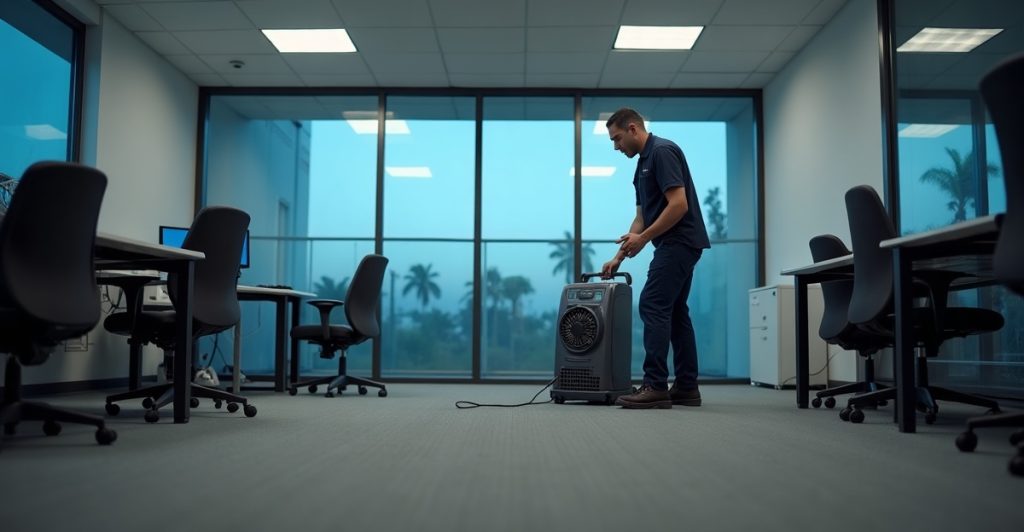
Dry times must align with business operations. Extended drying increases slip hazards and operational disruption. Moisture control and airflow planning are critical in commercial environments.
A professional provider should assess:
- Carpet fibre type
- Age and wear patterns
- High-traffic pathways
- Stain frequency
- Industry hygiene requirements
Residential-focused operators often rely on equipment unsuitable for commercial workloads. That is a significant red flag when evaluating long-term suitability.
Poor cleaning leads to:
- Premature carpet replacement
- Embedded soil buildup
- Odour complaints
- Ongoing spot-treatment issues
A structured maintenance plan delivered through a defined commercial carpet cleaning service protects flooring assets and reduces lifecycle cost. Investment should prioritise long-term asset value, not short-term price savings.
How to Compare Quotes Structurally and Avoid Costly Mistakes
Clear scope definition prevents disputes and variation claims.
Quotes should clearly outline inclusions and exclusions. Confirm:
- Treatment of high-traffic zones
- Spot and stain removal processes
- Furniture moving requirements
- Access arrangements
- Drying expectations
Conduct genuine like-for-like comparisons. One provider may price for basic extraction, while another includes pre-treatment and post-grooming. Surface price differences can be misleading.
Review:
- SLAs and performance benchmarks
- Quality assurance processes
- Inspection schedules
- Reporting commitments
- Contract flexibility and renewal terms
Extremely low pricing often signals:
- Reduced service scope
- Inadequate equipment
- Labour shortages
- Uninsured operators
- Inconsistent attendance
Part of understanding how to choose the best carpet cleaning company is recognising that lowest price rarely delivers operational stability.
For budgeting context, review how much carpet cleaning costs to set realistic commercial expectations.
Practical Checklist: Questions to Ask and Red Flags to Watch For
When determining how to find a good carpet cleaning company, structured questioning reduces uncertainty and protects procurement decisions.
Ask:
- Do you specialise in commercial sites?
- Can you provide references from similar facilities?
- What insurance cover do you hold?
- Can you supply SWMS and WHS documentation?
- What cleaning methods will you use and why?
- What are expected dry times?
- Do you offer after-hours services?
- How do you manage quality inspections?
- What reporting will we receive?
- Who is our primary point of contact?
- How do you handle incidents or damage?
- Do you service multi-site portfolios?
Watch for red flags:
- Marketing focused only on residential work
- No written scope of works
- No documented safety systems
- Lack of commercial references
- Extremely low pricing
- Unwillingness to provide insurance certificates
Selecting a carpet cleaning company should be structured, documented, and transparent. Clear evaluation protects budgets, reduces complaints, and supports long-term facility performance.
Frequently Asked Questions
What questions should I ask before hiring a carpet cleaning company?
Ask about their cleaning method, experience, insurance, certifications, pricing, drying time, and satisfaction guarantee. It’s also helpful to ask whether they include stain treatment and furniture moving in the quoted price. Comparing these details makes it easier to choose a reliable provider rather than simply selecting the cheapest option.
How do I know if a carpet cleaning company is reputable?
A reputable company has verified customer reviews, transparent pricing, experienced technicians, and proper insurance coverage. They should clearly explain their cleaning process and provide written quotes without hidden fees. Businesses with consistent positive feedback and established local experience are generally a safer choice.
Is the cheapest carpet cleaning service always the best value?
No. Low prices can sometimes mean rushed work, hidden charges, or lower-quality equipment and products. A company that offers detailed quotes, experienced technicians, and quality cleaning methods often provides better long-term value by extending the life of your carpets.
Should a carpet cleaning company be insured?
Yes. Professional carpet cleaners should carry public liability insurance to protect both their business and your property in case of accidental damage. Insurance demonstrates professionalism and provides peace of mind during the cleaning process.
How long does it take for carpets to dry after professional cleaning?
Drying time typically ranges from 4 to 24 hours depending on the cleaning method, carpet thickness, humidity, and ventilation. Steam cleaning usually requires longer drying than low-moisture cleaning methods. Opening windows or using fans can help speed up the process.
Are eco-friendly carpet cleaning products effective?
Yes. Many modern eco-friendly cleaning solutions effectively remove dirt and stains while being safer for children, pets, and indoor air quality. They also leave fewer chemical residues, making them a popular choice for households seeking environmentally responsible cleaning.
Can a professional carpet cleaner remove pet stains and odours?
Yes, professional cleaners can treat many pet stains and odours using specialised cleaning solutions and deodorising treatments. The success depends on how deeply the contamination has penetrated the carpet and underlay, so early treatment generally produces the best results.
How often should carpets be professionally cleaned?
Most homes benefit from professional carpet cleaning every 12 to 18 months. Homes with pets, children, allergy sufferers, or heavy foot traffic may benefit from cleaning every 6 to 12 months to maintain appearance, hygiene, and carpet lifespan.
What should I do before the carpet cleaners arrive?
Remove small furniture, valuables, and fragile items from the area and vacuum lightly if requested by the company. Identifying problem stains and ensuring easy access allows technicians to work more efficiently and achieve better cleaning results.
Do carpet cleaning companies offer satisfaction guarantees?
Many professional companies offer satisfaction guarantees or free re-cleaning if you’re not happy with the results. Before booking, ask what the guarantee covers and whether any conditions or time limits apply so you know what to expect after the service.